
What Clothing To Wear In The Sahara Desert
What clothing to wear in the Sahara Desert is an integral part of any preparation for a trip to the Desert. Don’t be drawn or fooled into any perception that it never rains in the Sahara! It does. This short article on what to wear in the Sahara Desert should give you a good insight.
Also read what footwear to wear in the Sahara Desert, and why you should use the Layer Clothing System.
When To Go. Travel with us to the Sahara and you are highly likely to travel in the months of Mar/Apr and late Sep/Oct. They are, in our opinion, considered the best months to trek in the Sahara due to the weather. Outside of those periods, you may find the temperatures either too hot in the heat of the day, or too cool at night. That said, weather patterns are not quite as predictable as they used to be so high temperatures (we’re talking into the 40°C + range) may still be experienced during our recommended periods.
Check out our Morocco Sahara Desert trek dates and itinerary.
Sahara Desert Clothing – General
Perhaps surprisingly, the clothing kit list for the Sahara doesn’t differ too much from many other treks regardless of terrain, with the exception of extreme cold!
You still need to be equipped to deal with the heat, the potential chilly nights as well as potential rain. The reduced risk of rain may lead you to pack a more lightweight rain jacket but other than that, you still need the protection.
I routinely carry a lightweight duvet jacket as part of my Sahara Desert clothing. It’s light, packs down extremely small, and covers any adverse weather that may involve chilly or cold temperatures.
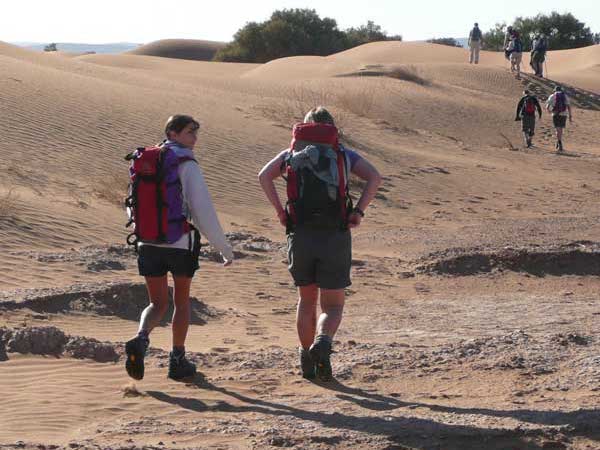
Early mornings can be chilly
in the Sahara
Through the Day
What at you are likely to be wearing during the daily routine in the Sahara:
- 0600 – 0800 hrs: Early morning (on wake up, and breakfast) – Shorts or long trousers and a t-shirt + fleece (if cool enough). This will vary between individuals.
- 0800 – 1600 hrs: Trekking – you may start with a fleece on, but as the day progresses, you’ll likely end up wearing just shorts and a t-shirt. Long sleeve shirts, long trousers and a sunhat all play their part against a potentially fierce sun to prevent sunburn. Sunscreen doesn’t work so well for some (sand sticks).
- 1600 – 1800 hrs: End of trekking – personally, I remain in trekking clothes until I’m set up in the overnight camp. That’s tent up, kit sorted, etc… I then have a strip wash and change into clean clothes. I keep trek clothes separate from those I wear in the evenings.
- 1800 onwards: Evening (post trek) – once it cools down, you may opt for long trousers and a fleece.
What Clothing Should I Wear If It Rains?
As an absolute minimum, you should carry a waterproof jacket in your daysack at all times, but preferably waterproof trousers too (neither will weigh very much). Should it rain, without waterproof clothing, your body will cool down very quickly. It can easily lead to hypothermia. Remember, whilst trekking you will not have the support camels close by, and therefore access to your main bag with additional clothing. Having waterproofs in the main bag (as opposed to being with you) is of no use if the weather changes whilst trekking (and it can change rapidly).
How Is All Of This Clothing Carried?
Apart from what you are physically wearing (assume shorts and t-shirt), any additional clothing you may need during the day should be inside your daysack. That includes waterproofs, a lightweight fleece, sunhat, and any other spare clothing you may need.
Your main bag (usually a holdall), which contains the remainder of your belongings (sleeping bag, wash kit, etc…), will be loaded onto camels and you usually won’t see it again until you reach the next night stop.
Are There Any Specific Types Of Clothing?
It would be impractical to go through each and every item of clothing. You can find our Sahara Kit List on the Sahara webpage (the link goes to the ‘Notes’ section, open the ‘Kit List’ toggle).
I will draw your attention to 3 specific items:
- T-shirts – lightweight wicking type material will work well as you could potentially rinse it and it’ll dry quickly. But most trekkers, quite rightly don’t bother washing clothes for this length of the trek (5 days). So whatever is comfortable. Make sure you try them out with your daysack to ensure they don’t rub.
- Trousers – there are plenty of lightweight trekking trousers on the market, again it very much depends on what fits and works for you. Some find the trousers with zip-off legs annoying as the zip element can rub! Others prefer straightforward long trousers, no zip-offs.
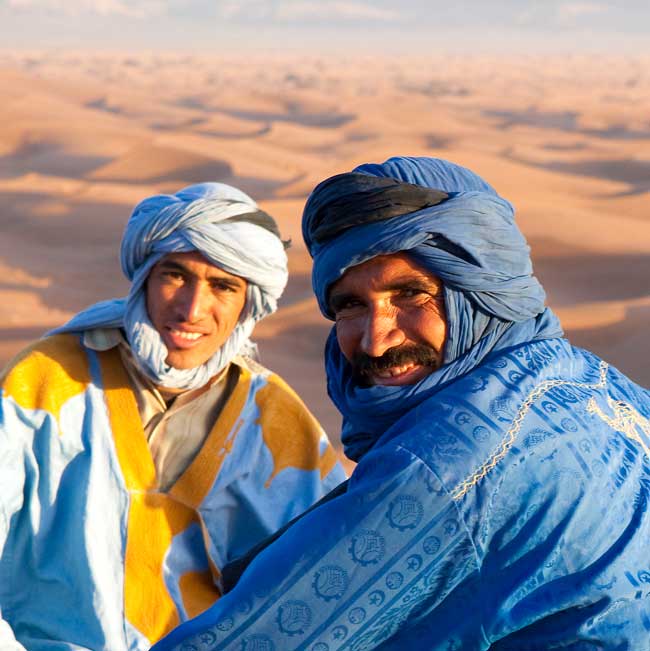
- Moroccan Headscarves (Sheche) – these fantastic bits of kit double up in so many ways. Traditionally the Berbers wear blue but any colour you fancy will do! I would recommend buying one (you can get them en route) and your Guide and support crew will show you how to wear them. Tip … length wise, buy the longest one on offer.
- Cooling Towels – it’s not often I single out specific items but this deserves it. These cooling towels were recommended by a group, so I tried them in Apr 2024 (in the Sahara). They work! Shared between 4 people, they are inexpensive. You can buy them on Amazon. If the link doesn’t work, go to Amazon and type in ‘U-Picks 4 Pack Cooling Towel’
- Bespoke Sahara Treks – Our Sahara Desert Treks can run with a minimum of 2 people. It is effectively a private trip! You can pick your dates to suit, and make any adjustments to the itinerary, such as extending the trek, and we can make it happen.


Related Articles
Pokhara – What To Do & See

Everest Base Camp Review

Kilimanjaro vs EBC | Treks Compared | Which is Harder

Is The Maldives Worth It?


