
What Footwear Do I Wear
For A Sahara Trek?
For A Sahara Trek?
To enjoy a Sahara trek to the full requires a mix of footwear. No single set of footwear will suit every scenario. Boots, desert wellies, sandals, or simply barefoot are all options.
This post will explain, in our opinion, what footwear works, what doesn’t work and why.
Sahara treks are not all conducted on deep soft sand. A day in the Sahara is a mix of soft sand, hard-baked river bed (wadi) and small pebbly stuff called Hamada. It might rain, a sandstorm may come through, it might be hot enough to melt the glue from your sandals or shoes! The ability to adjust and adapt is important and advantageous. In some cases it’s vital.
What Footwear Works For The Sahara
If I had to choose a single set of footwear (and only one set) to wear throughout an entire trek, it would be the trusty desert wellies, which are high-length boots (see image). Comfortable, high enough not to let the sand in (easily), and lightweight. They are as close to any footwear designed and built for the desert as you’ll get.
BUT, I reiterate that a mix of footwear will allow you to enjoy the terrain much better than a single set.
- Bare feet – in areas of deep soft sand, there’s nothing more pleasurable than walking barefoot in the warm/hot desert sand. The fine sand will run through your toes, it just feels great! Highly recommended when the opportunity arises. And there’s plenty of opportunity on our Sahara treks.
- Sandals (see image) – perhaps not the obvious choice but they work really well. You have the support of something on your feet and yet the sand will flow through the open style easily and not get stuck. With slight adjustments, you will soon find the right placements of the straps (slightly looser than normal). If you need to, wear a pair of socks too to avoid friction. It may not look the best but this is not a fashion contest! If it works, use it.
- Boots – normal over ankle boots are good for the Hamada sections (pebbles). Sandals will also work but you’ll find the pebbles creeping into the footwear and you’ll be forever shaking your feet to kick them out; annoying. On the low dune terrain, the sand is not deep enough to go over and into the boot in enough quantities to worry about. Don’t wear the boots on deep sand, you’ll have a boot full of sand in no time.
- Desert Wellies – these could replace your boots; excellent in the sand but not to everyone’s liking with the very high leg.
Check out our Morocco Sahara Desert trek dates and itinerary.

Desert Wellies
Designed for the desert!
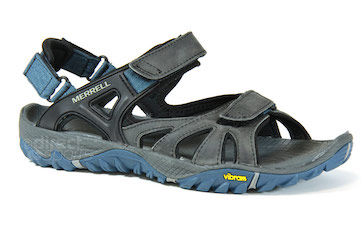
Sandals are ideal for most of time
They let the sand ‘float’ through

Boots best for Hamada (pebbles)
Not suitable for deep soft sand
What Footwear Not To Wear In The Sahara
Trainers, Trail Shoes, or anything similar. With the ankle line being so low, sand will flood into these shoes in an instant with no where to go. With a shoe full of sand, it’ll be minutes before you need to stop and empty them out. They simply don’t work.
Flip-flops (don’t work for trekking, but great for evening-wear). I’ve seen people walk in them and in all fairness they’re good for evening time flopping about the campsite to keep your feet aired. In deep sand though, they sink a bit and the force required to keep extracting them will be enough to break them eventually. Something is likely to give at some point.
Blisters
There is no guarantee you won’t get a blister or two, even for the most well prepared, hardy and experienced trekker. The Sahara conditions do funny things to your feet! We come back to adaptability. Go with a plan that is adjustable and do just that, adjust to what works for YOU. If that means padding along in a pair of thick socks so be it.
Learn how to prevent and fix blisters, and look into carrying a well-stocked ‘blister kit’ to suit your feet.
- Prevention is better than cure (tape feet?)
- Don’t let blisters develop (hot spots)
- Adjust as you go if you need to
Blister Kit – Don’t have one? You should. It’s nothing specialised, just a little thought:
- Needle
- Tissue (liquid absorption)
- Tape, zinc oxide is good, needs to be strong, durable, and sticky, Various widths are available
- Toe pads
- Compeed plasters (come in various sizes)
Finally
Preparation is everything. Consider what’s right for you and your feet, and don’t forget what to wear in the Sahara either. No single solution suits everyone. Be prepared to adjust to the conditions. This is a life-changing experience and if you need any inspiration, read how Luisa Pearce did it in a wheelchair!
Our Sahara treks are a liberating experience. For 5 days, there are no roads, no villages, no TV’s, no sounds, just silence and a sea of sand. Everything you need is right there on the camels supporting you. A bag weighing about 12 kg – that’s it.
Check out our Morocco Sahara Desert trek dates and itinerary.


