
EasyJet Review
EasyJet is a British low-cost, no-frills airline operating over 1000 routes in more than 30 countries, primarily Europe. It operates point-to-point routes (no ‘connecting’ flights) lasting anything from 20 mins up to around 6 hrs on the Airbus 320 family of aircraft.
Like all low-cost airlines, the EasyJet headline price will buy you a walk-on flight with a small bag (classed as ‘standard’). You pay additional fees for extras such as additional luggage, advanced seat selection, and pre-ordered food/drink if you wish. These elements can be purchased as packages or individual elements. If you know exactly what you need, then it is definitely worth checking the costs for individual elements (as opposed to packaged extras) to see if it is cheaper. How to beat the packages. EasyJet’s website is easy to use, and email confirmations are fast.
I have flown with EasyJet on numerous occasions in the last 2 – 3 years, to Tunisia, Rhodes, and Marrakech.
Booking
EasyJet revised its price structure in Feb 2021, reducing the size of the free-hand luggage allowance from a decent-sized wheeled roll-on case to a much smaller bag. You would now have to travel pretty light to not incur further fees.
Note that as the aircraft fills, so the price of everything increases, which is consistent with dynamic pricing.
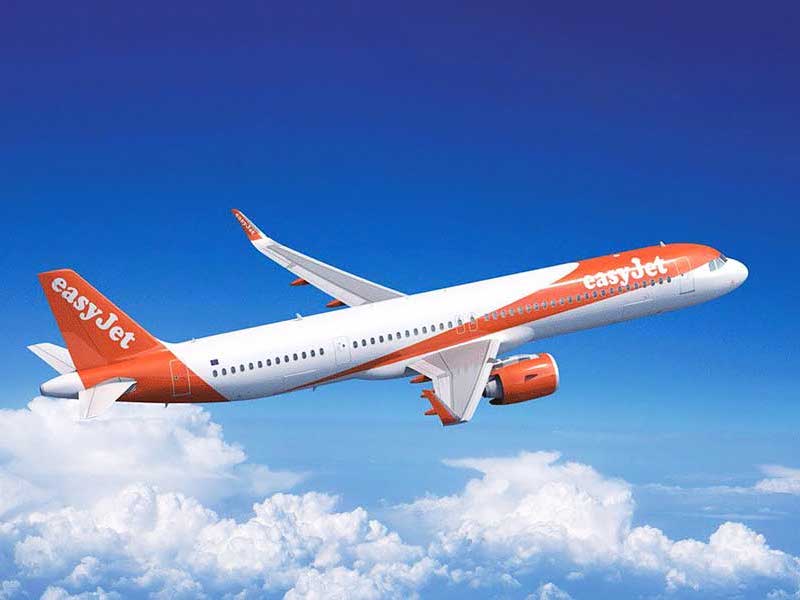
EasyJet’s distinctive livery
EasyJet’s Packaged Extras
Like most low-cost airlines, EasyJet is constantly changing how it packages its extras (luggage, seats, etc). Over time, passenger habits change and they know this through data collection. It knows what passengers want, and packages accordingly to make the maximum amount of profit it can. The good news is that you can still cherry-pick what you want, so you are not compelled to buy into a package. How to beat the packages.
Standard – This is the default, pay nothing more, option. It includes a 45 x 36 x 20 cm free bag, which is nothing more than a small rucksack or large handbag. It’s worth measuring your bag to ensure it’s within range because if it’s well over, they may simply take it off you and place it into the hold, at a high price. Advanced seat selection is not compulsory (about £5 each way). If you do nothing, your seat will be automatically allocated to you when you check in online (this can be done up to 30 days from departure, see below).
Standard Plus – The step up here is the inclusion of the larger cabin bag (56 x 45 x 25 cm), which is the more common roll-on bag, which goes in the overhead lockers. As soon as the overhead lockers are brought into play, so too does Speedy Boarding. EasyJet will want to get those passengers with the larger bags on first as they tend to take time to fill those lockers. Upfront seats (rows 2 – 6 (2 – 5 on some aircraft)) are not wholly necessary but some prefer it as it gets them off of the aircraft sooner and, therefore, potentially into immigration queues faster.
Essentials – This is designed for longer trips where checked hold luggage is required. It includes 23 kg of hold luggage, and a standard seat.
EasyJet’s Packaged Extras
Not compulsory
Standard (no extra payment, comes with the advertised fare)
- One small under seat cabin bag (max 45 x 36 x 20cm)
Standard Plus (extra payment)
- One small under seat cabin bag (max 45 x 36 x 20cm)
- One large overhead cabin bag (max 56 x 45 x 25cm)
- Upfront seat
- Speedy boarding
Essentials (extra payment)
- One small under seat cabin bag (max 45 x 36 x 20cm)
- 23 kg hold bag
- Standard seat
EasyJet’s Non-Packaged Extras
The good news with EasyJet is that you can still pre-book seats and whatever additional luggage you need as stand-alone elements if the packages offered do not suit you. It can work out cheaper.
Hold Luggage – You can book hold luggage of 15, 23, 26, 29 or 32kg in weight separately. You are strongly advised to pre-book any hold luggage, it is way more expensive if done at the airport.
Carry-On Large Bag – You can book a large carry-on bag (up to 56 x 45 x 25 cm) separately. It is much cheaper than a package. If you do this, you automatically get speedy boarding too, but do check when you go through the booking system.
Seats – You can pre-book seats, which is useful for families or large groups. This is not wholly necessary, I’ve never been split up from my family when the seat allocation has been done automatically at check-in but they do warn you that it is possible.
The full list of variable costs, luggage weights, etc.. can be found on EasyJet’s Fees and Charges webpage.
How To Beat The Packages – Example
I compared the costs of buying add-on packages vs. booking separate elements for a return flight from London Gatwick to Rome in Feb 2024. Prices were correct at the time of this demonstration (2 Sep 2023).
3 Feb 2024, London Gatwick – Rome, departing @ 1525 hrs. Cost £40.99
11 Feb 2024, Rome – London Gatwick, departing @ 1140 hrs. Cost £34.41
Total so far is £75.40. This is the Standard fare, so only a small bag is included.
Package 1 – If you add a Standard Plus package (large cabin bag, speedy boarding, Upfront seat) it’s an extra £92.46. Total would be £167.86.
Without Package 1 – If you add a large cabin bag separately you get speedy boarding automatically. Cost £43.48. The total would be £118.88. A saving of £48.98. OK, you don’t get the Upfront seat but do you really need that? And by not pre-booking a seat at all, you can secure it 30 days from departure. Not many people get onto securing their seats at the 30-day mark so you can usually get a decent seat.
Package 2 – Let’s try the Essentials package option. Start with the standard fare and add the Essentials Package (23 kg bag + standard seat). That’s an extra £98.96. The total cost £174.36.
Without Package 2 – You could book a 23kg bag separately for £79.98 (a saving of £18.98), and you could save more if you decided that a 15kg allowance is sufficient.
Even if you were to add the standard seat at £7.49 each way, it still works out slightly cheaper than the full Essentials package.
Share luggage space. If you need a little more luggage capacity than large cabin bag, perhaps you can share a 23kg hold bag?
Remember, costs will vary according to destination, and the timing of your booking.
Check In
Checking in is easy and efficiently achieved online, which can be done up to 30 days prior to each departure (the 30 days applies to the outbound and inbound flights separately). 30 days is a generous period compared to other airlines (scheduled airlines as well as low cost). Your boarding passes (with seat numbers) are allocated at this point. You can print them or use the EasyJet App. It is advantageous to check in as soon as you can to obtain the seat allocation (if you have not paid to reserve).
With boarding passes in hand, you can use the self-service bag-drops and head through to departures. It works well.
You can alternatively check-in at the airport.
Seating
EasyJet aircraft cabins are a standard single class (economy) affair, with entry/exit doors at the very front and back. Passengers generally use both, which aids the speed of boarding/exiting.
The seating is a 3-3 configuration. With the exception of row 1, and the two rows of emergency exit seats (around rows 12/13), the legroom is a tight 29 inches, just about on the limit for someone 6’ tall. The seats themselves have been redesigned in recent years. They are now a much thinner version of their former self. They are static, with no recline but given the duration of flights, it is perhaps acceptable. Seats have a fold-down table and an elasticated mesh storage pouch(at knee level).
Small bags will fit under the seat in front and the metal frame of the seat prevents the bag from creeping forwards into the feet of the passenger in front.
There is no in-flight entertainment, charging ports, blankets, pillows, or amenity kits but you would not expect them on flights of an average duration of 3-4 hrs.

29 inch seat pitch
Tight for a 6 footer

Seat back with table and mesh storage

A standard row of 3 seats
Food and Drink
EasyJet offers an onboard buy-as-you-go food and drinks service, both by trolley and online (they bring it to your seat). It is usual for low-cost airlines, and indeed many scheduled airlines are switching to this buy-as-you-go service to allow them to compete on price.
Tea, coffee, some alcohol, wraps, and chocolate bars are typical of what is on offer. Card payment is the preferred method (GBP and Euros).
Verdict
If you know what to expect from a low-cost airline, it departs on time and gets you there, it is difficult to fault it, especially with short flights.
Flying with EasyJet offers a simple, straightforward experience. With over 1,000 European routes, Easyjet is a popular choice for lots of destinations. Check-in is efficient, with most UK airports having self-service bag drops. EasyJet’s onboard luggage policy has removed any passenger ‘scrums’ with scrambling for overhead locker space. You would need to travel extremely light to avoid paying additional fees now. While the base fare only covers the essentials, you can customize your flight with options like seat selection and extra baggage.
The aircraft are modern and no different from what you would experience with British Airways using the same aircraft type. Most airlines operating short-haul flights now charge for food/drink, and you don’t expect it to be of the highest quality. Depending on the length of the flight, consider taking snacks on board.
Pricing – it’s worth running the figures for various options of seating/luggage to see what best suits you.
Who’s Writing?
Terry Crosby founded, owns, and runs Travel and Trek Limited, an adventure travel company based in the UK. A former British Army Mountain Leader and Arctic Survival Instructor, he loves to travel.
Related Posts

Best route to fly UK to Kathmandu

Best route to fly UK to Kilimanjaro

Best route to fly UK to Marrakech

Underseat Bag Boom


