
Your Journey
With Us
With Us
The perfect travel solution for friends, couples, families, small groups, and solo travellers.
Enjoy the excitement of independent travel with all the confidence of package protection.
Enjoy the excitement of independent travel with all the confidence of package protection.
The perfect travel solution for friends, couples,
families, small groups, and solo travellers.
Enjoy the excitement of independent travel
with all the confidence of
package protection.
QUICK LINKS
Our Operational Managers, guides, ground crew and support staff in each of the countries we operate in are the kingpins to our success. These relationships have been built over many years, so that they too maintain the high level of service, flexibility and safety we expect.
We know our overseas partners personally, and in times of need (such as the Nepalese earthquake), we supported them financially. It is vitally important to us. Unless we feel your safety requires a UK Leader, our trips are led by experienced, qualified, english speaking local guides. Terry personally led many trips in the early years and soon realised that his presence was not only unnecessary but also detrimental in most countries. When a UK leader is present, local guides step back out of respect. Clients then not only miss out on their vast local knowledge but also their experience of adapting to situations and the dynamics of the group. Local guides are superb; it is after all their home patch.
Our overseas team(s) are as much a part of our company as we are. It shows through their enthusiasm, their loyalty, and their care on each and every one of our trips.
“Changes in our world are making travel a much more precious commodity and something we no longer take for granted. And with that comes a desire to make the most of each journey, not just the destination. Now more than ever there is a need to appreciate the incredible biodiversity of our planet, experience different cultures and religions, and explore breathtaking landscapes across the globe.”
EXPERIENCE
Our adventures open up a side to countries that tourists often don’t see; and many of them you would struggle to replicate solo. Terry Crosby’s vision has always been to create incredible and rare trips that offer you the chance to discover travelling beyond tourism. And the more well-known adventures that we do offer have a twist, the attention to details which set it apart and make it a more enjoyable and memorable experience.
NUMBERS
Enjoying the world of adventure travel should not have to mean group travel. As a small independent tour operator, we work to keep our overheads down and in turn, our prices. That means our prices are easily competitive, while still being able to guarantee trips with numbers as low as 2.
PROTECT
Whilst our trips are created to offer you the best experience possible, we strive to place equal emphasis on protecting and benefitting the environment and the communities which we visit. We only work with local people who support their community and their environment. You may find yourself camping in the grounds of a local school who will benefit from the fees or staying in a non-profit hotel which support the orphanage next door, but you won’t be riding elephants on our trips.
Essential Information
Budget for Clothing and Equipment – The items listed may be at the top end of your budget considerations if you are venturing into the wilds. These notes should help you on the way to doing some homework and get what’s right for YOU. Remember, sometimes it’s better to hire than buy and not use again.
Read our useful Layer Clothing System article.

This section is considered essential reading, appropriate to your chosen adventure.
Having good waterproof clothing with you if you are heading into exposed terrain for any length of time, I would simply class as essential. Without them, you could be in for a very uncomfortable ride and the word hypothermia immediately comes to mind. Don’t underestimate how quickly that can happen.
They can be expensive and it therefore poses the question of what should you buy – the array of options can be daunting.
Key point – never buy waterproofs without trying them on. The fit, style, feel and design all have a huge impact on whether they feel right for you.
Put simply, you want a jacket that will keep you dry in a sustained downpour. A ‘pacamac’ isn’t going to do this! It needs to be relatively lightweight, compact and (in my view) of ‘shell’ construction. In other words, one without a fixed inner layer such as a fleece. You can always add an inner layer (make sure the shell is big enough to accommodate an inner layer) but make sure it’s not fixed in to start with or it’ll be too warm to trek in. Give yourself the flexibility to change up or down as the weather dictates. Remember, it’s not always cold when it rains.
Until you start trying them on, you won’t get the feel of what you want. The hood, zips, cuffs, pockets, will all be factors as to whether it’s right. So go to the big stores such as Cotswold Outdoors, Go Outdoors, Mountain Warehouse, etc.. where they have plenty of choice and see what’s what.
For a decent quality jacket, you won’t get much change out of £150 but think of it as an investment if the intention is to use it time and time again. Do your homework, keep your eye out for sales or closing down shops or end of the line garments, etc.. and strike. Know your prices for the right jacket.
Good comfortable boots are worth their weight in gold. And they don’t have to be expensive.
Boots tend to be classified in ‘seasons’, which indicates their use suitability. 1 season boots are pure summer use going up to 4 season, which are for winter. Some 3 season and most 4 season boots (if not all) will be of such a construction that they will be suitable also for crampon use. As the rating increases, so too the overall strength and robustness of the boot and this includes both uppers and the sole.
As a ‘one off’, a 2 season, soft-skinned, waterproof boot will be adequate for Kilimanjaro as it remains on well worn tracks. The boots will probably last a couple of treks as they will take a bit of a battering and after a while you may begin to feel the pebbles underfoot. Over time this can cause sore feet and/or blisters.
A 3 season boot on the other hand is likely to be far sturdier (including the sole) and therefore last a lot longer. If you’re looking for a boot that will last you years, you should seriously look at this level. With some boots like this, you won’t feel a thing underfoot.
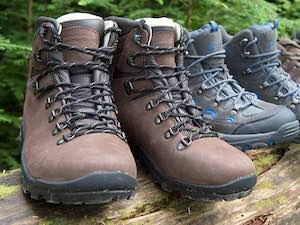
This is the typical type of boot you’re looking at, with an over the ankle protection. This is another classic case of trying some boots on to get the feel of what they are like and cost etc.. against the usage (a one-off or multiple use).



Like boots and sleeping bags, if you are going to use them time and time again, treat them as investments (in you!) and get the best you can. Daypacks need to be comfortable and ‘fit for purpose’.
Read our comprehensive article on how to choose a daypack, what ‘fit for purpose’ means, what to consider (including capacity), and links to the main manufacturers, as well as whether it may be better to hire.
Which one? What temperature rating? Synthetic or down? Buy or hire?
Whatever it is, it’s got to do its job and that is to keep you warm at night. Let’s be clear, sleeping bags do not produce heat, you do. A sleeping bag’s job is to retain your body heat so it’s all about what that bag is made of and its design.
Sleeping bags are measured in temperature ratings these days so look for the ‘comfort rating’ (see below for what this means). For Kilimanjaro, we recommend a sleeping bag with a rating of at least -10°C. This figure is subjective as you can always wear wooly hats (huge effect) and fleeces inside your bag to help the process.
Pay attention to the ‘fit’. As bizarre as that may sound, bags do come in various lengths and also to fit females (shaped differently). You don’t want a bag to be too snug (claustrophobic) as that warm air you are producing needs to circulate. We all like a bit of wiggle room and it’s useful to be able to store some stuff!
Tip … experienced trekkers will routinely store all sorts of stuff in their sleeping bags overnight (some bags have pockets). Examples are head torches (keep it handy), camera batteries in a bag (prevents deterioration) and socks (warm for the morning)!
Synthetic bags are cheaper, easier to maintain (wash) and more robust when it comes to different conditions. But they are bulkier and heavier.
Down bags are more expensive and need more care (don’t get them wet). But they are lighter, more compact.
Buy or hire? This very much depends on whether your trek is a ‘one off’ or you intend to use it again. You can hire really good, professionally laundered sleeping bags from trek hire companies if you don’t wish to buy something you may not use again. You can buy sleeping bags in Nepal too, good enough for most treks and cheaper than hiring in UK. You can also hire the bags in Nepal, they will be new, not used and washed.
Head for the big stores like Cotswold Outdoors, Go Outdoors, etc… to see for yourself the array of bags and how they feel. Armed with the information you need, start to narrow down your search. Do some homework….
Go Outdoors – sleeping bag guide.
Cotswold Outdoors – sleeping bag guide.
Temperature Ratings – There is a European Standard to be able to compare sleeping bag performances and sleeping bags will have a label inside them:
- Comfort — the temperature at which a standard female can expect to sleep comfortably in a relaxed position.
- Lower Limit — the temperature at which a standard male can sleep for eight hours in a curled position without waking.
- Extreme — the minimum temperature at which a standard female can remain for six hours without risk of death from hypothermia (though frostbite is still possible).
Head torches are extremely useful, almost essential in any environment where no electricity is available such as camping. Essentially, it gives you hands-free lighting to where your eyes go; exactly what you want. Night time reading, sorting stuff out, toilets, you name it, you’ll need a head torch. You can get really good, powerful head torches these days quite cheaply. They often use LED’s so no chance of breaking bulbs.
Make sure it’s comfortable on your head, you know what batteries are used (take spares) and how long they last. Head torches come in a vast array of designs, colours and have varying levels of facilities.
You Cannot Afford To Travel Without Travel Insurance – Simple
It is a condition of joining any Travel and Trek Limited trip that you have adequate and valid travel insurance for the full duration of your trip to cover the cost of medical treatment, cancellation and curtailment, and the activities included in our holidays (including the maximum altitude on treks).
We strongly advise that you take out your travel insurance as soon as your booking is confirmed to provide you with cancellation cover should you be prevented from taking part between then and departure.
Travel insurance should be considered an integral part of your trip costs. Accidents can happen to anyone at any time.
Take a look at some of our personal experience case studies.
TIP! As soon as you book any trip, investigate, decide and buy your travel insurance.
Why? Even half decent policies will cover you for cancellation of your trip from the date of purchase, not just the period of your cover.
To be adequate, your policy MUST cover you for:
- Medical emergencies including rescue and repatriation to UK.
- All activities you will be undertaking.
Some advice…
- Missed departure – make sure this section covers the cost of a one way flight home. If it doesn’t, consider increasing it, using a policy that does or be prepared to pay the extra!
- Most travel insurance companies use a ‘pay and claim’ system. Carry a credit card with adequate funding capacity for emergencies.
- If you need to claim – call your insurance company immediately (or as soon as possible; don’t delay). They will give you advice. Check phone calls are a claimable cost. Keep all paperwork and receipts related to the claim, take photos if appropriate, videos/images of delayed flight information, etc…you are highly likely to need them to support any claim.
- Purchase your insurance policy as soon as you can after booking a trip. Policies should cover you for cancellation of your trip prior to departure due to injury or illness.
- Travelling more than once in a year? Consider an annual policy; usually cheaper.
- Check policies you may have with banks or building societies; some are not geared for adventure travel.
Here are some companies that some of our previous clients have used before and found their cover to be adequate for their needs. Make sure that you check the policies yourself for what YOU want it for:
True Traveller
Easy site to use, set up by travellers and a good place to start.
Add sections onto the policy, step by step, and see the premium change as you do.
Adventure Pack and Extreme Adventure Pack cover just about anything you need for our trips.
The annual multi-trip policy is excellent value; worth a look if you’re likely to travel twice in a 12-month period.
You don’t have to be a Doctor or medical professional to be well prepared medically for an adventure.
Nothing will spoil your trip more than having health problems. With just a little thought about what might happen and together with knowledge of your own body, it should be sufficient for you to prepare a decent personal First Aid kit.
Quick checklist:
- Adequate travel insurance
- A personal First Aid kit (see below)
- Up to date and appropriate vaccinations for your trip (see below).
- A dental check up prior to travel.
Food hygiene standards in third-world countries are less than what you are used to; a change of bowel movement is likely! The question is, to what degree? Travellers’ diarrhoea is very common so be ready for it! Read more about traveller’s diarrhoea.
Vaccinations
Make sure you’re up to date with both the UK citizen childhood NHS vaccination schedule and what you are recommended to have for your destination. Some travel vaccinations can be obtained on the NHS FREE of charge, while others will be chargeable.
There are no vaccines for Malaria; just tablets. Seek advice as what is prescribed very much depends on where you are going (and in some cases the region of that country). Preventative medicine for Malaria is constantly changing.
The following websites are excellent references to ascertain or confirm, what is recommended for each country.
Travel Health Pro – All things travel health
Travel Doctor Vaccines (UK)
Personal First Aid Kit
This is a suggested list of what you might consider carrying. It is not exhaustive. Build your own by adapting it to your own wishes/needs.
- Zovirax, cold sores
- Lip balm, preferably sun protective
- Steristrips
- Crepe bandage
- Vaseline
- Safety pins
- Cold/Flu capsules
- Imodium, diarrhoea
- Strepsils or similar, throats
- Ibuprofen, pain inflammation
- Paracetamol, pain killer/headache
- Asprin, sore throat/various
- Dioralyte, dehydration
- Gaviscon, indigestion
- Insect repellent
- Zinc oxide tape, for blisters
- Compede, for blisters
- Melonin Pads for injuries
- Diamox, related to high altitude (see High Altitude tab)
Trekking to high altitudes is hugely rewarding.
But do it responsibly – know the risks, signs and symptoms of AMS
If conducted responsibly, there is absolutely no reason why anyone should not trek safely to destinations such as Everest Base Camp, Kilimanjaro and numerous trekking peaks over 6000m. By responsibly, we mean knowing what to expect, how it will/can affect you and what to do if it does. By doing so, you could also save someone else’s life. Make sure your travel insurance covers you for the max altitude you will trek to.
Rest assure that our high altitude treks are tried and tested and you may already be asking yourself the question about whether you can pre-acclimatise or train for it?
What are the effects of altitude?
When you ascend to altitude for a sustained period of time, your body undergoes some physiological changes. Feeling fatigued, headaches, breathlessness, vivid dreams, sleeping badly, a loss of appetite (and possible nausea) and a change of bowel movement are all common experiences. These are the common symptoms of Acute Mountain Sickness (AMS). Whilst these symptoms are not life-threatening, they should be treated as early warning signs.
If you continue to ascend with the symptoms, there is a real risk that it will progress to either High Altitude Cerebral Oedema (HACE) or High Altitude Pulmonary Oedema (HAPE). Both are considered emergencies and any further delay in treatment could be fatal.
The most effective treatment (and probably quickest) is to descend. Rapid recovery is often experienced by descending just a few hundred metres in altitude.
Stay hydrated, and drink lots.
What is AMS?
Acute Mountain Sickness (AMS) is the term given to the early warning signs (symptoms) that are likely to occur to someone who is ascending without having fully acclimatised: in short, ascending too fast. AMS can strike anyone regardless of age, gender, fitness or experience. No one is immune, not even those that were born and live/work at higher elevations such as the porters who work in the Everest region.
If ignored, it can lead to more serious, often fatal, issues.
Can I pre-acclimatise, or train for altitude?
It is possible (in a fashion) but given that a decent acclimatisation programme should suffice, it is questionable whether the time and money spent are worth it.
You can use a mask or chamber to experience a reduced oxygen level but all it proves is that it is more difficult to breathe with less oxygen! What it can’t do (in a single day at least) is replicate the effects of being at altitude for a number of consecutive days and that is far more important and significant. See more detail about why.
What’s acclimatisation?
Acclimatisation is the process of allowing the body to get accustomed to the thinner air. Everyone can acclimatise although some people take longer than others. The vast majority of people acclimatise well on tried and tested acclimatisation programmes. You won’t know until you do it.
In general, once you get over 3000m, you should adhere to general mountaineering guidelines for a safe ascent. Ascend no more than 300m higher than the previous night’s sleeping altitude. You can ascend higher during the day (ie going over a high pass) as long as the net gain is no more than 300m. Every 3rd day, rest (go no higher). The shape of mountain terrain will not allow these guidelines to be met exactly (or sometimes even close), so manage it as best you can.
All of our itineraries that involve high altitude have acclimatisation programmes built into them, often more or ‘spare’ days.
Diamox (Acetazolamide)
Diamox is a well-known drug within the mountaineering/trekking fraternity to aid acclimatisation. It can be prescribed by your GP (be aware some GPs won’t do this) or Travel Clinic. It can be used to aid prevention or as a cure (but it’s not guaranteed to do so). It does have side effects (intense temporary pins and needles is the prime one) but affects different people in different ways. The Travel Doctor’s webpage is a good source of information to decide if it is for you.
HACE and HAPE
HACE and HAPE are the next stages beyond AMS (if left untreated and you continue to ascend) and both can kill.
HACE (High Altitude Cerebral Oedema). The brain needs a good supply of oxygen and high altitude reduces that supply. If the symptoms of AMS are ignored and you continue to ascend, additional symptoms may appear:
Symptoms – Severe headache, clumsiness, confusion, vomiting and a change of behaviour (mood swings) are classic examples.
If these symptoms are ignored, it could rapidly lead to a loss of consciousness, reduced breathing and death.
HAPE (High Altitude Pulmonary Oedema). As the body adapts to a quicker and deeper style of breathing, changes occur in the blood. Fluid may collect in the lungs as a result, causing HAPE. Symptoms include:
Symptoms – Shortness of breath, fatigued, coughing (with blood in the spit).
If these symptoms are ignored, it could rapidly lead to breathing stopping and death.
In serious cases, death can follow within a matter of hours. Do not delay … descend, descend, descend.
Essential reading: Travel and High Altitude and Medex – travelling at high altitude.
Trek Itineraries
Our itineraries all have built-in tried and tested acclimatisation programmes that will not be broken (shortened). They conform to the internationally recognised guidelines for a safe ascent. Some trekking days may appear short when ascending. This is purely to stay within safe ascent guidelines.
Common Sense
Experiences at high altitudes vary enormously. It is not an exact science and everyone is different. Guidelines are there to help you avoid putting yourself (and others) in danger. Summit Fever is a strong emotion but remember, the mountain will always be there. You may not if you continue to ascend when your body tells you not to. Common sense should always prevail.
Unbelievably beautiful, wild, and unspoiled.
The arctic environment is beautiful, demanding, extreme, exciting, and a real adventure in wild, remote unspoiled terrain. Our arctic adventures and expeditions are run in northern Norway (Finnmark and Spitsbergen (Svalbard)) and Finland.
As the explorer, Sir Ranulph Fiennes once said ‘there is no bad weather; only inappropriate clothing‘. People fear the arctic simply because of the cold temperatures. Perhaps their real fear is that they would be ill-equipped.
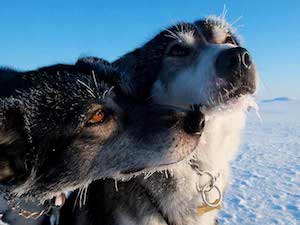
If you have ever thought of heading for the North or South Pole, try our Arctic adventures to see if it’s for you. At 7-10 days long on the snow, they immerse you in this white wild space at a fraction of the cost! One of life’s experiences.
Finland – is our home to snowshoeing, long-distance cross-country ski touring, some mixed activity adventures, and some wilderness expeditions. Most take place on the east Finnish border and use wilderness huts for accommodation on a nightly basis. The wilderness expeditions take place in east Lapland, some 200km inside the arctic circle.
Terry Crosby (founder of Travel and Trek) is a former Arctic Survival Instructor, trained in Norway.

Travel Safety
The safety of our clients and staff is paramount and at the heart of everything we do. We live in an ever changing world and when in unfamiliar surrounding, we are perhaps at our most vulnerable.
In addition to the UK’s FCDO’s travel advice, we work closely with our country partners, continually monitoring and assessing potential threats or dangers that may affect our trips.
We will do all we can to keep you safe. We have the flexibility to adjust itineraries where necessary.
If you have any questions, call Terry on 07725 943108.
“Of all the paths you take in life, make sure a few of them are dirt.”
John Muir
General Information
Product specific information can be found on the relevant webpage.
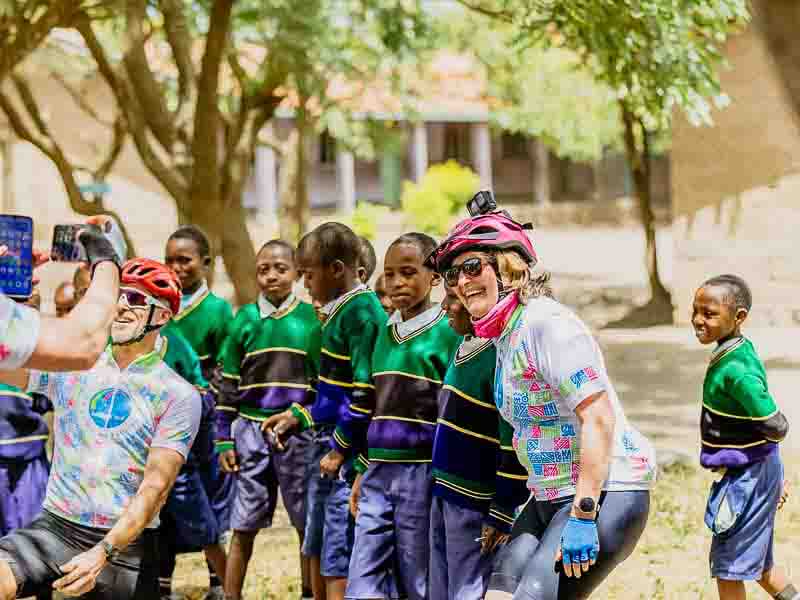
Charity Challenges – This Is How It Works
The steps described assumes that you know how you are going to fund your challenge. If you’re not sure, read the information contained within the tab entitled ‘How to pay for my Challenge’.
Fundraising Options Explained
The 3 fundraising options are described here. If you still unsure of how it applies to you, call Terry on 07725 943108.
Fundraising Tips and Guidelines
The thought of raising your minimum sponsorship level can often be daunting. But by planning ahead and using a little imagination, the fundraising can be as rewarding and enjoyable as the challenge itself.
Charities are the experts in this field, they are there to give you loads of ideas, support and advice. Ensure you speak to them regarding the legalities of things like holding raffles, using collection tins, accounting, and sponsorship forms.
Here are some of our tips to get you started.
You may find the following two articles of some use. They open up another webpage on our website:
Frequently Asked Questions
If you have a question that you can’t find the answer to on our website, call Terry on 07725 943108.
The $64,000 question.
Fitness is very subjective and the level of fitness required for each of our adventures will clearly vary. But the perception that you need to be super fit, or a marathon runner to reach Everest Base Camp, for example, is simply not true.
In my own experience, much of it is in the mind. Fear of the unknown is perhaps your biggest enemy! If you want to do something enough, then you can do it, provided it’s realistic! And many of the challenges you will face are not necessarily physical.
This is my rule of thumb … if you can go out hill walking in one of our National Parks (Lake District or the Peaks for example) covering around 6 hrs over undulating terrain, carrying a daysack weighing about 6kg and do it all again next day without undue discomfort, then you should be perfectly capable of completing the vast majority of our treks, including Base Camp and Kilimanjaro.
That is not to say you should not conduct any training prior to departure. Regular training in the months before departure is key to good physical condition, which should see you through most adventures. Training should always be geared to precisely what you are going to face if you can. If you’re on a cycle challenge, then train on a bike! If you’re going to climb Kilimanjaro, train for endurance and climb hills.
Be bold, be confident, challenge yourself for it is better to try than not to try at all. There is no failure to challenges, you keep learning.
Should anyone wish to discuss the suitability of any of our trips for their personal circumstances, then please call Terry on 07725 943108. In 2016, we planned and facilitated a wheelchair bound lady to undertake the Sahara Trek.
We will always focus on capability, rather than disability.
The vast majority of our family adventures are organised on a tailor-made basis (just for you) to allow for complete flexibility and enjoyment. Your guide will be constantly aware of how your family is coping and be in a position to adapt and adjust as you go. The key is to always engage with your guide, the more he knows, the more he can help.
The simple answer is yes. In most cases we can run trips with just one person but costs for a trip with just 1 person on it will always be higher. Our advertised prices are generally based on 2 people sharing.
If you are travelling alone but join others on the main trip (eg. a trek), then there is no reason why you cannot adjust either the front end or the back end of the trip (or both), once the trek is complete.
Not necessarily.
The key to any tailor-made or bespoke trip is the level of additional services added. If, as a couple for example, you embark on an Everest Base Camp trek, and all you do is add an additional night in a hotel on the back end of the trip, then the only additional payment is for the hotel. There are no ‘extra’ admin payments just because it’s tailor-made.
In general terms, we can create a trip, specifically to your requirements, at a cost that compares to group prices. We will happily put together an itinerary and a cost for you to consider without any obligation.
As we are a small independent, privately owned, tour operator, we do not have large overheads. We can, therefore, keep our costs down. This allows us to offer our adventures (with a min of 2 people) at costs which you would normally associate with large groups.
Joining the tour
When you purchase a tour on a Land Only basis, the responsibility of reaching the start point of the tour is yours. In the vast majority of cases, the start point of the tour will either be the arrival airport, or the first night’s accommodation. Either way, this will be stated within the trip information and further detailed information (including meeting times with the guide) will be contained in the final details sent to you a couple of weeks prior to departure.
Transfers
If your trip does not include transfers from the airport to the first night’s accommodation we can arrange transfers for you for a minimal charge. You must request this at least 14 days in advance and provide us with your flight arrival details.
Baggage allowance
If your trip includes either porters to carry your bags or domestic flights, these may have a lower baggage allowance than your international airline; this is mentioned in the trip notes if applicable and will be confirmed in your final documentation.
You can find details of all payment methods on our booking webpage using this link – how to make a payment to Travel and Trek Limited
If the links fail, please contact us by phone, 01529 488159 or 07725 943108 and we will assist you.
Please follow this link to our Booking Conditions.
If you wish to transfer your booking to a different traveller, you should contact us as soon as possible and no later than 7 days before your departure. There is a charge for the change, set out in Section 8 of our Terms. In addition, any costs incurred as a result of the change would also be charged. For example, if the original booker was male and the new traveller female, it may change the accommodation configuration and subsequently the costs to us. Both you and the new traveller are responsible for paying all the costs we incur in making the transfer. Please bear in mind that certain airlines (if some domestic flights are included) and other transport providers treat changes as a cancellation and charge accordingly, up to 100% of the cost for that part of the arrangement. Where applicable these charges will be passed on to you. You will be made aware of all of the costs involved prior to any change being made so that you can make an informed decision on whether to go ahead with the change or not.
If you need to cancel your booking, please let us know as soon as possible, in writing (an email is acceptable). Please refer to the booking conditions with regards to any cancellation charges that may apply.
If you wish to make any changes to your booking, please let us know as soon as possible. Assuming the change is possible, charges may apply depending on the nature of the change.


