Still one of the world’s
toughest trekking ascents

Kilimanjaro

Kilimanjaro is the world’s highest free-standing mountain at 5895m (19,340 feet).
It requires no technical climbing skills and therefore remains a genuine trekking challenge for anyone to reach its lofty summit.

Which Route and When to go

Quick links:  Lemosho  |  Rongai  |  Machame  | Northern Circuit

Which Route?

Acclimatisation is KEY on Kilimanjaro.
We only operate 4 routes due to acclimatisation issues. Note the number of days reflects the trek, not the overall trip length.

Lemosho (8 days/7 nights) – our favorite, preferred, and recommended. Good acclimatisation, high success rate. One of the longer routes, very pretty, good varied scenery. Approaches from the west.

Rongai (7 days/6 nights) – approaches from the north, receives little rain and is therefore barren. But it has very few people on it.

Machame (7 days/6 nights) – a popular route with a very steep start.

Northern Circuit (9 days/8 nights) – uses the Rongai route to begin with and tracks anti-clockwise to join the southern circuit which has the Lemosho and Machame routes on it. Given its length, it is excellent for acclimatisation.

Fridge Man (Mike Copeland) – as the first person to summit Kilimanjaro with a fridge on his back, we are proud to have been the supporting act behind him. Read Fridge Man’s story.

Private or Group?

We offer a 2-pax guaranteed departure, at no extra cost.
Read the pro’s and Cons of going private or with a group in our article.

When To Go?

In general terms:

Very GoodJan, Feb, Sep (recommended months)
GoodJun, Jul, Aug, Oct
Short rainy seasonNov to early Dec
Long rainy season*End of Mar - early Jun
*This period (long rainy season) is suitable for the Rongai route. This route lies on the north side of the mountain, which receives very little rain (rain shadow).

No one can control the weather! Given climate change, Kilimanjaro’s weather is less predictable now than ever before. Regardless of when you go, there will always be a compromise with something. For example, in late Jul and Aug the routes are likely to be busier due to school groups (usually large).

Frequently Asked Questions

Pricing

The cost of any trip inside Kilimanjaro’s National Park is directly related to the number of days spent inside the Park. The numerous daily fees mount up, so they are high. It explains why so many people use the shorter routes (5 nights or less) because they are cheaper. But with the shorter trips come the dangers of a shorter acclimatisation period.

The risks of using the cheaper, shorter routes are huge. The altitude of Kilimanjaro is enough to kill. The Tanzanian Govt does not release figures for the deaths on the mountain. Virtually all of them are due to altitude-related issues caused by a lack of sufficient acclimatisation. The simple message is to use the longer routes.

Toilets – the long drop toilets (contained within buildings) provided by the National park we consider sub-standard, and therefore provide a private portable toilet on every trip as standard.

All of our Kilimanjaro treks are  available as a Charity Challenge

Tailor Made – Choose Your Own Departure Dates

Flexible as it can be …

  • Choose your own departure date, and who you go with!
  • Advertised prices are for a minimum group size of 2 people.
  • You can go as a couple, a pre-formed group, or even solo (with our full support, please ask for a price).
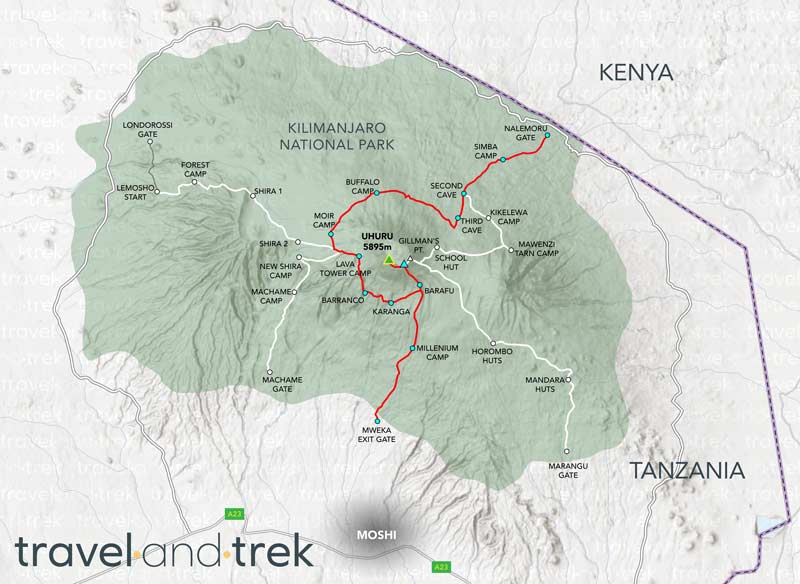
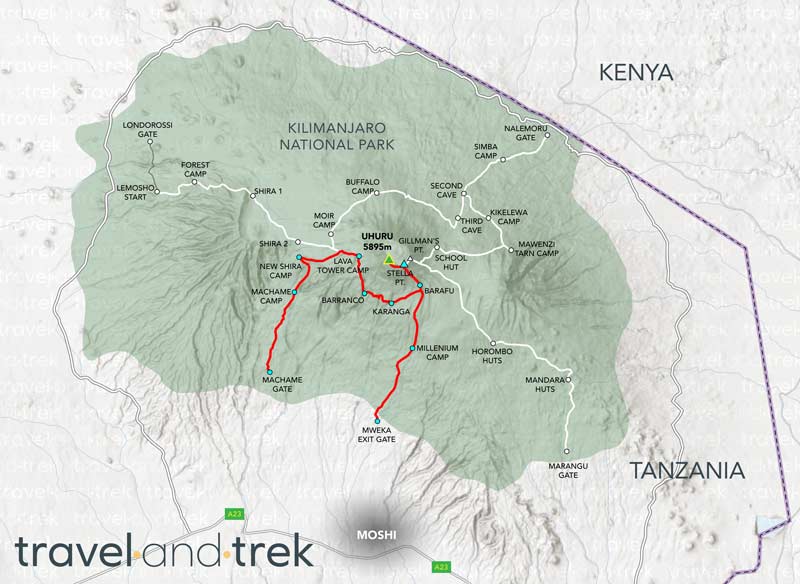
Kilimanjaro 4 Routes Map

Our Kilimanjaro Routes

Lemosho Trek

Lemosho: 8 days/7 nights
Price from £2595
per person
____________

Deposit £400

Balance due 8 weeks prior to departure

Single room option: £220

____________

Flexible departure dates

Ask a question, or call Terry: 07725 943108

The Lemosho route has a high summit success rate and is highly recommended. It is our No 1 route. It is an 8-day/7-night trek spending 4 nights in the acclimatisation zone and is, therefore, an excellent option.

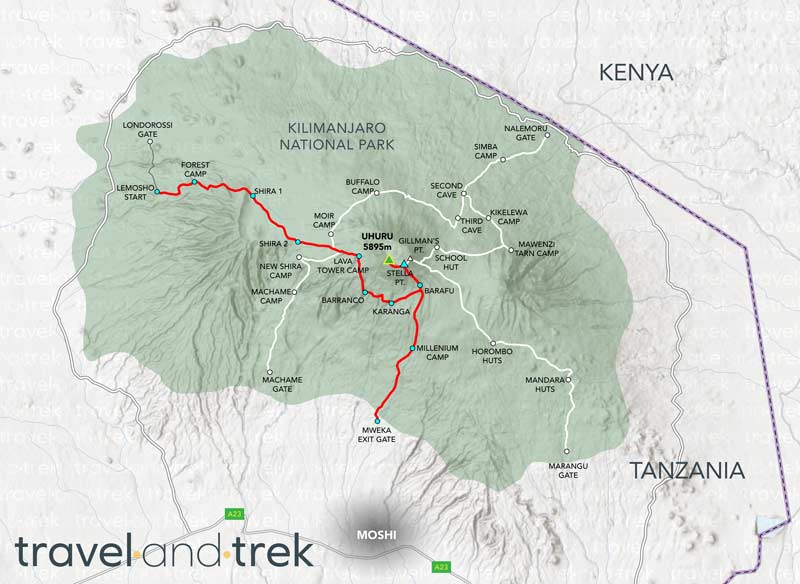
Approaching from the west side, it ascends through the rainforest, and high bushland before emerging onto the vast Shira Plateau. It is considered the prettiest route on the mountain. It is along this southern circuit of the mountain that you encounter the unmistakable Lava Tower and the infamous Barranco Wall. Our experienced team will take care of you and get you ready for summit night.

Worth a read – the reality of the summit night.

Go to the Trek Notes for Tanzania.

Group DatesLand Only
17 - 26 Jun 2026£2595
2 - 11 Sep 2026£2595
30 Sep - 10 Oct 2026£2595
14 - 23 Jan 2027£2695
22 - 31 Jan 2027£2695
4 - 13 Feb 2027£2695
2 - 11 Jun 2027£2695

Prices based on a min group size of 2 people.
Different dates? – Choose your own departure dates if those you see are not suitable.
View Inclusions/exclusions

Frequently Asked Questions

Climbing Kilimanjaro, Lemosho Trek, Brief Itinerary

  • 1. Arrive Tanzania
  • 2. Moshi – Londorossi Park Gate (2100m) – Forest Camp (2800m)
  • 3. Forest Camp – Shira One (3500m)
  • 4. Shira One – Shira Two (3900m)
  • 5. Shira Two – Barranco (3950m), via the Lava Tower (4590m)
  • 6. Barranco – Karanga (4050m)
  • 7. Karanga – Barafu (4650m)
  • 8. Barafu – summit (5895m) – Millenium Camp
  • 9. Millenium Camp – Mweka Gate – Hotel
  • 10. Depart

Climbing Kilimanjaro, Lemosho, Full Itinerary

Day 1. Arrive Tanzania
On arrival, the group will be collected by our staff and transferred to the lodge. The guide will be there to brief the group on the timings for tomorrow and offer any further assistance. The remainder of the day is free to settle in and prepare for the trek the following day. Our friendly hotel staff is on hand to provide any advice or assistance.

Day 2. Moshi – Londorossi Park Gate (2100m) – Forest Camp (2800m)
After breakfast, the group will be transferred to the Londorossi Gate (approx 2 hrs drive) on the west side of Kilimanjaro.
After completing the necessary paperwork at the gate (compulsory), and the support crew have distributed the loads, this fantastic Lemosho trek can begin. It’ll take about 2 – 3 hrs of trekking through the dense rainforest to reach Forest Camp, the first night’s stop. BLD

Day 3. Forest Camp – Shira One (3500m)
As the Lemosho trek progresses through the rainforest, keep an eye out for the monkeys! With the rainforest is left behind, the trek continues upward through a high moor with some interesting flora and fauna. The altitude is already beginning to get to a significant level as the second night stop at Shira Camp approaches. There are great views towards Mt Meru. 4 – 5 hrs, BLD

Day 4. Shira One – Shira Two (3900m)
This is a great day to demonstrate the history of this area and to see how vast Kilimanjaro National Park is. We take a diversion trek via the Cathedral Rock formation across the wide Shira Plateau with glorious views to Mt. Meru and Kibo. The Shira Plateau is a relict of a gigantic volcano and the oldest of the three volcanos of the Kilimanjaro Massive. 6hrs, BLD

Day 5. Shira Two – Barranco (3950m), via the Lava Tower (4590m)
A good acclimatisation day as the group ascends to the well-known Lava Tower for lunch (4590m, approx 4 hrs of trekking). There are some excellent views of the route behind. The second half of the day is a descent back down to 3950m (Barranco campsite). Right in front of the campsite is the wonderful Barranco Wall, the first thing to be ascended in the morning. 6 hrs, BLD

Day 6. Barranco – Karanga (4050m)
This is another trek high, sleep low day with the first 60-90 minutes ascending the Barranco wall. Enjoy the expansive views from on top of the Wall. After a short break, the trek continues, descending into the Karanga Valley until the night stop is reached. It is a relatively short day but all geared to acclimatisation. Never be tempted to skip this day and move on to Barafu. 3 – 4 hrs, BLD

Day 7. Karanga – Barafu (4650m)
Another short day but a very important one. The ascent to Barafu should be taken slowly and on arrival, take the time to rest, drink and take an early dinner in preparation for the overnight ascent to the summit. Ensure that all of your clothing and equipment are ready for the climb; snacks, water, torch, batteries, etc… Check, check, and check again. 3 hrs, BLD

Day 8. Barafu – summit (5895m) – Millenium Camp
Summit day; this is the day that you have been waiting for!

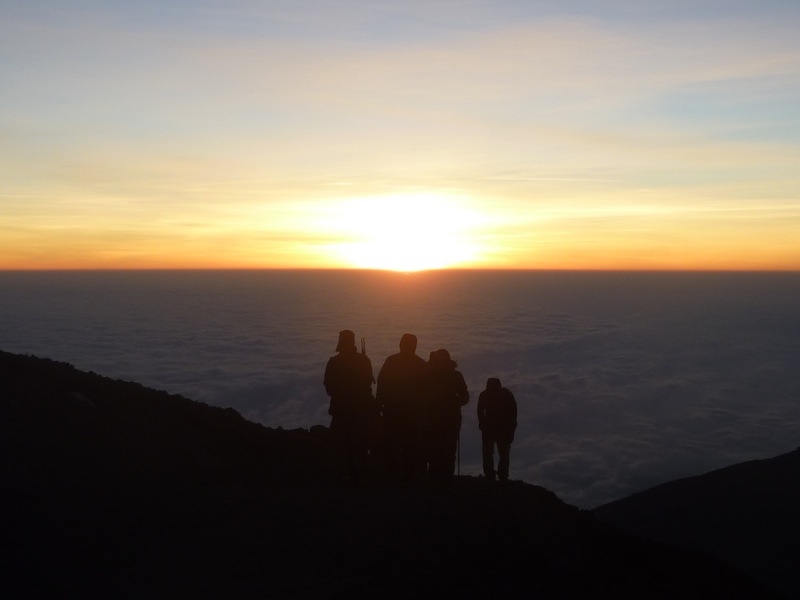
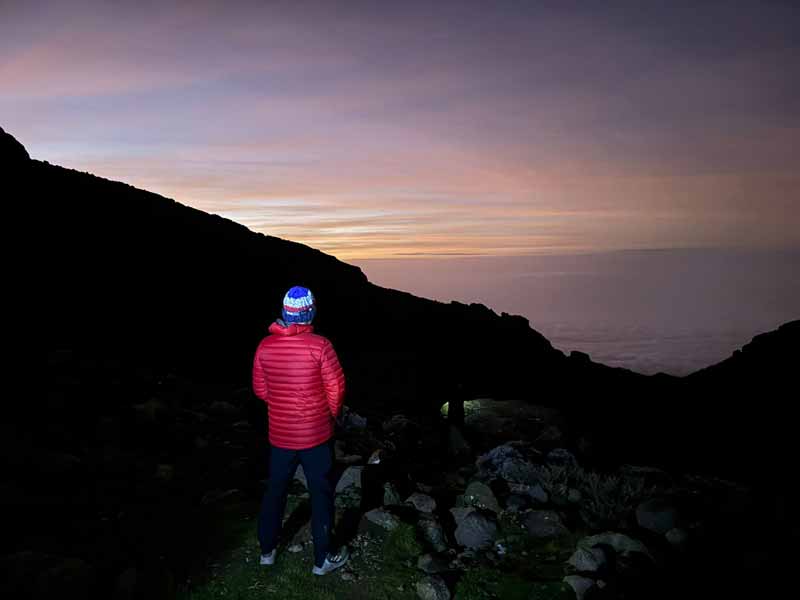
At approx midnight the ascent will begin. It will be cold and dark. There is likely to be lots of lights visible ahead and behind. It is not a race, take time to get into the climb. The initial target is Stella Point (5730m). With the temperatures so low, the underfoot conditions will initially be fairly solid, but this will soften as the Stella Point approaches. The summit (Uhuru) is just another 40 mins away from Stella Point, passing the Rebnamm glacier. The aim is to reach the summit by sunrise.

Once at the summit, enjoy the view, enjoy the moment for just then, there is no human on the African Continent standing higher than you! The descent is much faster and in daylight, it will become obvious why. The upper reaches of the mountain are made of soft volcanic ash, perfect for scree running! Once the group has descended to Barafu, rest a little, eat, drink, and then continue the long descent to Millenium Camp. Depending on how the group feels, it is possible to extend the additional 3-4km to Mweka Camp thus making the final trek out shorter. Total trek time today is up to 15 hrs with a 1300m ascent. BLD

Day 9. Millenium Camp – Mweka Gate – Hotel
From here, it will take 4 – 5 hrs to trek the 13-14km down into the rainforest and to the exit of the park at the Mweka Gate. It is here that the certificates are presented. The transport will be waiting to take the group to the Lodge for a well-earned rest and shower. BL

Day 10. Depart, B

This table is based on a trek price of £2695 per person.

Funding MethodRegistration FeeFinal BalanceFundraising Target
Self Fund£395£2300No formal Target
Flexi Fund£395£800£3000
Min Sponsorship£395Paid by charity£4600

Need a full explanation of the 3 fundraising options?
Go to our How Charity Challenges Work section (opens up a new page).

Ask a question, or call Terry: 07725 943108

Map Lemosho route Kilimanjaro
Dawn breaking on Kilimanjaro
Uhuru, the summit of Kilimanjaro

Rongai Trek

Rongai: 8 days/7 nights
Price from £2295
per person
____________

Deposit £400

Balance due 8 weeks prior to departure

Single room option: £220
____________

Flexible departure dates

Ask a question, or call Terry: 07725 943108

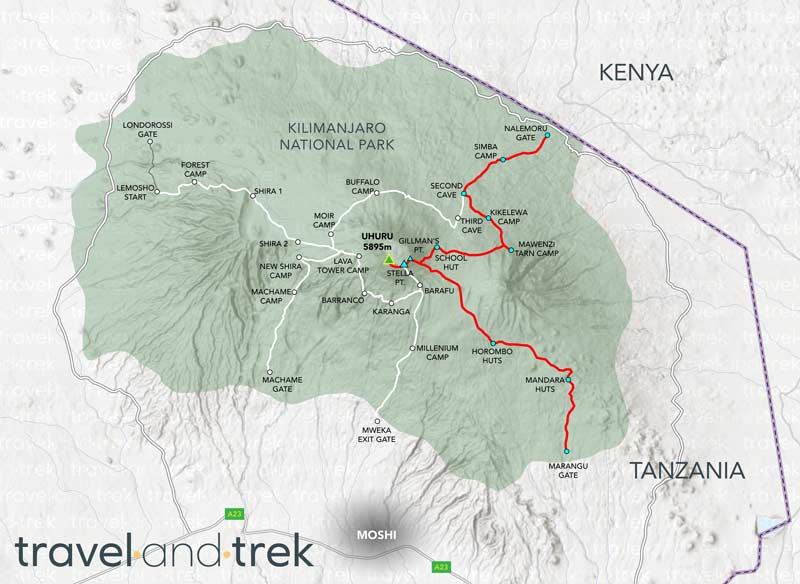
The Rongai route is the least frequented route and the only route that comes in from the northern side, close to the Kenyan border. It is popular during the rainy season, as the northern slopes tend to be drier. It is a 7-day/6-night trek spending 3 nights in the acclimatisation zone and is therefore a decent route option.

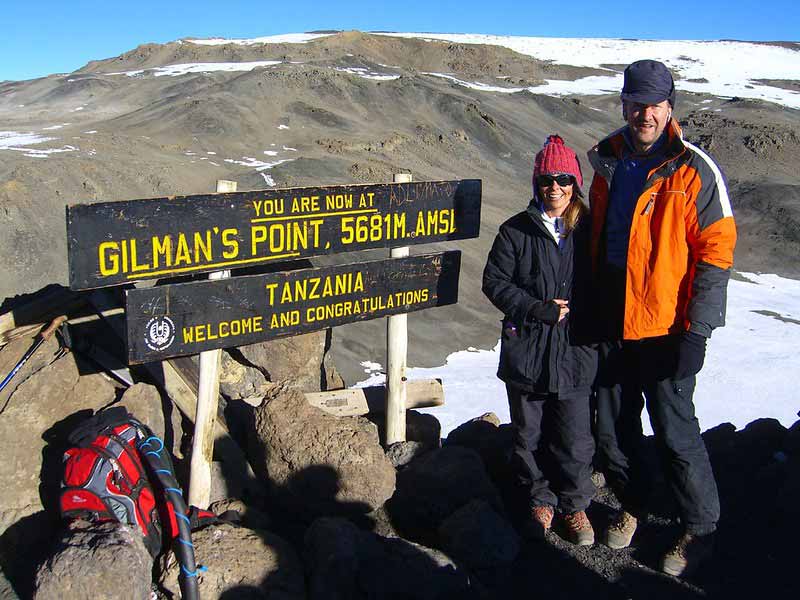
The Rongai is certainly different from the other approaches. With less rainfall, the terrain is more barren and therefore potentially less interesting, at least to begin with. Conversely, as the terrain rises, so the views northwards into Kenya over the Amboseli Plains become increasingly spectacular. The route goes via the Mawenzi Tarn Hut and also accesses the crater rim at the less frequented Gilman’s Point. It exits using the Marangu route.

The Rongai is perfect for the spring months and has a less physically demanding approach. It avoids the daunting and vertigo-inducing Barranco Wall.

Go to the Trek Notes for Tanzania.

Group DatesLand Only
3 - 11 Sep 2026£2295
15 - 23 Jan 2027£2395
5 - 13 Feb 2027£2395
26 Feb - 6 Mar 2027£2395
5 - 13 Mar 2027£2395
2 - 10 Apr 2027£2395
30 Apr - 8 May 2027£2395
4 - 12 Jun 2027£2395
1 - 9 Jul 2027£2395

Prices based on a min group size of 2 people.
Different dates? – Choose your own departure dates if those you see are not suitable.
View Inclusions/exclusions

Frequently Asked Questions

BRIEF Itinerary, Climbing Kilimanjaro, Rongai Route

  • 1. Arrive Tanzania
  • 2. Drive to Nalemoru (1990m) – Simba Camp (2625m)
  • 3. Simba Camp – 2nd Cave (3480m)
  • 4. 2nd Cave – Kikelewa Camp (3630m)
  • 5. Kielewa Camp – Mawenzi Tarn Hut (4310m)
  • 6. Mawenzi Tarn Hut – Kibo Hut (4700m)
  • 7. Kibo Hut – Uhuru Peak (Summit, 5895m) – Horombo Hut (3700m)
  • 8. Horombo Hut – Marangu Gate (1860m), transfer to Lodge
  • 9. Depart

FULL Itinerary, Climbing Kilimanjaro, Rongai Route

Day 1. Arrive Tanzania
On arrival, the group will be collected by our staff and transferred to the lodge. The guide will be there to brief the group on the timings for tomorrow and offer any further assistance. The remainder of the day is free to settle in and prepare for the trek the following day. Our friendly hotel staff is on hand to provide any advice or assistance.

Day 2. Drive to Nalemoru Gate (1990m) – Trek to Simba Camp (2625m)
This morning we will drive to the village of Nalemoru for the starting point of the Rongai route. The first stage of the trek is through farmland and pine forests. You may have chance to see the beautiful Colobus monkeys or if you’re lucky enough, elephants or buffalos en route. Our first camp will be the Simba Camp located at the edge of the moorland zone at 2625m. 8km, 4 – 5 hrs BLD

Day 3. Simba Camp (2625m) to 2nd Cave (3480m)
The morning hike is a steady ascent up to the Second Cave located in the moorland zone with superb views of Kibo and the Eastern ice fields on the crater rim. 5km, 3 – 4 hrs, LD

Day 4. 2nd Cave (3480m) to Kikelewa Camp (3630m)
Leaving the pine forest behind we carry on with a steady ascent walking though moorland. There are superb views of the Eastern ice fields on the crater rim of Kibo, the highest of the three volcanoes which form the mountain. We will leave the main trail and strike out across moorland on a smaller path towards the jagged peaks of Mawenzi, the second of Kilimanjaro’s volcanoes. We will set up camp today in the sheltered valley near Kikelewa caves at 3630m. 5km, 3 – 4 hrs BLD

Day 5. Kikelewa Camp (3630m) to Mawenzi Tarn Hut (4310m)
This morning we have a short but steep ascent up grassy slopes which is rewarded by a superb view of the Kenyan plains to the north. We leave vegetation behind shortly before reaching our next camp at Mawenzi Tarn Hut directly below the towering cliffs of Mawenzi. This afternoon you have chance to rest or explore the surrounding area to aid acclimatization. 8km, 4-5hrs BLD

Day 6. Mawenzi Tarn Hut (4310m) to Kibo Hut (4700m)
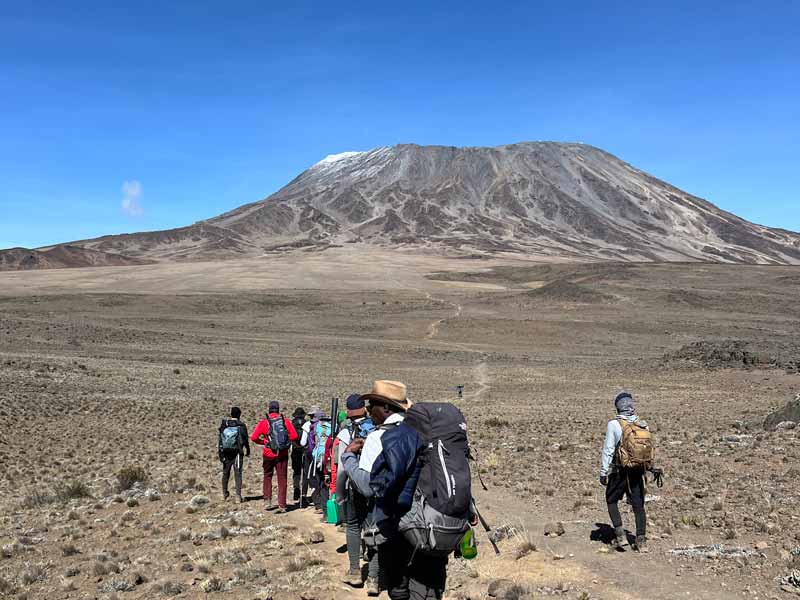
We leave our campsite and cross the lunar desert of the ‘saddle’ between Mawenzi and Kibo After a couple hours trekking, reach this spectacular place, with the summit of Kilimanjaro in the background and our trail to the high camp stretched out before our eyes. Upon reaching our camp the remainder of the day will be spent resting in preparation of the final ascent after a very early night! 8km, 5 – 6 hrs, BLD

Day 7. Kibo Hut (4700m) to UHURU PEAK (5895m) & down to Horombo Hut (3700m)
Today is “The Big Day” – the summit stage. You will begin your final ascent around midnight which will be long and strenuous. Passing the Hans Meyer Cave at 5220m, the climb slowly but surely goes upwards. At sunrise, you will reach Gillman’s Point (5681m) – the crater rim of Kilimanjaro – where the sun will slowly start to warm up the land. You will have soon forgotten the cold of the night and after a further hike of 1 – 2 hours, you will reach Uhuru Peak at 5895m. On your return to Kibo Hut, a warm meal awaits you followed by a 1 – 2-hour break before proceeding back down to Horombo Hut. 22km, 12 – 15 hrs BLD

Day 8. Horombo Hut (3700m) to Marangu Gate (1860m)
The last stage passes through the heath and moor zone to the Mandara Hut (2700m) where a warm lunch is waiting for you. Soon, you will once again pass the tropical rainforest and after a total time of 6 hours trekking, you will be back at the Kilimanjaro National Park Gate (1860m). After saying goodbye to your mountain guides, a short transfer follows to take you back to your hotel in Moshi. Once there, you can take a warm and relaxing shower and celebrate your success in reaching the summit of the Kilimanjaro. 21km, 8 hrs BL

Day 9. Depart
At the appropriate time, you will be transferred to the airport for your flight back to London. B

This table is based on a trek price of £2395 per person.

Funding MethodRegistration FeeFinal BalanceFundraising Target
Self Fund£395£2000No formal Target
Flexi Fund£395£800£2400
Min Sponsorship£395Paid by charity£4000

Need a full explanation of the 3 fundraising options?
Go to our How Charity Challenges Work section (opens up a new page).

Ask a question, or call Terry: 07725 943108

Map of Rongai trek Kilimanjaro
Rongai route Kilimanjaro
Gilmans Point on Rongai route Kilimanjaro

Machame Trek

Machame: 7 days/6 nights
Price from £2295
per person
____________

Deposit £400

Balance due 8 weeks prior to departure

Single room option: £220
____________

Flexible departure dates

Ask a question​, or call Terry: 07725 943108

The Machame route is the most popular, and is a 7-day/6-night trek, spending 3 nights in the acclimatisation zone. It spends 2 nights ascending to the Shira Plateau before joining forces with the Lemosho route on Day 3 at the Lava Tower. With the 3 nights acclimatisation period, it is a decent option, although my only concern is the sharp ascent from the Machame Gate (1800m) to Shira (3800m) in just 2 days. It is a shorter trek than the Lemosho, a cheaper one too.

Approaching from the west side, it ascends through the rainforest, and then high bushland before emerging onto the vast Shira Plateau. It is along this southern circuit of the mountain that you encounter the unmistakable Lava Tower and the infamous Barranco Wall. Our experienced team will take care of you and get you ready for that tough final ascent to the summit.

Go to the Trek Notes for Tanzania.

Group DatesLand Only
5 - 13 Sep 2026£2295
17 - 23 Jan 2027£2395
5 - 13 Feb 2027£2395
3 - 11 Jun 2027£2395

Prices based on a min group size of 2 people.
Different dates? – Choose your own departure dates if those you see are not suitable.
View Inclusions/exclusions

Frequently Asked Questions

BRIEF Itinerary, Climbing Kilimanjaro, Machame Route

  • 1. Arrive Tanzania
  • 2. Drive to the Machame Gate (1800m) – trek to Machame Camp (3010m)
  • 3. Machame Camp – Shira Camp (3850m)
  • 4. Shira Camp – Barranco (3960m)
  • 5. Barranco – Karanga (4050m)
  • 6. Karanga – Barafu (4650m)
  • 7. Barafu – summit (5895m) – Mweke Camp
  • 8. Mweke Camp – Mweka Gate – Hotel
  • 9. Depart

FULL Itinerary, Climbing Kilimanjaro, Machame Route

Day 1. Arrive Tanzania
You will be collected by our staff at the airport and transferred to the Lodge. Your Guide will be there to meet you and brief you on the timings for tomorrow and offer any further assistance. You are then free to settle in and prepare for the trek the following day. Our friendly hotel staff is on hand to provide any advice or assistance.

Day 2. Machame Gate (1800m) – Machame Camp (3010m)
After breakfast at the Lodge, it’s time to board the transport for the short journey to the Kilimanjaro National Park entrance (Machame Gate). There is some necessary paperwork to complete and the equipment will be distributed among the supporting crew.
Then it’s into the rainforest for the 11km trek to Machame Camp. The track is solid but it is still over a 1000m ascent in what will be warm conditions, if not hot. Keep your eyes peeled for the Colobus monkeys. 11km, 5-6 hrs, BLD

Day 3. Machame Camp – Shira Camp (3845m)
Today, there is another respectable ascent. It will not be long before the rainforest is left behind, to be replaced by the moorland of the vast Shira Plateau. The difference between yesterday and today is huge, and the views will come with it. 5.4km, 4-5 hrs, BLD

Day 4. Shira Camp – Barranco (3950m), via the Lava Tower (4590m)
A good acclimatisation day to the easily recognisable Lava Tower for lunch (4590m, approx 4 hrs of trekking). The views are excellent of where the group has come from.
The second half of the day is a descent back down to the night camp of Barranco (3950m). Right in front of the camp is the wonderful vertigo-inducing Barranco Wall. It is the first thing to be climbed in the morning. 10.8km, 6 hrs, BLD

Day 5. Barranco – Karanga (4050m)
What a great start to the day. Ascending the Barranco Wall is an experience, and if you have any form of vertigo, this will certainly surface. It will take about an hour or so to clear the Wall. Be sure to get some photographs on top. After a break, it will be time to get going again, finally descending into the Karanga valley and the night stop. It is a relatively short day but all geared to acclimatisation. Do not be tempted to skip this day and move on to Barafu. 5.5km, 3-4 hrs, BLD

Day 6. Karanga – Barafu (4650m)
This is another short day, but a very important one. The ascent to Barafu should be taken slowly. On arrival, take the time to rest, drink and take an early dinner in preparation for the overnight ascent to the summit. This is about fuelling up. Check that all of your clothing and equipment are ready for the climb; snacks, water, torch, batteries, etc… Check, check, and check again. 3km, 3 hrs, BLD

Day 7. Barafu – summit (5895m) – Mweke Camp
Summit day; the day is here!

At approx midnight the ascent to the summit will begin. It will be cold and dark. You are likely to see lots of lights ahead and behind. It is not a race, take your time to get into the climb. The initial target is Stella Point (5730m). With the temperatures so low, the underfoot conditions will be fairly solid to begin with, but that will become softer as Stella Point approaches. The summit (Uhuru) is just another 40 mins away from Stella Point, passing the Rebnamm glacier. The aim is to reach the summit and witness the sun rising over the earth’s curvature.

Once you get to Uhuru, enjoy the view, enjoy the moment for just then, there is no human on the African Continent standing higher than you! The descent is much faster and in daylight, you will see why. The upper reaches of the mountain are made of soft ash, perfect for scree running! Once the descent is complete back to Barafu, rest a little, eat, drink, and then continue the long descent to Mweke Camp. Total trek time today is up to 14 hrs with a 1300m ascent. 13 – 14 km, 12 – 14 hrs, BLD

Day 8. Mweke – Mweka Gate – Lodge
From here, it’s just a few hours down through the rain forest to exit the park at the Mweka Gate. Certificates are presented here to mark the achievement.
The transport will be waiting to transfer the group back to the Lodge for a hot lunch, and well-earned rest and shower. BL

Day 9. Depart
At the appropriate time, transport will transfer the group to the airport for the return flight home. ed to the airport for your flight back to London. B

This table is based on a trek price of £2395 per person.

Funding MethodRegistration FeeFinal Balance Fundraising Target
Self Fund£395£2000No formal Target
Flexi Fund£395£800£2400
Min Sponsorship£395Paid by charity£4000

Need a full explanation of the 3 fundraising options?
Go to our How Charity Challenges Work section (opens up a new page).

Ask a question, or call Terry: 07725 943108

Map Machame route Kilimanjaro
sundown Kilimanjaro
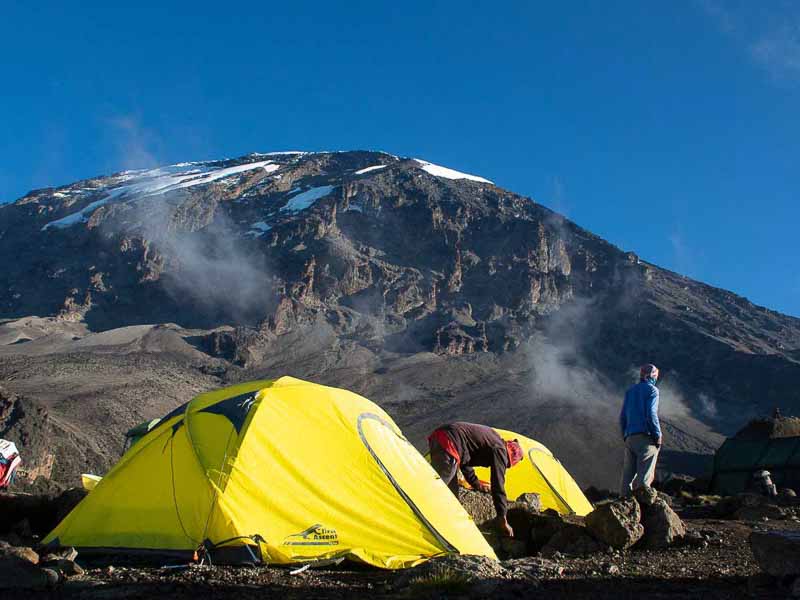
Tent on Kilimanjaro

Northern Circuit Trek

Northern Circuit: 9 days/8 nights
Price from £2695
per person
____________

Deposit £400

Balance due 8 weeks prior to departure

Single room option: £220
____________

Flexible departure dates

Ask a question​, or call Terry: 07725 943108

Kilimanjaro’s Northern Circuit is not only one of, if not the longest route on the mountain but it almost completely circumnavigates it. It begins its journey on the Rongai route, and then uses the northern circuit anti-clockwise to join the southern circuit around the Lava Tower. If you have the time, use this route. It is a 9-day/8-night trek, spending 5 nights in the acclimatisation zone.

This trek has the best of both worlds experiencing the Rongai’s gentle rain-free slopes before entering the more lush terrain of the southern side of Kilimanjaro. The superior acclimatization period allows you to spend the night prior to summiting at Kosovo Camp, closer to the summit than most (who camp at Barafu). Our experienced team will ensure that you are ready for that final ascent to the summit and can always fall back to Barafu should there be any altitude issues.

Go to the Trek Notes for Tanzania.

Group DatesLand Only
1 - 11 Sep 2026£2695
6 - 16 Jan 2027£2795
20 Jan - 30 Jan 2027£2795
1 - 11 Jun 2027£2795

Prices based on a min group size of 2 people.
Different dates? – Choose your own departure dates if those you see are not suitable.
View Inclusions/exclusions

Frequently Asked Questions

Climbing Kilimanjaro, Northern Circuit Trek, Brief Itinerary

  • 1 – Arrive Kilimanjaro International Airport, transfer to Lodge
  • 2 – Transfer to Nalemoru Gate (1950m) – Simba Camp (2670m)
  • 3 – Simba Camp – Rongai Caves 3rd Camp (3800m)
  • 4 – Rongai Caves – Buffalo Camp (4030m)
  • 5 – Buffalo Camp – Moir Hut (4155m)
  • 6 – Moir Hut – Lava Tower (4590m)
  • 7 – Lava Tower – Karanga (4050m)
  • 8 – Karanga – Kosovo Camp (4810m)
  • 9 – Kosovo Camp – summit (5895m) – Millenium Camp
  • 10 – Millenium Camp – Mweka Gate – Hotel
  • 11 – Depart (arriving in London on Day 12)

Climbing Kilimanjaro, Northern Circuit Trek, Full Itinerary

Day 1 – Arrive Kilimanjaro International Airport, transfer to Lodge
On arrival, you will be met by your driver and transferred to your hotel/lodge. You have the remainder of the day to rest and relax. You will meet your Guide at a mutually agreed time that day for a briefing.

Day 2 – Transfer to Nalemoru Gate (1950m) – Simba Camp (2670m)
Your Guide will meet you at the hotel and after breakfast, drive to the Nalemoru Gate on the north side of Kilimanjaro. After registering at the gate (compulsory), meet your porters and start trekking. It’ll take about 4 hrs of trekking through a mix of farmland and forest. Keep your eyes open for wildlife. There are far more on this more remote side of the National Park than on the south.
4 hrs, BLD

Day 3 – Simba Camp – Rongai Caves 3rd Camp (3800m)
A sharp increase in altitude takes you out of the forest and onto the higher slopes, where the vegetation is much lower. Some excellent views behind you looking into Kenya.
6 – 7 hrs, BLD

Day 4 – Rongai Caves – Buffalo Camp (4030m)
Head around the very quiet and remote northern circuit. A great day for isolation, sheer peacefulness, and more views into Kenya. You’re now into acclimatisation mode as you’ll maintain this sort of altitude for a good number of days.
6 – 7 hrs, BLD

Day 5 – Buffalo Camp – Moir Hut (4155m)
The isolation continues as does the views across the Plains. This time they are Tanzanian Plains and if your eyesight was good enough, you’d see the plethora of wild zebra, giraffe, wildebeest, and antelope that roam freely on the land below.
6 – 7 hrs, BLD

Day 6 – Moir Hut – Lava Tower (4590m)
You’ll join the southern circuit today and you will notice an increase in footfall as you approach the Lava Tower. A very distinctive rock formation, many groups use this as a lunch stop on their way to Barranco. At close to 4600m, it provides an excellent step up in the acclimatisation process. Cracking views of where you have come from.
4 – 5 hrs, BLD

Day 7 – Lava Tower – Karanga 4050m
The initial part of the day descends to Barranco (3950m), a common night stop for most groups. On arrival, right in front of you is the wonderful Barranco Wall. It looks vertical! But once on it, it’s a great climb and a brilliant photo spot on the top. This a good day to have descended and re-ascended to just 4000m. This is another trek high, sleep low day with the first hour and a half ascending up through the Barranco wall. Some fantastic views once you get onto the top of this. After a short break you will walk along the old original Machame Route, descending until you arrive in the Karanga valley.
3 – 4 hrs, BLD

Day 8 – Karanga – Kosovo Camp (4810m)
A short stint initially up to Barafu, which is where the vast majority of groups will camp prior to the summit ascent. Your acclimatisation process should allow you to move further upwards to Kosovo Camp, making the summit ascent shorter. Barafu is a fallback option should any altitude issues surface. Once at Kosovo Camp, take your time to rest, drink, and take an early dinner in preparation for the overnight ascent to the summit. Ensure that all of your kit is ready for the climb; snacks, water, torch, batteries, etc… Check, check, and check again.
5 – 6 hrs, BLD

Day 9 – Kosovo Camp – summit (5895m) – Millenium Camp
Summit day; the day you have been waiting for! Between midnight and 1 am, you will begin the ascent. You are likely to see lots of lights below you (from Barafu). It is not a race, take your time to get into the climb. The initial target is Stella Point (5730m) with the summit (Uhuru) just another 40 mins away. You should reach Stella Point by sunrise.
You will explore the Crater floor for a short while before continuing up to Uhuru. Enjoy the view, enjoy the moment for just then, there is no human on the African Continent standing higher than you!
The descent is much faster and in daylight, you will see why. The upper reaches of the mountain are made of soft ash, perfect for scree running! Once you have descended back down to Kosovo, rest a little, eat, drink, and then continue the long descent to Millenium Camp.
Total trek time today is up to 15 hrs with an 1100m ascent. BLD

Day 10 – Millenium Camp – Mweka Gate – Hotel
From here, it’s just a 4 – 5 hr trek down through the rainforest to exit the park at the Mweka Gate, where you will be presented with your Certificate. Your transport will be waiting for you to take you to your hotel for a well-earned rest and shower.
4 – 5 hrs, BL and Celebration Dinner

Day 11 – Depart
You will depart for the airport at a mutually agreed time for your flight. Arrival back into the UK is likely to be the next morning.

This table is based on a trek price of £2795 per person.

Funding MethodRegistration FeeFinal BalanceFundraising Target
Self Fund£395£2400No formal Target
Flexi Fund£395£800£3200
Min Sponsorship £395Paid by charity£4800

Need a full explanation of the 3 fundraising options?
Go to our How Charity Challenges Work section (opens up a new page).

Ask a question, or call Terry: 07725 943108

Map Northern Circuit Kilimanjaro
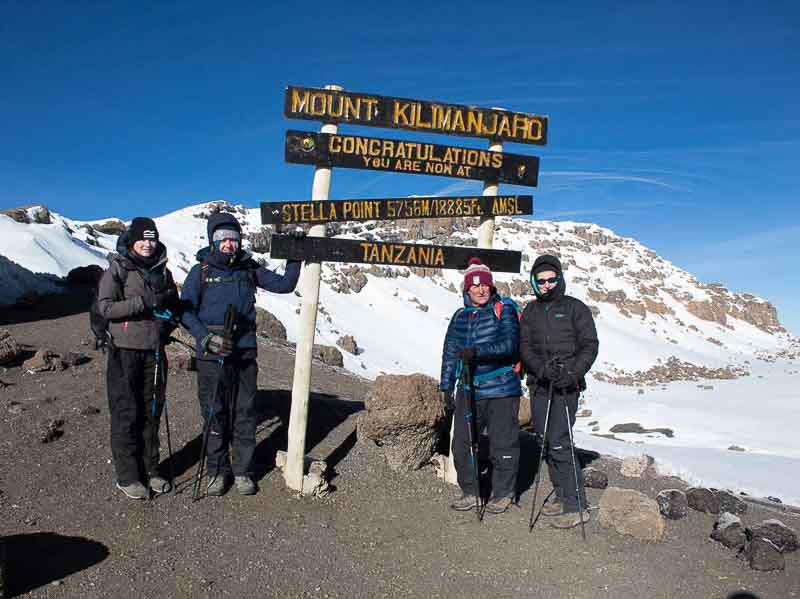
Stella Point Kilimanjaro
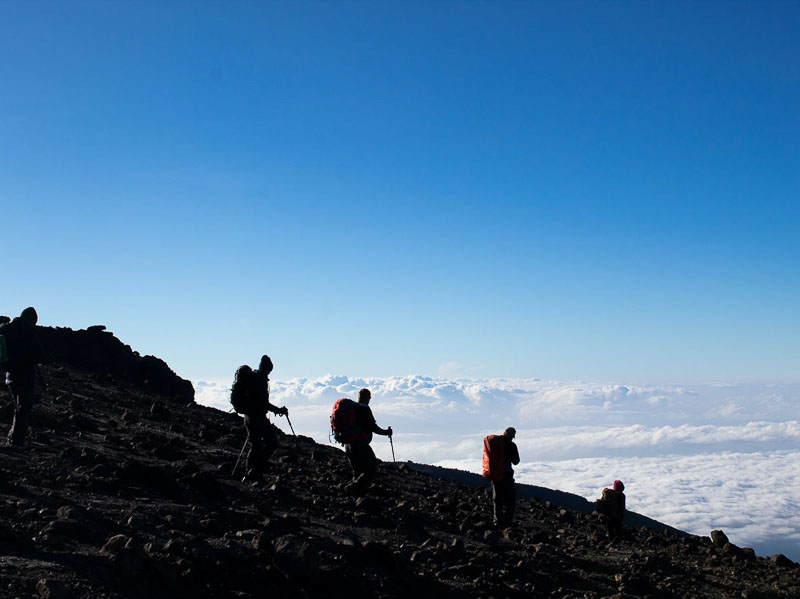
Trekking down after summiting Kilimanjaro

Kilimanjaro – Why is the final climb
conducted through the night?

With a 6-7 hr ascent to Kilimanjaro’s summit (Uhuru) from the final night camp, anyone would have thought that was tough enough. So why do it overnight? It’s dark and cold!

The simple answers are underfoot conditions, time (mixed with safety), and the magnificent sunrise from Kilimanjaro’s summit.

Underfoot Conditions – In short, the colder night temperatures mean firmer, more stable underfoot conditions, making it easier to walk on. You use less energy, and it’s safer (less chance of slips). The upper slopes of Kilimanjaro are volcanic ash rock, sand, and scree. It is subsequently quite soft so it is favourable for it to be as firm as possible on the ascent. Once you reach Stella or Gilman’s Point, the underfoot conditions on the crater rim may well be snow and ice, so the firmer that is, the better.

The principle of using the cold night temperatures for firm conditions is common mountaineering practice for most summit attempts, including Mt Everest.

The good news … for those that like scree running, dig the heels in on the descent for the softer day conditions allow a good degree of slippage (the use of trekking poles will aid balance when descending on this type of soft terrain). Great fun!

Time (and Safety) – Kilimanjaro’s summit day is long. From departure from the final night camp to the summit, and back down again, and then further to the next night stop is between 12-14 hrs. If the departure time was at dawn, time would be an issue to make the next night stop by nightfall. If progress was slow for any reason, darkness would fall, and with the inevitable tiredness, injuries are more likely to happen. Rescues and injuries are more difficult to deal with under darkness. Even if the next camp was reached by nightfall, the recovery time is shortened.

Why not stop at the same night camp again instead of descending further? – All of the final night camps are at an altitude of around 4600m – 4700m. That’s high enough for the altitude to still cause issues with sleep, appetite, fatigue, and recovery, so it is much better to descend to a lower, safer altitude. The body will appreciate it. The final night camps (especially Barafu) are also busy places, space is tight. The local policy is to stay just one night and move on. Running water is also an issue. It has to be carried in by porters from a long way out.

The Magnificant Sunrise – There can be fewer better places in the world than to witness the sun rising over the earth’s curvature than on top of Kilimanjaro. The fluffy cloud base is inevitably below you, a truly magnificent sight to witness.

Kilimanjaro climb - approach to the summit

Timings should get you to the summit to witness
the sunrise, above the fluffy cloud base.
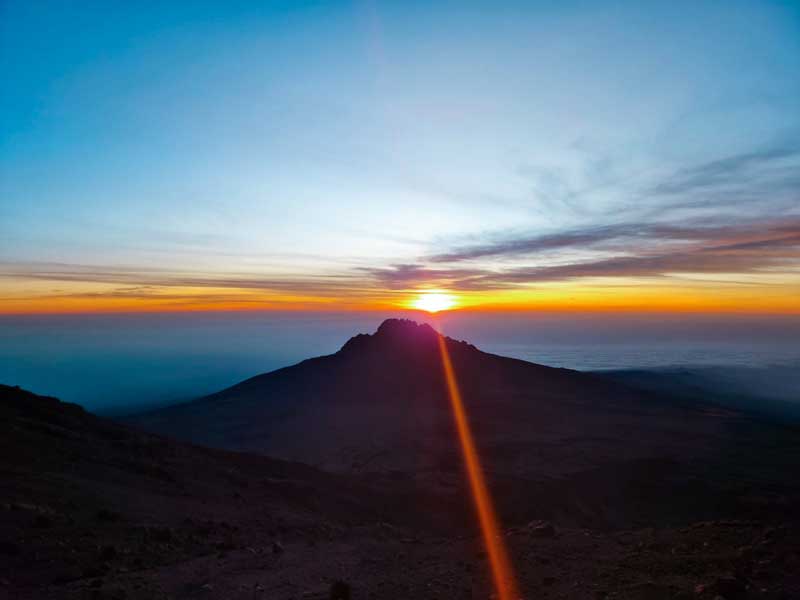
Kilimanjaro sunrise

Kilimanjaro has to be one of the greatest
places to witness the sun rising.

Why Climb Kilimanjaro With Us?

  • We have been climbing Kilimanjaro since 2005, on various routes.
  • A UK-based reputable adventure travel company. No risk, or costs, in sending money overseas.
  • Financial protection, should we become insolvent.
  • The key to Kilimanjaro is acclimatisation. We won’t use any route that we consider has insufficient acclimatisation to give you a good chance of reaching the summit.
  • Personal experience summiting Kilimanjaro, and higher in the Himalaya.
  • Min group size 2 at the advertised price. We can operate treks for 1 person.
  • Flexible dates. Depart on dates of your choosing.
  • Excellent record of successful summits.
  • Use of high-quality mountain tents capable of withstanding Kilimanjaro’s weather, we use high-quality guides, utilise daily medical checks, and of course, there is plenty of good quality nutritious food needed for a climb of this nature.
  • Private portable toilets on trek, with every group.

Kilimanjaro – Frequently Asked Questions

Can a beginner climb Kilimanjaro?

Yes, beginners can climb Kilimanjaro provide they fit enough and well prepared. Our article ‘how hard Kilimanjaro can be’ explains what to expect, and what clothing and equipment you need.

What is the summit success rate for Kilimanjaro?

The average success rate across all routes is roughly 65% – 70%. But this depends on the route.
We do not operate the short routes (5-days) – success rate = under 50%.
Our longer 7-to-8-day routes boast success rates above 85% to 90% because they allow better altitude acclimatisation.

Which is harder: Kilimanjaro or EBC?

We compare these two iconic treks and deliver why we think Kilimanjaro is the more challenging.

Why is climbing Kilimanjaro so expensive?

It is the numerous daily fees charged by the Tanzanian Government for being inside the Kilimanjaro National Park that make climbing Kilimanjaro so expensive. The fees can change without notice.

Can you climb Kilimanjaro without a guide?

No, this is not allowed. Entry into the National Park is formally and strictly controlled. Campsites are also controlled by Wardens. Even if were allowed, individuals would struggle with the logistics. All equipment such as tents, cooking equipment plus food would need to be carried for the entire duration of the trek.

Which Kilimanjaro route is the best?

The best route in our opinion is the Lemosho route (8 days/7 nights). It has the scenic beauty, excellent acclimatisation profile, high summit success rate.

Can you climb Kilimanjaro in trainers?

In theory Yes, but in practical terms, No. It is certainly NOT recommended. Trainers (training shoes) are simply not designed or built for climbing Kilimanjaro. The ‘under the ankle’ design and fabric of trainers will not withstand the uneven, sometimes rocky, muddy, soft, and occasionally snow/ice conditions encountered on Kilimanjaro. One slip, or twist of the ankle will end your trek almost instantly.

You need waterproof boots with a decent sole designed to cope with the terrain and conditions that you will meet on Kilimanjaro. Read our similar article on can you trek to Everest Base Camp in trainers.

What is included in a Kilimanjaro trek package?

Our price includes:

  • Return airport transfers from Kilimanjaro airport (JRO)
  • Hotel/Lodge accommodation, 2 nights (1 pre-trek, 1 post trek (B&B basis)
  • Good 3-season tented accommodation on trek
  • All meals on trek
  • Head guide, experienced, licenced, local
  • Full support team: Assistant guide(s), chef(s), and porter assistance that covers many duties
  • Portable private toilets
  • All necessary National Park access, and camping fees
  • Transport to/from entry/exit gates

Tanzania Notes

Essential information on clothing and equipment, such as waterproofs, boots, sleeping bags, daysacks and more, can be found in our dedicated Essential Information section. It also includes generic information on travel health, travel insurance and high altitude trekking.

Generic information such as group numbers, tailor-made trips can be found on our General Information section.

Tanzania is a beautiful, welcoming country blessed with numerous options for trekking and cycling adventures, safaris, relaxation on white sandy beaches, or a mix of all of them.

Everyone will associate Tanzania with Kilimanjaro but it is a lot more than that. The Ngorongoro Crater, Tarangire, and the Serengeti are all Safari parks, home to a wonderful array of wildlife and all accessible within just a few days. And we must not forget the beautiful island of Zanzibar just off the coast. This island has miles of white sand beaches, and warm shallow turquoise waters to base a relaxing holiday around.
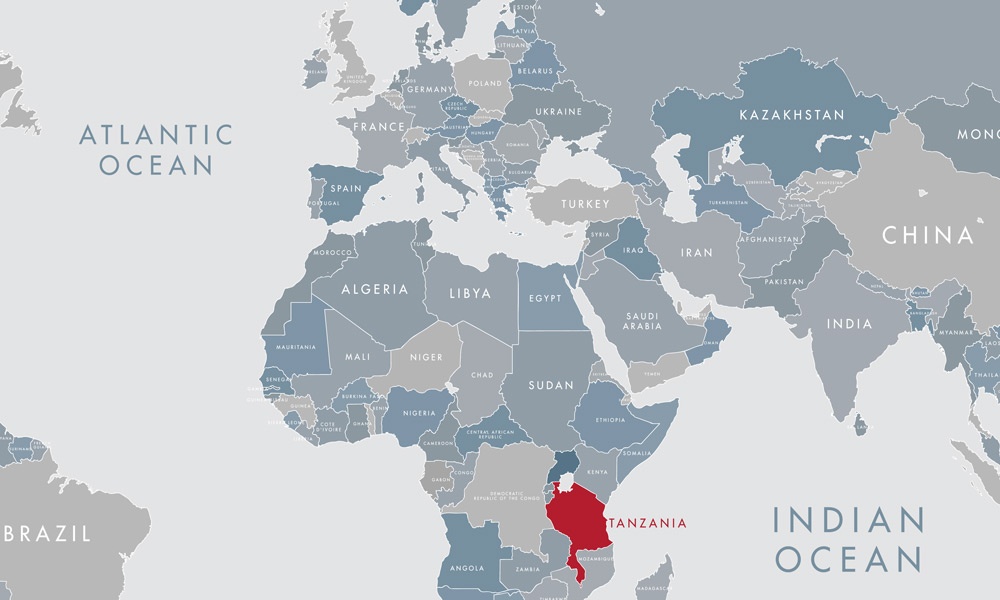
Passport – Your passport must be valid for at least 6 months from the date you arrive in Tanzania. Please check the latest Entry Requirements for Tanzania using the FCDO Travel Advice Tanzania. webpage.

Visa – A tourist visa is required for Tanzania. You can either apply and obtain it prior to travel (e-visa) or obtain it on arrival at the airport.
We recommend the e-visa – apply for a Tanzanian e-visa through the official website here. It will save a lot of time on arrival at the airport.

Warning – Plastic Bags. On 1 June 2019, Tanzania banned all single-use plastic bags for environmental reasons. Thin or thick, if they are deemed as single-use, they will be confiscated by officials on entry into the country. Zip lock bags or similar, that are clearly multi-use are allowed.

Whether you are trekking or touring (safari), bear in mind your luggage is going to get covered in dust.

If trekking, you will need a daysack and a trek holdall (suitcases are not suitable for trekking!). See our article on holdalls and luggage.

Daysack – Our recommended capacity is 35 litres. The daysack stays with you all of the time and is likely to contain:

  • waterproofs, fleece, duvet jacket, hat/gloves
  • water, snacks
  • sunhat, sunscreen, sunglasses
  • personal hygiene (toilet tissue, hand sanitiser)
  • camera
  • personal first aid kit

Trek Holdall – A holdall is a soft-skinned bag that will carry the remainder of your clothing/equipment, wash kit and sleeping bag. The Porters do not walk alongside you during the day therefore when planning your packing, bear in mind that once your bag leaves you in the morning, you may not see it again until you reach camp at the end of the day. Your holdall will be packed into another outer ‘sleeve’, which is then carried by the porter thereby protecting your holdall from dusty or wet conditions. That said, make sure you protect your gear (especially your sleeping bag), you can’t afford to get it wet.

Travelling there – Some travellers prefer to use a hard-backed suitcase for transporting their luggage on international flights. They are more robust, and secure and protect your more valuable items during the airline transit process. If you use this method, you will need to pack any holdall within the suitcase or use it as a second bag in the aircraft hold assuming the airline allows 2 bags (they vary).

Storing Luggage in Tanzania – free and safe storage facilities are available in hotels so you can leave clothing behind whilst you trek.

If touring on Safari, or cycling, it doesn’t matter what your main bag is as your luggage will be transported by a vehicle each day.

Return airport transfers are included on the scheduled itinerary dates. Additional fees are payable if additional transfers are required. The itinerary must also be consecutive.

Examples:
A group of 6 arrives on Day 1, and departs on Day 9. Those transfers are included. If 2 of that group decide to extend for a few days, the return transfer for those 2 people will be an addition.

A group of 4 arrives on Day 1, and they all decide to extend for a few days after Day 9. As there is only 1 return transfer, that would be included (no additional fees).

Moshi based Hotels/Lodges – the accommodation we use are based just outside Moshi and tend to be Lodges rather than hotels. They have a classic Tanzanian welcome, friendly and are all well equipped for your needs. These are used for anything Kilimanjaro based such as the Kilimanjaro climbs and the start/finish for cycle rides.

Camping (trekking) – good quality mountain tents (inner and outer), able to withstand the harshest of weather on the mountain. Sleeping mats are provided and sleeping bags too if requested.

Lodges (including tented lodges) – used for the cycle rides and safari accommodation. Lodges can come in various forms. All have a central building where the restaurant is based. Accommodation can either be solidly built (ie, brick) or tented form (on a solid base), spread around the large grounds. Either way, they are spacious, in keeping with traditional Tanzanian culture and well equipped with showers or bath, beds, etc.

This is a typical tented lodge.
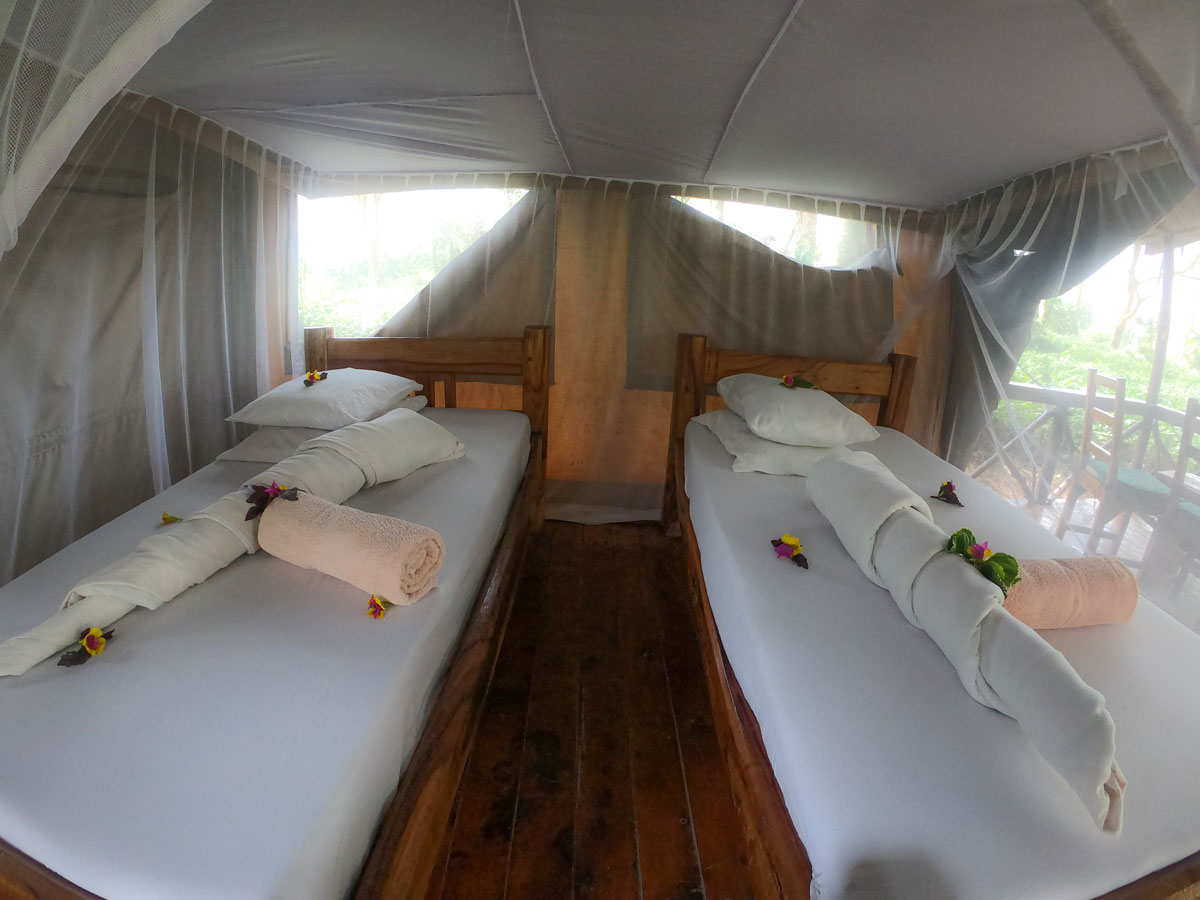
Tented lodge

Single room option costs are stated under the Dates & Prices tab above.

Trekking

  • B’fast is supplied in hotels, full board on trek (including filtered drinking water).
  • Breakfasts are a choice of cereals, porridge, toast, eggs, spreads, etc.. plus hot drinks.
  • Lunches are packed meals, made up at b’fast.
  • Tea/coffee/biscuits are served on arrival at camp.
  • The evening meal is at least two courses; rice, pasta, lentils, vegetables, etc.. + dessert (usually tinned fruit). Hot drink.

Safari & Other Touring

  • B’fast is supplied in hotels/lodges.
  • Packed lunches (including water) are supplied for safari game drives, if applicable. This will be confirmed prior to booking.
  • Other meals may or may not be included depending on the itinerary. The itinerary will confirm.

Use bottled mineral water in hotels and when out and about. Do not drink tap water.
Catering for vegetarians presents no issues.
Most dietary requirements can be catered for if we are aware in advance.

Tanzania’s currency is the Tanzanian Shilling (Tzs) which is not available on the currency markets.

The US$ is king here and given the amount of time, and where, you can spend money, it is suggested you stick to this currency for ease and convenience. The biggest advantage is that you can have the currency (US$) in your hands prior to arrival in Tanzania.

Personal spending. If you are not travelling beyond the extent of a standard itinerary, then a few meals and drinks and the odd souvenir is going to be about the extent of your spending in Tanzania. This does not include staff tips (see below). £150 – £200 should therefore be enough but this does depend on your personal spending habits.  

We recommend either carrying additional spare cash OR a debit/credit card as a backup. The latter (credit card) should always be carried for emergencies.

Be aware that if you do use a card (debit or credit) at the Lodge to pay for incidentals (such as alcohol), they will levy a % charge, typically 4 – 5% of the value of the purchase.

ATM’s are available in Moshi but that will involve a trip into town (taxi required) as well as the time to travel there and back.

Staff Tips. The tipping level expectations for Kilimanjaro climbs is high when compared to other global (and comparable) trekking destinations. We will provide you with advice.

Credit Cards are accepted in larger establishments, such as hotels. Travel credit cards.

Fitness is very subjective and in simple terms, train for what you are going to do.

Trekking (Kilimanjaro and The Highlands)

Kilimanjaro – When climbing Kilimanjaro, you will be walking between 4 – 7 hours per day. The exception is summit day (over 12 hrs). Distances in mountainous terrain are measured in hours, not distance. Why is climbing kilimanjaro so tough?

The preamble trek around parts of the mountain’s southern or northern circuit is not massively physical. That element is all about acclimatisation. Climbing Kilimanjaro to the summit is a different kettle of fish; it’s a beast. It’s 1400m, through the night (cold and dark) and the underfoot conditions can be extremely soft, especially near the top. When combined with the descent, you’ll be on your feet for over 12 hrs; it’s a very long day.

Temperatures during the day (sun up) will vary between 15°C and 25°C. As soon as the sun drops, the temperatures will fall and the night temperatures will drop to below zero most of the time. You need a sleeping bag that will take you comfortably down to -10°C.

Climbing Kilimanjaro is all about that final climb. Adrenaline and sheer determination will get you there provided the altitude is kind to you. When training, work on those legs for they will carry you up, up and up to the highest place Africa can offer.

In the UK, if you can walk for 5 – 6 hrs per day, on consecutive days, over undulating terrain (with normal rest stops), carrying a daysack weighing approx 6kg, then you have a good foundation for completing this trek.

The Highlands – The Highlands is nowhere near as physical as Kilimanjaro, but all things are relative! It is a beautiful, gently undulating area in the heart of the Masaii people. Daily treks are between 4 – 7 hrs, with rest stops.

The start of the trek is up on the Great Rift Escarpment with great views of the Plains below. The route follows the Escarpment and heads north towards Lake Natron.

There is an optional (but recommended) trek into the Embakaai Crater. Within it is the Embakaai Lake, where thousands of pink Flamingoes live.

For any advice – call 01529 488159 or 07725 943108.

Treks to both Kilimanjaro and Mt Meru both involve trekking to high altitudes. The Highlands trek does not involve high altitude.

Kilimanjaro in particular ascends to a serious altitude. You are strongly advised to read about what Acute Mountain Sickness (AMS, aka altitude sickness) is, be aware of the effects, the symptoms, and what to do if you succumb. You are strongly advised to read the section on High Altitude Trekking above.

If you would rather speak to us for advice, call us on 01529 488159.

Our trips in Tanzania are geared around what is deemed to be the best weather conditions for that activity. But given today’s climate change environment, predictions are made more difficult.

All of our trips take place in northern Tanzania and they are therefore just a few hundred kilometres south of the equator. You can therefore expect a warm/hot environment at ground level.

The exception is climbing Kilimanjaro. Due to the altitude (the summit is 5895m), the climb ascends through 5 climatic zones. It ranges from rainforest, through bushland, heathland, alpine desert and arctic conditions. On the summit, it will be below zero and possibly snowing.

If it rains, it can rain hard and with many of our trips, you may well be exposed to it with no respite. You are therefore advised to be well equipped to protect yourself from the weather.

Medical – Vaccinations

Advice for vaccines is constantly developing. Visit your GP and the UK’s travel health website for the most up-to-date advice and information on where you will be travelling to (including Malaria). Don’t forget to include ALL travel if it includes a wider itinerary.

Trekking (all treks) – your Guide will meet you at the hotel/lodge on your arrival day. You’ll have a briefing and then he will meet you the following day when you depart for the trek. He will be with you until the trek is complete. You will also have chef and porter support on trek.

Safari and Touring – You will have a Driver/Guide depending on the nature of the tour.

Mobile Phones

Looking for an eSIM?

Install an eSIM before you go, the website checks compatibility for your phone before you buy.
Activate on arrival.
10% eSIM discount automatically when using this link.

Mobile phone coverage is quite good but not everywhere (don’t rely on it). It is improving. Most hotels and Lodges have free wifi.

Tanzania’s electricity supply is 230v, 50Hz. They use the British-style 3-pin square plugs, although many are now also wired for the European continental 2-pin sockets. It is advisable to take an adaptor to make use of all available sockets. World power and plugs – see what works?

Extensions In Tanzania
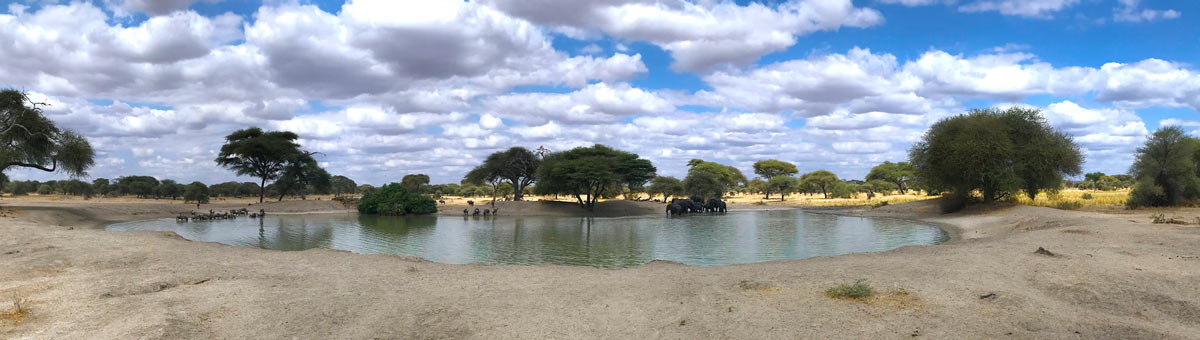
Tanzania extensions - Kilimanjaro, Safari, Zanzibar

The options for extensions in Tanzania, and beyond, are endless.
Tick the box on the Booking Form and we will contact you to discuss your requirement.
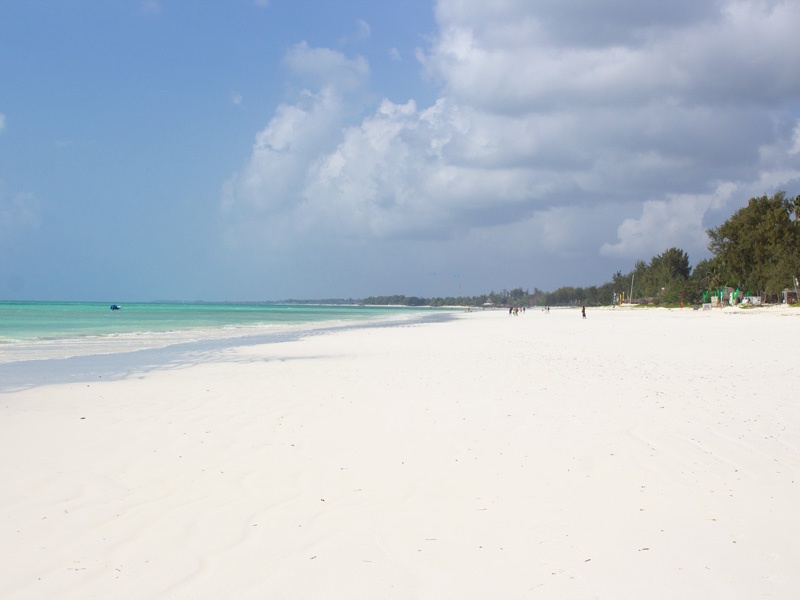
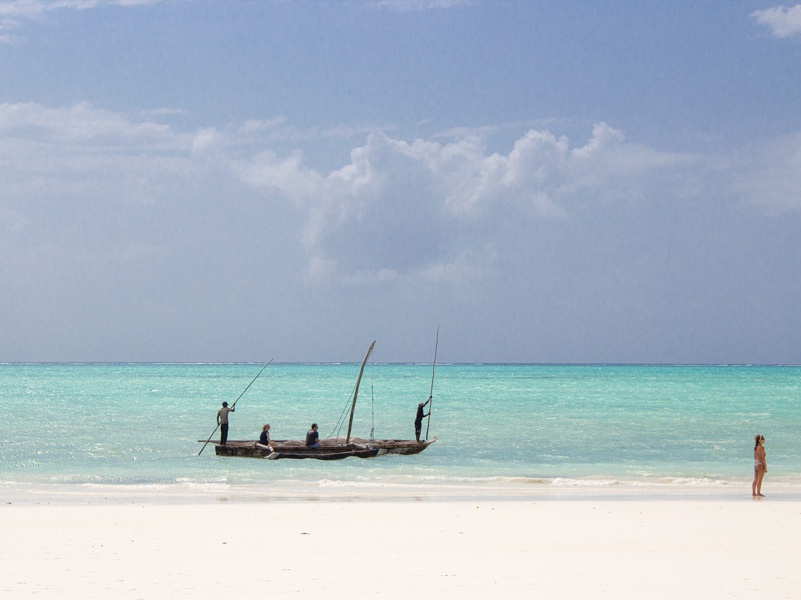
Paje
Beautiful waters in Paje
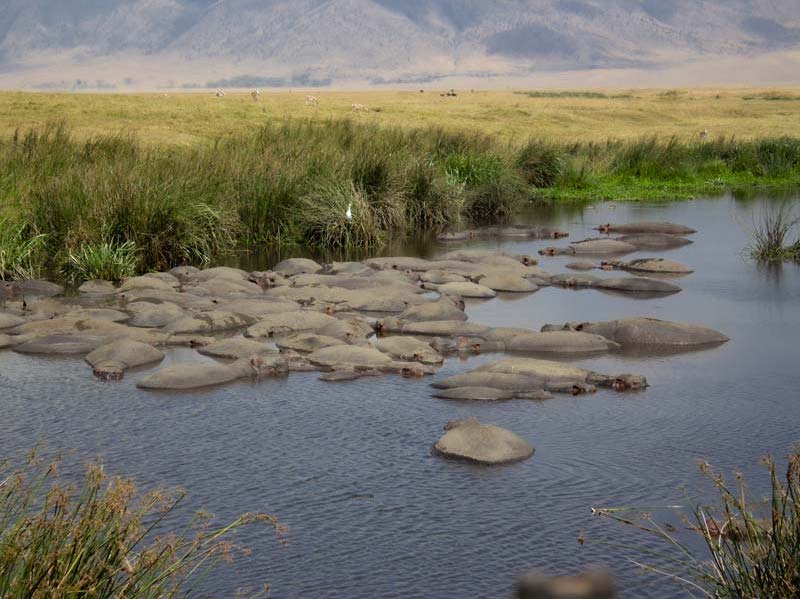
Hippo pool in the Ngorongoro Crater National Park
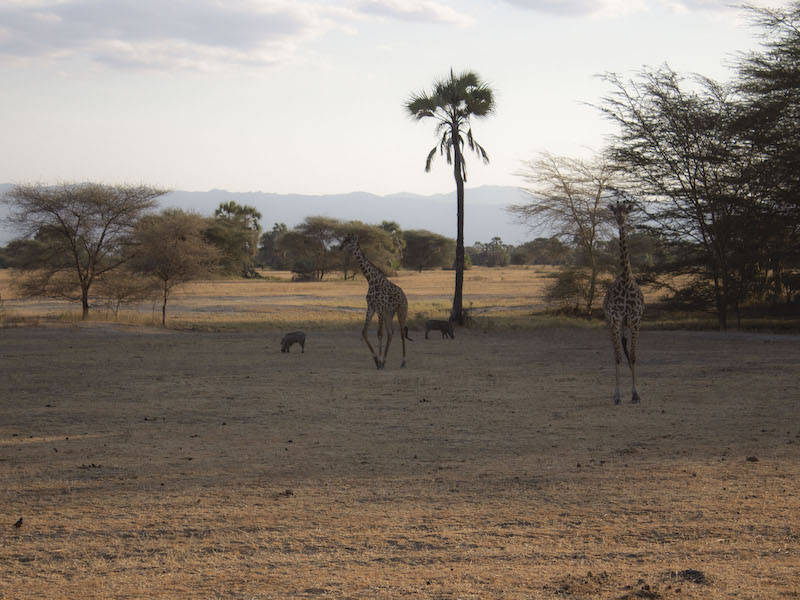
Two young Giraffe
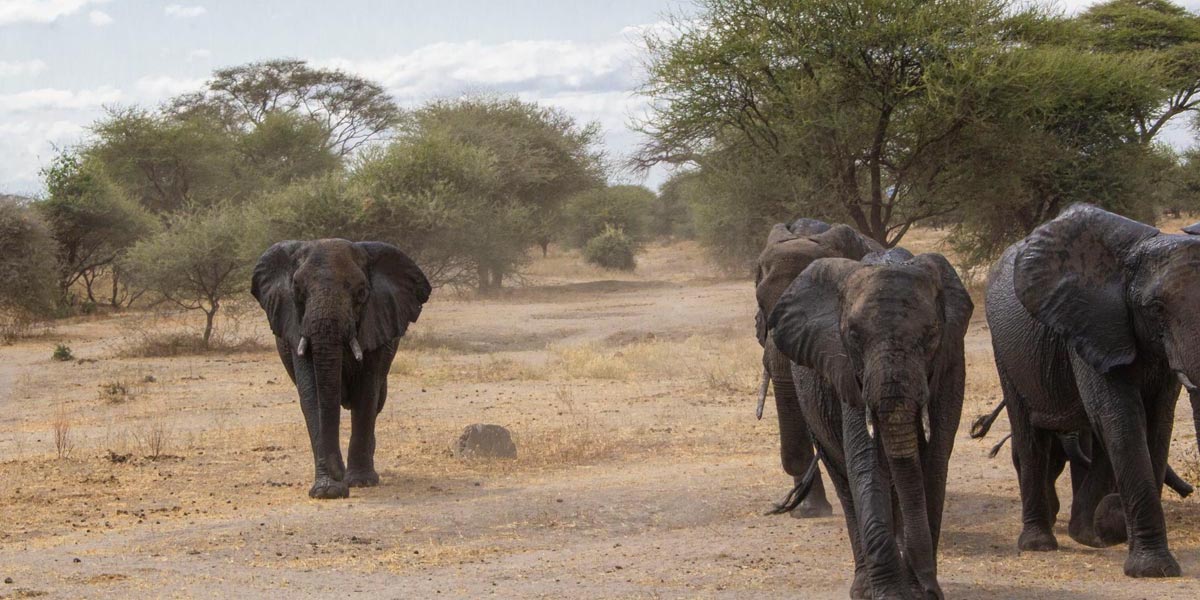
Marching elephants in Tarangire National Park - Kilimanjaro extension
2 Day Safari – Tarangire and Ngorongoro Crater

This 2-day safari option is the best way to experience some of Tanzania’s amazing wildlife with a visit to Tarangire National Park and the Ngorongoro Crater. The concentration of wildlife in these two parks maximises your chances of viewing a variety of wildlife within a short period of time. You are highly likely to see Elephant, Giraffe, Zebra, Wildebeest, Hippos, Antelope, Buffalo, Hyena, and Lion amongst others.
Extension Itinerary:

Day 1 of the extension – This will be the day you would have normally departed Tanzania. Depart for Tarangire for a game drive. On departure, you will overnight in a tented camp, or lodge, close to the Ngorongoro Crater National Park.
Meals: Breakfast, packed lunch, and dinner

Day 2 – An early morning game drive in the Ngorongoro Crater National Park. After, transfer to the airport for your evening flight OR return to Arusha or Moshi for your overnight stay.
Meals: Breakfast, packed lunch. Dinner will be provided if overnight in Moshi.

Day 3 – Depart (breakfast included)

Note, an evening flight will land in the UK the following day.

Includes:

  • National Park fees and taxes.
  • Private transport (safari 4×4) Moshi to Moshi (or airport for departure).
  • English-speaking driver guide.
  • 1 night tented camp.
  • 1 night lodge (if applicable).
  • Meals as described.
  • Transfer to airport.

Prices on request, there are many variations on this itinerary

Beautiful white sand beach in Paje, Zanzibar - Kilimanjaro extension
4 Nights in Zanzibar – Perfect Relaxation

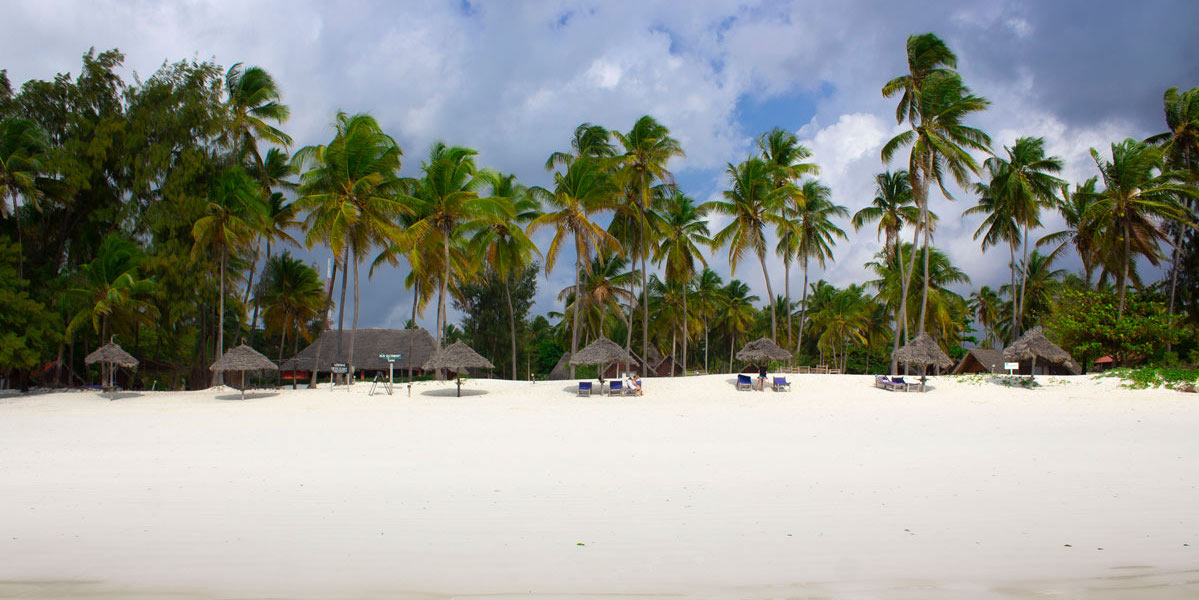
If you want to relax in an uncrowded location with pure white sand by the turquoise waters of the Indian Ocean, look no further.

  • Kick your shoes off on arrival and leave them off!
  • 3 full days to truly relax.
  • Beautiful shallow sea that stretches out a long way.
  • Fly back from Zanzibar, no need to fly back to Kilimanjaro.
Our recommendation is the white sands of Paje beach. Located on the east coast of the island, Paje is a less developed village and home to many kite surfing schools – which means cooling breezes in paradise. The warm water is also very shallow going out for quite a distance. There are a number of hotels or resorts depending on your preferences. These maybe better booked yourselves as you then have full control over your booking, but we can certainly help you.

Itinerary extending from Kilimanjaro:

Day 1 (this is the day you would normally have departed Tanzania had there been no extension) – Transfer to Kilimanjaro International airport (JRO), fly to Zanzibar. You will be met and transferred by road to Paje. Settle into the Resort.
Day 2 – Free
Day 3 – Free
Day 4 – Free
Day 5 – Road transfer back to Zanzibar airport, fly back to UK.

If this extension is used, be aware that your flight itinerary can look like this: London – Kilimanjaro, Kilimanjaro – Zanzibar (1 hr domestic flight), and then Zanzibar – London. The domestic flight is booked separately. The London – Kilimanjaro, Zanzibar – London flights can work out at approx the same price as a London – Kilimanjaro return flight.

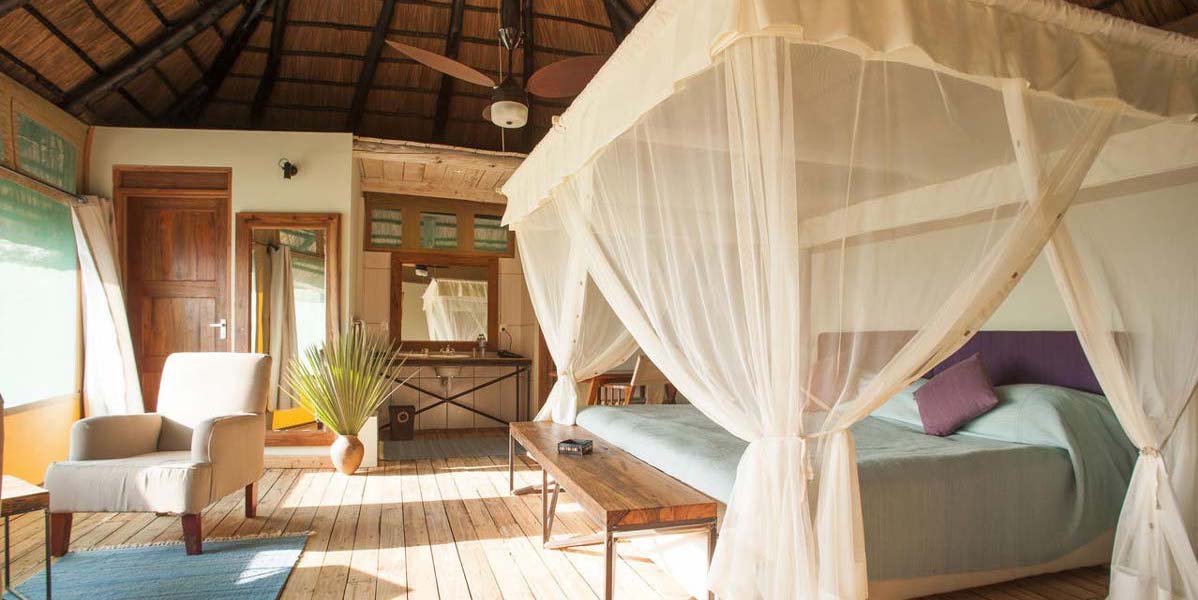
Tented Lodges can be quite luxurious - Kilimanjaro extension
Tented Lodges

Tented lodges are an awful lot more comfortable than the name perhaps implies. The ‘Lodge’ often refers to the central building where the reception and restaurant is. The accommodation is generally well spread out (walking distance) so it is effectively a detached room.

The accommodation is set on hard standing, the canvas ‘walls’ are in keeping with the surroundings and environment. Inside the beds are normal beds with shower/bath facilities. Lodges have their own styles so you’ll experience something different where ever you stay.

All of our holidays can be tailor-made for YOU and we make it simple. It’s so easy to do. 

Popular Treks and Cycles

  • Kilimanjaro, Lemosho
  • Annapurna Circuit
  • Ngorongoro Bike Ride, Tanzania
  • Sahara

Our Reviews

  • Pokhara – What To Do & See
  • Everest Base Camp Review
  • Kilimanjaro vs EBC | Treks Compared | Which is Harder
  • Is The Maldives Worth It?