

Husky Safari, Norway
Become a Husky Musher – this is no ordinary dog sled run
2027 dates coming soon.
Getting there
This Husky Safari takes place in Northern Norway. You will need to get to Karasjok. It will involve an international flight to one of 3 airports and a transfer from there. You may need an overnight en route depending on schedules.
Please read the Airport Transfers toggle in the Notes below. It contains the options of how to get to Karasjok.
Is a Husky Safari for you?
As long as you can stand up on the back of a fast moving sled, with a good sense of balance, in potentially very cold conditions, and have an adventurous spirit, then this is definitely for you.
This Husky Safari disappears into the wilderness for 3 days/2 nights. You will learn just how hard working and lovable these beautiful animals are.
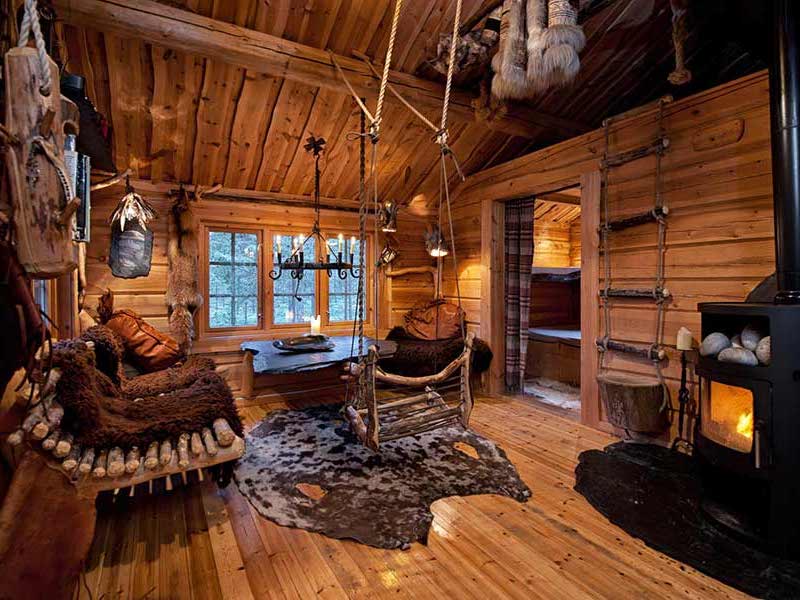
Home for the first and final night.
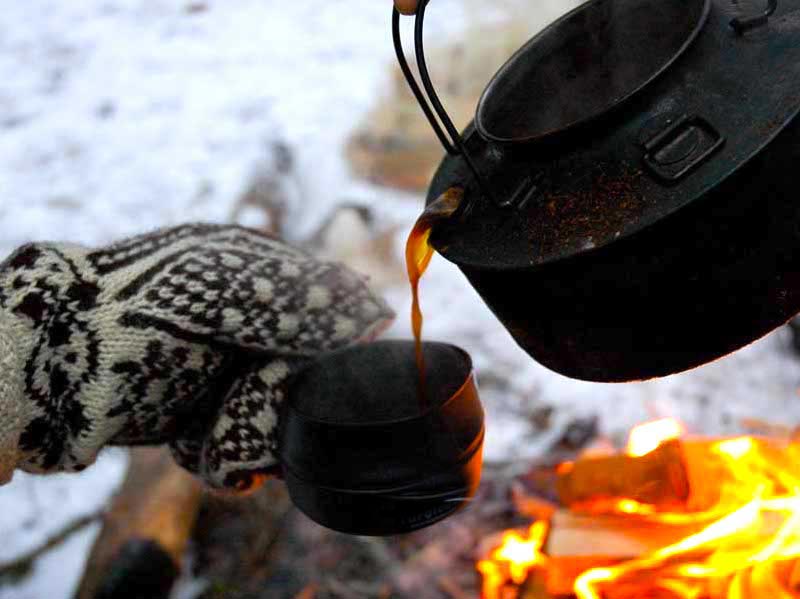
Coffee over an open fire in the wilderness.
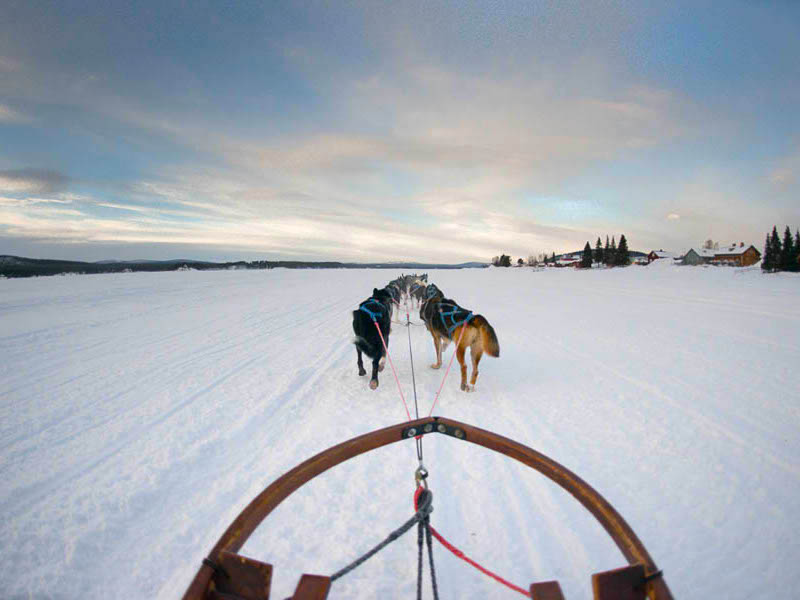
Control your own team of up to 6 Huskies.
Norway Notes
Essential Notes – essential reading on clothing and equipment such as waterproofs, boots, daysack, sleeping bags, travel insurance, travel health and trekking high altitude (opens new tab).
General Notes – covers generic information on our adventures (opens new tab).
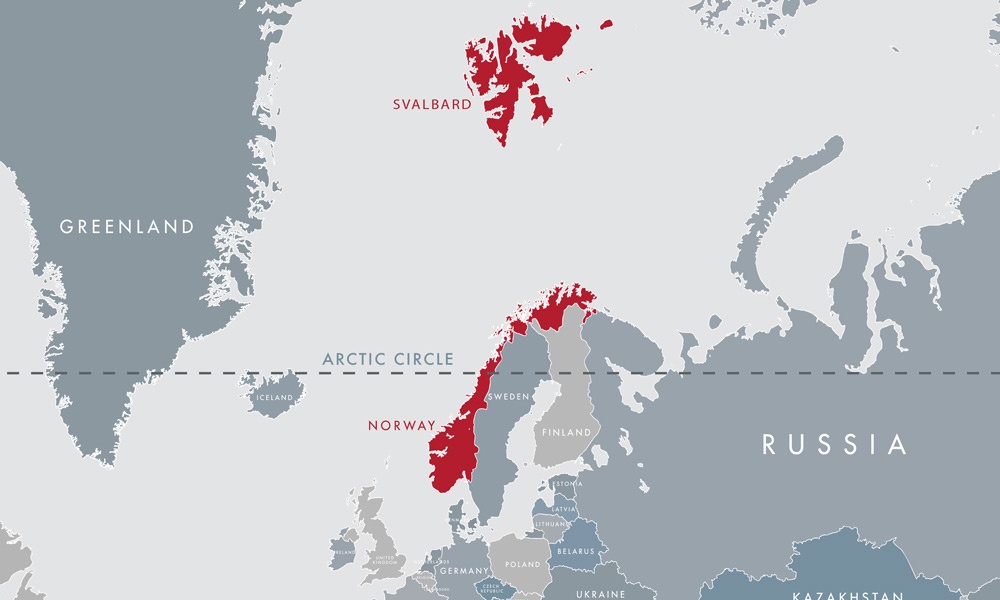
Norway is the host to most of our more extreme arctic adventures, all of them well inside the arctic circle.
Spitsbergen (part of Svalbard) is Norway’s largest, and one of the world’s most remote islands (approx 500miles from Greenland). It is home to one of our toughest adventures (Arctic Challenge), and it is also home to a sizeable polar bear population! Our other adventures are conducted in Finnmark, renowned for world-class cross country skiing and excellent conditions for the Northern Lights. We must not forget the outstanding Huskies, who are the stars of the show on our Husky Safari, a 3 day trip into the wilderness.
Download the appropriate kit list:
Arctic challenge (78° North), Spitsbergen, Svalbard
Finnmark arctic challenge
Husky Safari
Northern Lights Activity Week
Equipment Notes: the Arctic environment is a serious one. Temperatures can easily reach -30°C overnight, and wind speeds of potentially 30 meters per second. The equipment provided for you (by us) has got to be top-notch. And it is.
The tents, skis, poles, boots, pulks (sleds), primus stoves are all designed for Arctic conditions.
Your personal equipment must match this to keep you warm enough to operate effectively.
Touring skis – mountain skis with steel edges. They will be either Asnes Nansen or Asnes Amundsen skis with BC bindings. Click-skins are used on the base of the skis throughout.
Ski boots – Alfa Expedition Polar. These are made for the South/North pole expeditions. They are well-insulated.
Poles – with large baskets.
Passport – Passports must be valid for 3 months beyond your intended stay in Norway, and be less than 10 years old (check the ‘date of issue’). Check the FCDO webpage for up-to-date Entry Requirements to Norway.
Visa – No visa is required for Norway at the moment.
International flights – we do not include or sell international flights.
The flights for these trips are understandably restricted. We therefore provide the following information to help you understand how it all works. All the arrangements below are subject to change due to public transport schedules.
Arctic Challenge (78° North) – Spitsbergen, Svalbard
Standard flights are London – Longyearbyen (LYR), via Oslo (there may be an additional stop, within Norway).
You need to take into account the possibility of an overnight stop in Oslo (airport hotel) in one, or both directions.
Depending on dates, sometimes the journey can be done in a single day.
Finnmark Arctic Adventure
This has changed for 2024.
Outbound (UK – Norway) – Oslo to Lakselv, then a public bus from there to Karasjok. We will confirm this on booking.
The current schedule departs Oslo at 0925hrs, arriving at Lakselv at 1125hrs. The bus departs at 1515 hrs and takes approx 1 hr.
There are no flights that will get you to Oslo from London to meet that 0925hrs departure, and therefore, an overnight stay in Oslo will be needed if the current schedules remain unchanged. There are good quality airport hotels at reasonable rates available.
Inbound (Norway – UK) – departing from Alta.
Current flight schedules may also mean an overnight stay in Oslo. This may change as other flights out of Oslo develop.
Husky Safari & Northern Lights Activity Week
Ivalo (in Finland) is the closest airport to Karasjok (in Norway), your final destination. It is approx 2.5 hrs by private tax.
The easiest way (suggested) is to fly from London – Ivalo (IVL), Finland, via Helsinki. Both the outbound and inbound flights are done in a single day.
See the next tab, ‘Airport Transfers’.
Transfers/transport from airports will depend on the Challenge you’re on:
Longyearbyen (Svalbard, 78° North) – This is a self-transfer on arrival and on departure. The airport is very local to the town of Longyearbyen and it’s a short distance. Our teams themselves fly in from mainland Norway so we don’t have a permanent team based there with transport available.
Challenges in Finnmark (Northern Norway, including the Arctic Adventure, Husky Safari, and Northern Lights Activity Week) – There are 3 airports that can be used to get to and from the Lodge close to Karajok. Two are in Norway, and one is in Finland. Be aware that some challenges are ‘one-way’ trips, eg start in Karasjok and end in Alta. The arrival and departure airports may therefore be different. Which airport(s) you use may depend on your dates of travel.
Karasjok – the Lodge (in all cases where a bus is used), on arrival in Karasjok, you will need to get a taxi to the Lodge, see each option below.
Lakselv airport (code LKL) in Norway is the closest airport to Karasjok. Flights to LKL use the SAS airline, check for schedules, they do not fly daily.
Bus – (No 140, check as this can change over time) – takes 1 hrs from Lakselv airport – Karasjok bus station. The cost is approx NOK 180. The timetable can be found here – bus timetable.
On arrival in Karasjok, you will need a taxi to the Lodge (6 – 7 km from Karasjok bus station). Karasjok taxi (+47) 78466506 or email [email protected]
We can arrange this if required.
Taxi – Lakselv airport – Karasjok, ~1 hr. Price is about NOK 2000 – 2600.
Alta airport (code ALF) in Norway is the furthest away (4 hrs by bus). You can fly to Alta using the airline SAS or Norwegian.
Bus – takes ~4 hrs from Alta airport – Karasjok bus station (usually with 1 change). The cost is approx NOK 550. Bus timetable.
On arrival in Karasjok, you will need a taxi to the Lodge (6 – 7 km from Karasjok bus station). Karasjok taxi (+47) 78466506 or email [email protected]
We can arrange this if required.
Taxi – Alta airport – Karasjok, ~2.5 hrs. Price is about NOK 4300 – 4900.
Ivalo airport (code IVL) is in Finland. You can fly to Ivalo using Finnair.com and Norwegian (via Helsinki).
It’s possible you will need an overnight stay in Ivalo due to flight schedules.
Bus – takes 2,5 hrs, daily from Ivalo bus terminal (which is 7km from the airport) departing at 1625 hrs (Finland time), arriving Karasjok bus station at 1740 hrs (Norwegian time). Journeys can be booked on the bus company timetable. Cost approx £30 one-way (as at Nov 2025).
On arrival in Karasjok, you will need a taxi to the Lodge (6 – 7 km from Karasjok bus station). Karasjok taxi (+47) 78466506 or email [email protected]
We can arrange this if required.
In reverse, it departs daily from Karasjok at 0915 hrs (Norwegian time), arriving at Ivalo bus station at 1245 hrs (Finland time).
Taxi Ivalo – Karasjok, ~2 hrs. Contact [email protected]
Cost approx €290 one-way (as @ Nov 2025), can be share if more than 1 in the taxi.
The airline restriction on baggage is the only practical restriction.
On any of these challenges, your clothing and equipment will go on pulks for either all of the time or at least some of it. Note the requirement to keep your kit dry! Snow and ice particles will get in if you give it a chance! In all cases, you are going to need a holdall or similar.
A holdall is a soft-skinned bag that will carry your clothing/equipment and your sleeping bag. Make sure the bag is waterproof. It’s also a good idea to place other essential items such as your sleeping bag into another waterproof bag. You cannot afford to get that wet.
78° North, Longyearbyen – Guesthouse in Longyearbyen, high-quality tents on expedition.
Finnmark – A Lodge on night 1, wilderness cabins (basic) and/or high-quality tents on the expedition, a Lodge on final night. Sole occupation (pre-booked) is only possible on the first and last nights (both in Lodges).
Husky Safari – A hotel in Ivalo (if required), a Lodge at the Husky Lodge, and high-quality tents or wilderness cabins on the safari. Sole occupation is not possible on the Safari.
Single room options are possible for all or some parts of each of our trips in Norway.
The detail is stated on each trip specific webpage.
Food
Virtually all meals are supplied from arrival to departure. The full itinerary on this webpage will confirm what meals are supplied.
Due to the nature of these trips, food on the expeditions and husky safari are freeze-dried. You can expect cereals for breakfast, pre-prepared meals for lunch, and meats/fish and vegetables for dinner.
In Lodges:
- Breakfasts, buffet-style; mainly cereals (including porridge), fruit, continental b’fast meats and cheeses, and breads.
- Lots of hot drinks.
- Picnic-style lunches.
- Evening meals – meat and vegetables.
Catering for vegetarians presents no issues.
Most dietary requirements can be catered for if we are aware in advance.
Water
In Lodges, there is an unlimited supply of fresh water. You can drink tap water.
On the expedition and the husky safari, the drinking water will be boiled from snow/ice. Suffice to say, most of the fluids you drink will be hot in order to keep you hydrated and warm inside. At least one water bottle should be capable of taking boiling water. Nalgene and Sigg bottles are both good examples. A thermos flask is also highly recommended to have with you in order to carry pre-made hot drinks during the day. The Kit List associated with your chosen trip will inform you if you need to take one or if they are supplied.
The local currency is the Norwegian Krone (NOK). If you are travelling in through Finland (Ivalo airport, Husky Safari), they use Euros. Both currencies are readily available at currency outlets within the UK prior to travel as well as at airports.
With just a few meals to pay for and very little time spent in towns, there’s not a great deal of time to spend money! This does of course depend very much on your personal spending habits and your wish to buy souvenirs.
During the expedition/safari, there are no places to buy anything! If you have a preference for snack bars, etc… take them with you.
We recommend that you carry a credit card with you at all times for emergency purposes and any last-minute purchases. Travel credit cards.
No tipping is expected for the Norwegian Guides.
Fitness is very subjective but in general terms, our trips in Norway require a good degree of fitness and robustness. You need to be willing and motivated to work in cold conditions in order to set up and break camps as well as the other work required of being in such an environment.
Arctic Challenge (Spitsbergen, Svalbard), Finnmark Arctic Adventure
A good level of fitness is required, primarily endurance combined with a certain amount of robustness.
Do I need to be a cross-country skier to do this? No, you do not, see below (see below*).
Both are considered ‘challenging’, if not ‘tough’. For 7 days, you will be living out in an exposed arctic environment, in a tent. Expect -20°C overnight and so your equipment must be geared accordingly. Should the weather close in, you have no choice but to ‘batten down the hatches’ and wait for it to clear.
These trips entail moving on cross-country touring skis, and pulling a pulk (sled) behind you weighing 25 – 30kg (using a harness around the waist). This is in addition to the physical effort required to set up camp, cook and break camp the following day + the Huskies. This may be conducted in very cold weather.
Skiing distances are generally between 4 – 15km daily but can go beyond if required.
These trips are designed to be enjoyed within a challenging framework. No one is trying to kill you! If you are struggling with the weight of the loaded pulk, teamwork will take hold and some weight will be re-distributed to other expedition members and/or the dogs. The pulks are fibreglass and are quite lightweight on their own.
* You do not need any previous cross-country skiing experience. The skis are robust, touring skis (not the lightweight thin racing ones you may have seen) and the skiing is a walking (shuffling) motion in order to progress on the snow in the most efficient manner. The skis are fitted with ‘skins’ on the soles so you don’t slip backwards. The weight of the pulk (attached to you) ensures there is no speedy stuff here!
Husky Safari
Whilst it may appear that you will be standing on the back of a dog sled for much of the time, this trip still requires a good level of general fitness. It also requires a good level of concentration and balance. The cardiovascular effort is low but the physical effort of maintaining balance (forever adjusting) is more so. Attending the Huskies and the general physical effort of making camp all require effort in what can be cold conditions.
Mushing distances are between 25 – 50km daily.
For any advice – call 01529 488159 or 07725 943108.
The dates/periods chosen for these trips are suitable for the respective challenges. It will be cold, sometimes very cold! It needs to be that way, providing crisp cold ground conditions to move on. Average temperatures will be well below zero. In some cases, you will be in ‘committed’ terrain and if the weather turns against you, it will be a case of hunkering down until it passes. Guides are used to it, they will know what to do.
In bright sunshine, this is a white shiny wilderness and you will need good eye protection. You are advised to store them in a hard case to avoid damage; to be without them could lead to snow blindness.
For the Arctic Challenge (78° North, Spitsbergen) that takes place in May, there will be very little darkness due to the time of year and latitude; classic land of the midnight sun. Bring eye masks for sleeping.
Medical – Vaccinations
Advice for vaccines is constantly developing.
Visit your GP and the following UK travel advice website for the most up-to-date advice and information on where you will be travelling to. Don’t forget to include ALL travel if it includes a wider itinerary.
Your Guide(s) will be a local and speak english. These are serious environments and your Guide will be a professional. He/she will be First Aid trained and know the area extremely well as will any staff supporting you.
They will have all of the necessary equipment and knowledge to get you to professional medical assistance should it be necessary.
Norway has generally good mobile coverage.
On expedition, it is either poor or non-existent such is the remoteness of where you will be. The Guides have Satphone for emergencies but they are only switched on for outgoing calls should the need arise.
Our rule of thumb is to tell your families that you’ll be out of contact for the duration of your expedition. No news is good news.
Norway has a standard European 230v, 50Hz supply. The round European 2-pin plugs are used. World power and plugs – see what works
All of our holidays can be tailor-made for YOU and we make it simple. It’s so easy to do.
Similar Winter/Arctic Adventures
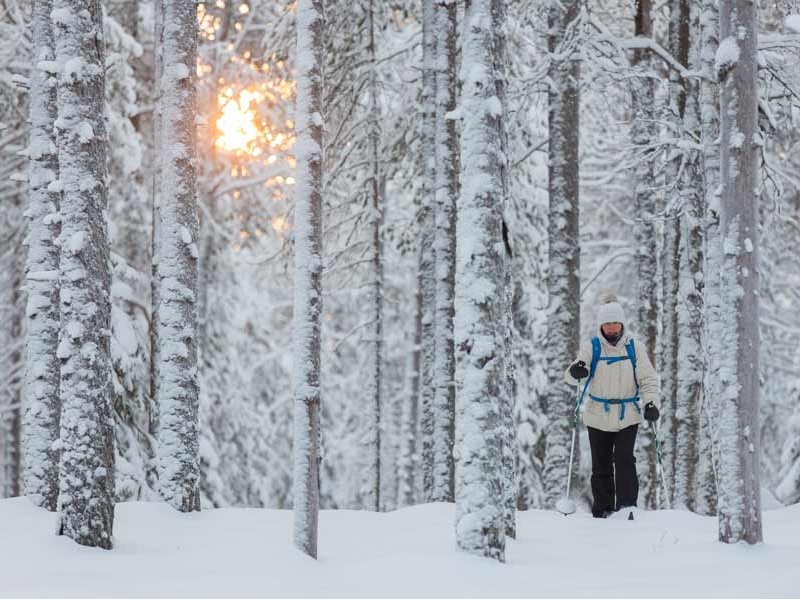
FINLAND BACKCOUNTRY SKI TOUR
Finland, 7 days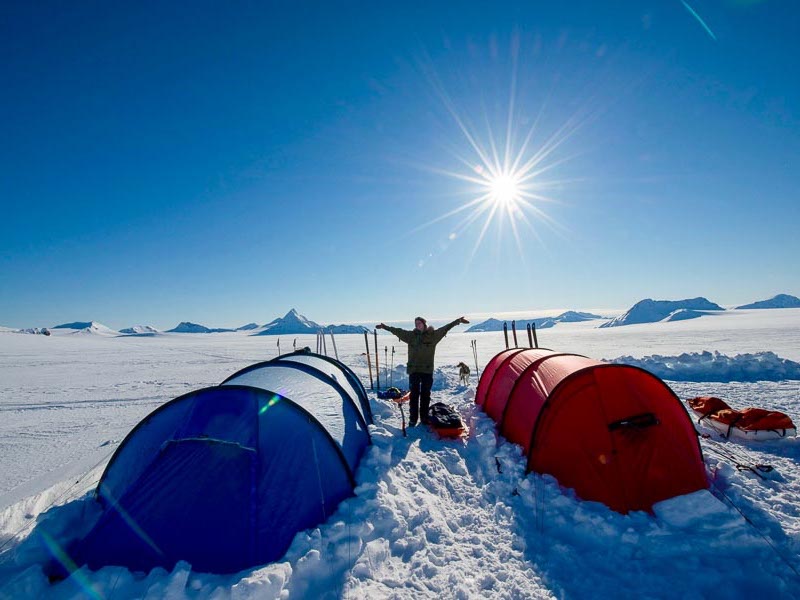
ARCTIC CHALLENGE
Norway (Svalbard), 10 days
FINLAND SKI TOUR
Cross country skiing, 7 days
ARCTIC ADVENTURE
Norway (Finnmark), 9 days
Our Reviews
Pokhara – What To Do & See

Everest Base Camp Review

Kilimanjaro vs EBC | Treks Compared | Which is Harder

Is The Maldives Worth It?


