
SANTA CRUZ TREK, PERU
SANTA CRUZ
TREK, PERU

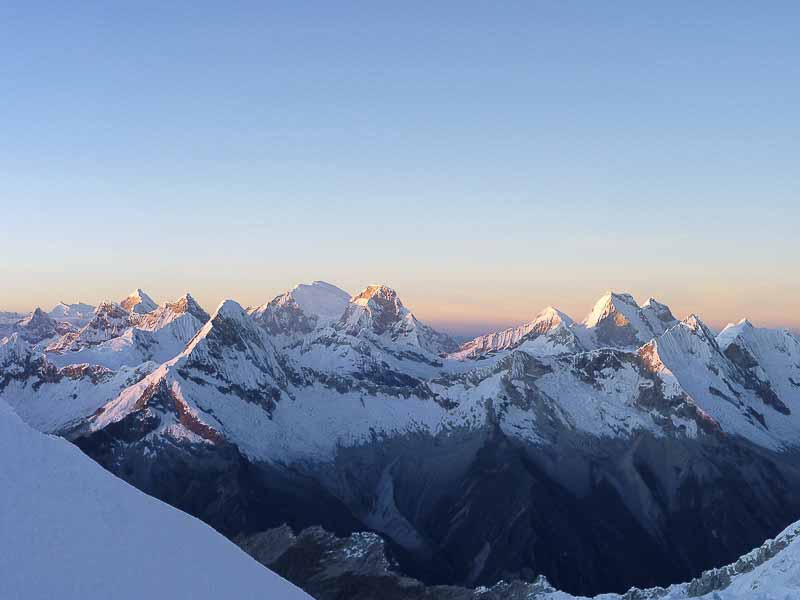
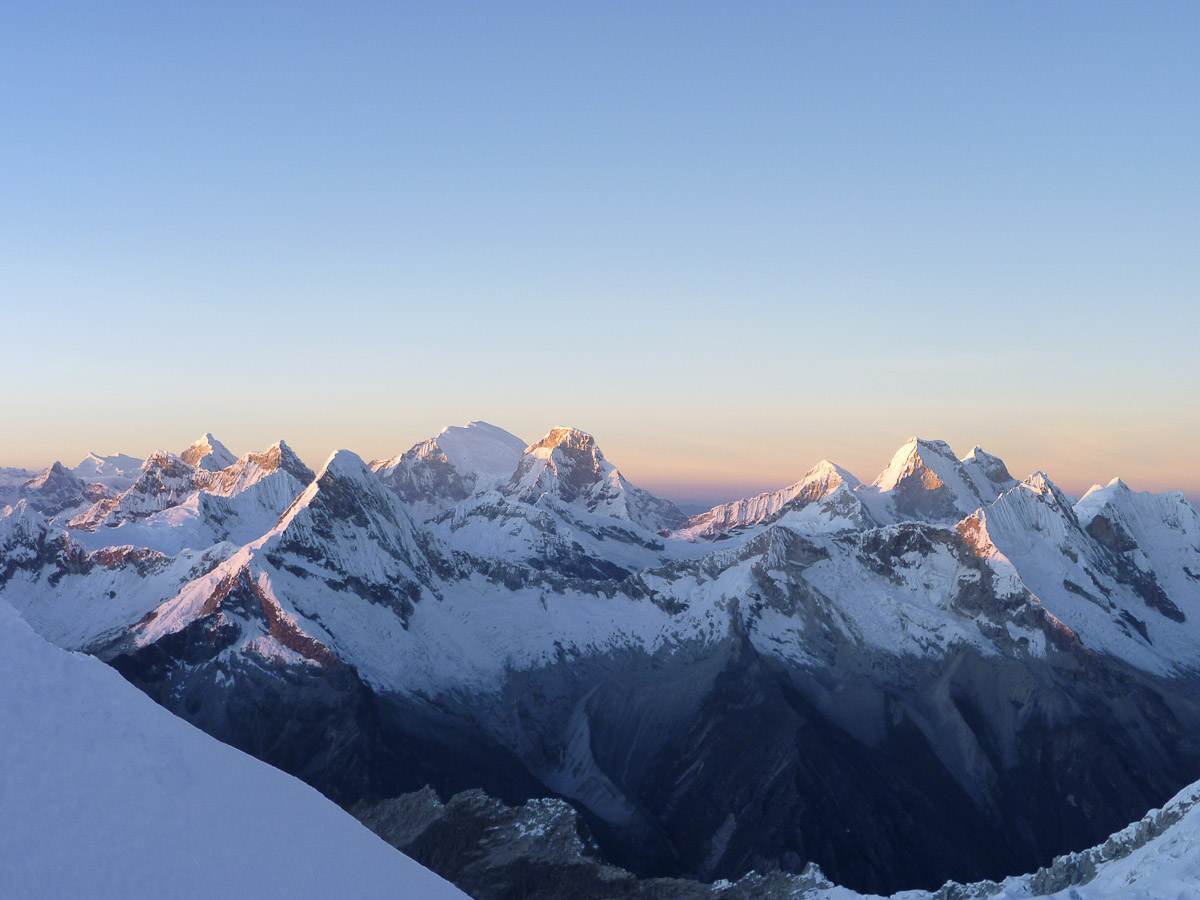
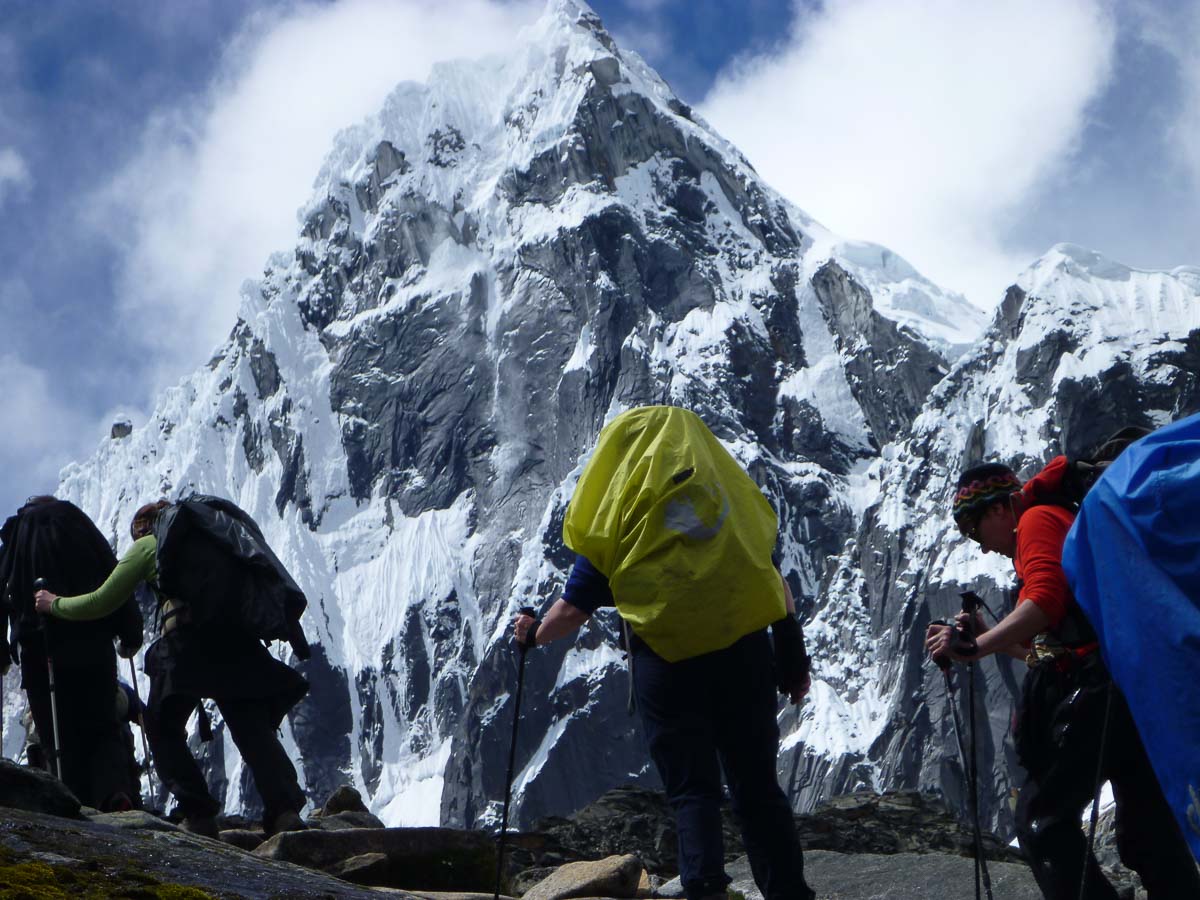
Stunning summit panorama. The Cordillera Blanca is one of the world’s best trekking regions outside of the Himalaya.

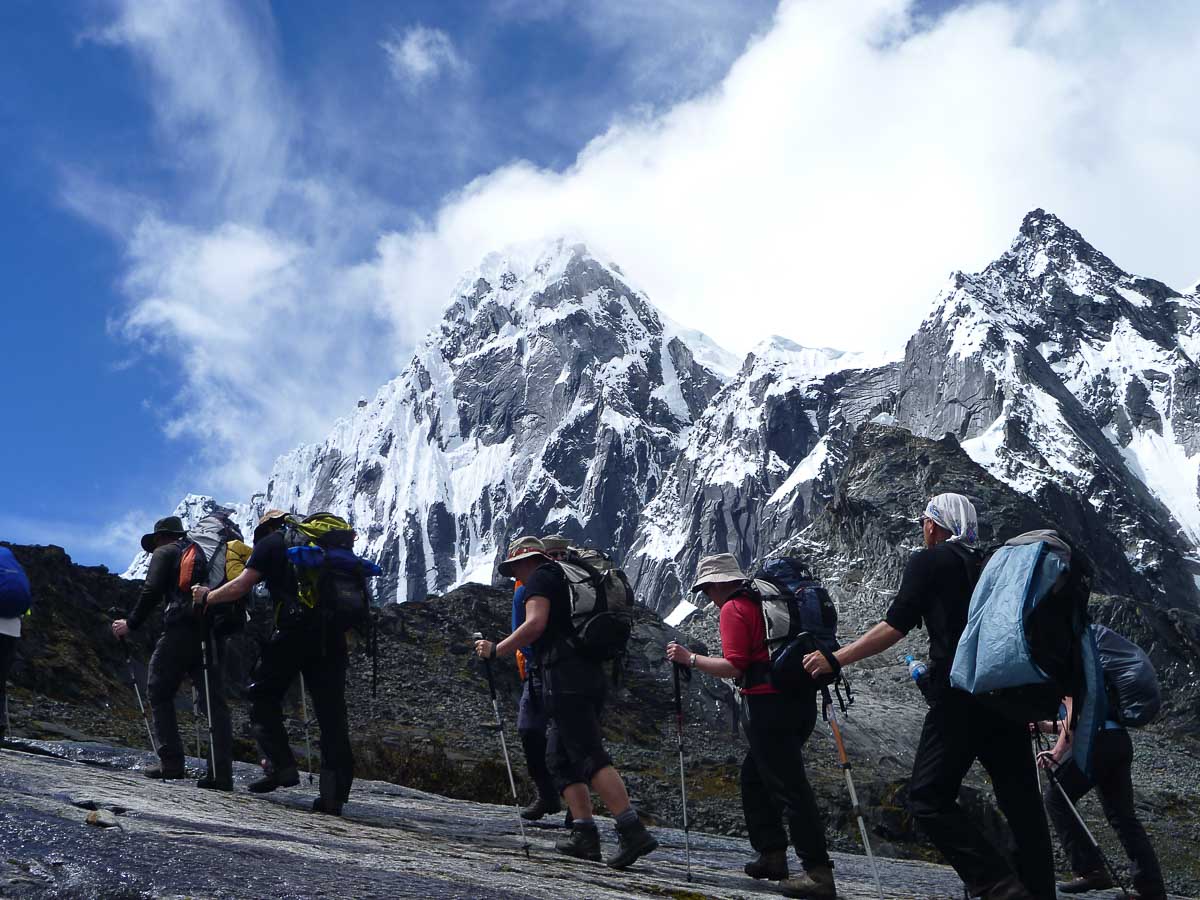
No matter what part of the Santa Cruz trek you’re on, high white peaks will be around you.

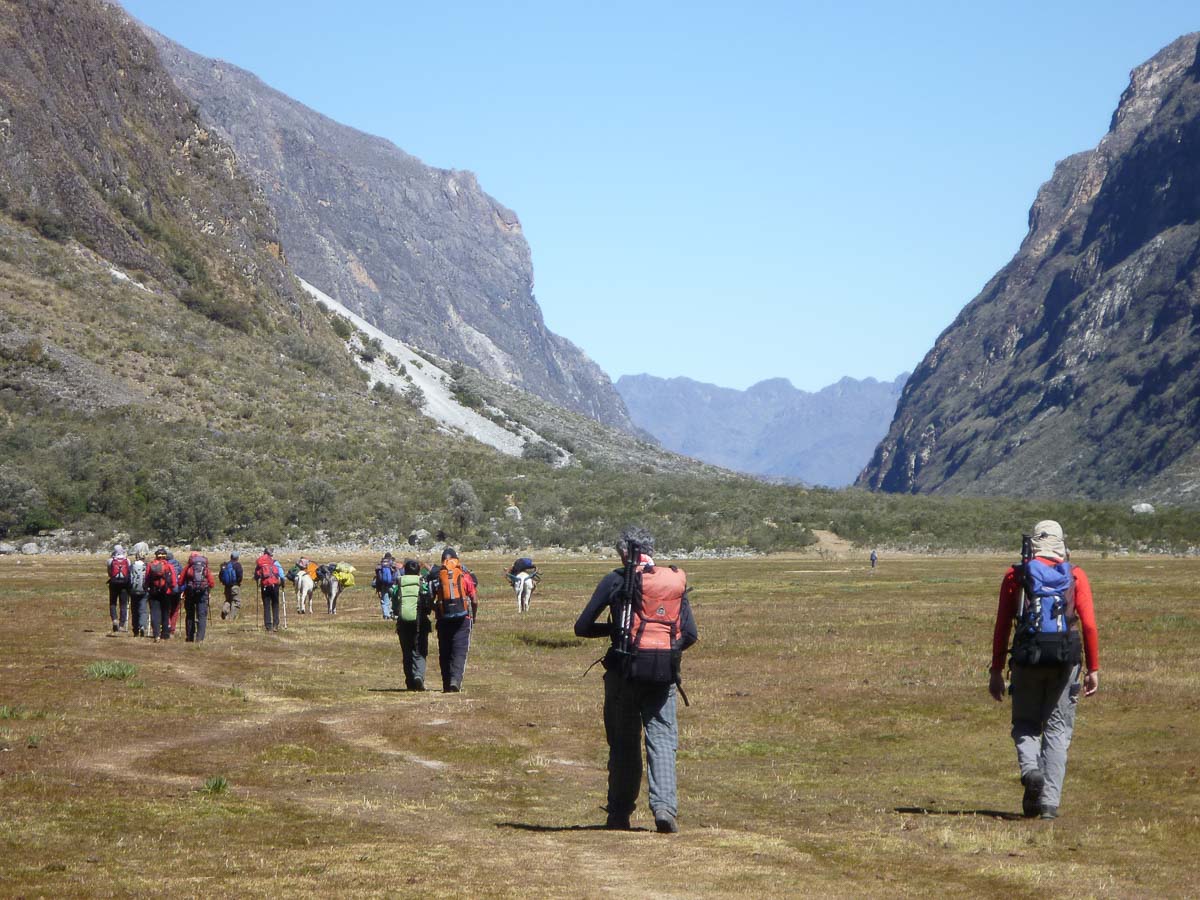
Campsites are flat, lush green areas, complimenting the high white peaks.
This Trip
- 13 days/7 days trek
- Max altitude 4750m
- Min group size – 2
- Airport transfers
- Internal transport
- 4 nights hotel Huaraz
- 2 nights hotel Lima
- 6 nights tented on the trek
- All meals on the trek
Land Only Price from £1595
Santa Cruz Trek – superb 7-day trek in a world-class trekking region
This Santa Cruz Trek is a superb 7-day trek in the Cordillera Blanca, crossing 2 high Passes, each of 4750m. The whole journey fits neatly into 2 weeks.
- Cordillera Blanca – is reputed to be the best mountain trekking region in the world outside of the Himalayas
- Cross the 4750m Punta Union Pass – stunning
- Experience the Peruvian countryside on the drive to Huaraz
- Time to explore Lima
Having arrived in Lima and stayed overnight, you will board the bus to Huaraz. Enjoy the long drive along the coastal highway before it turns right and up into the mountains, and finally to the delightful adventure town of Huaraz (3050m). Your guide will meet you here. You will acclimatise here for 3 nights.
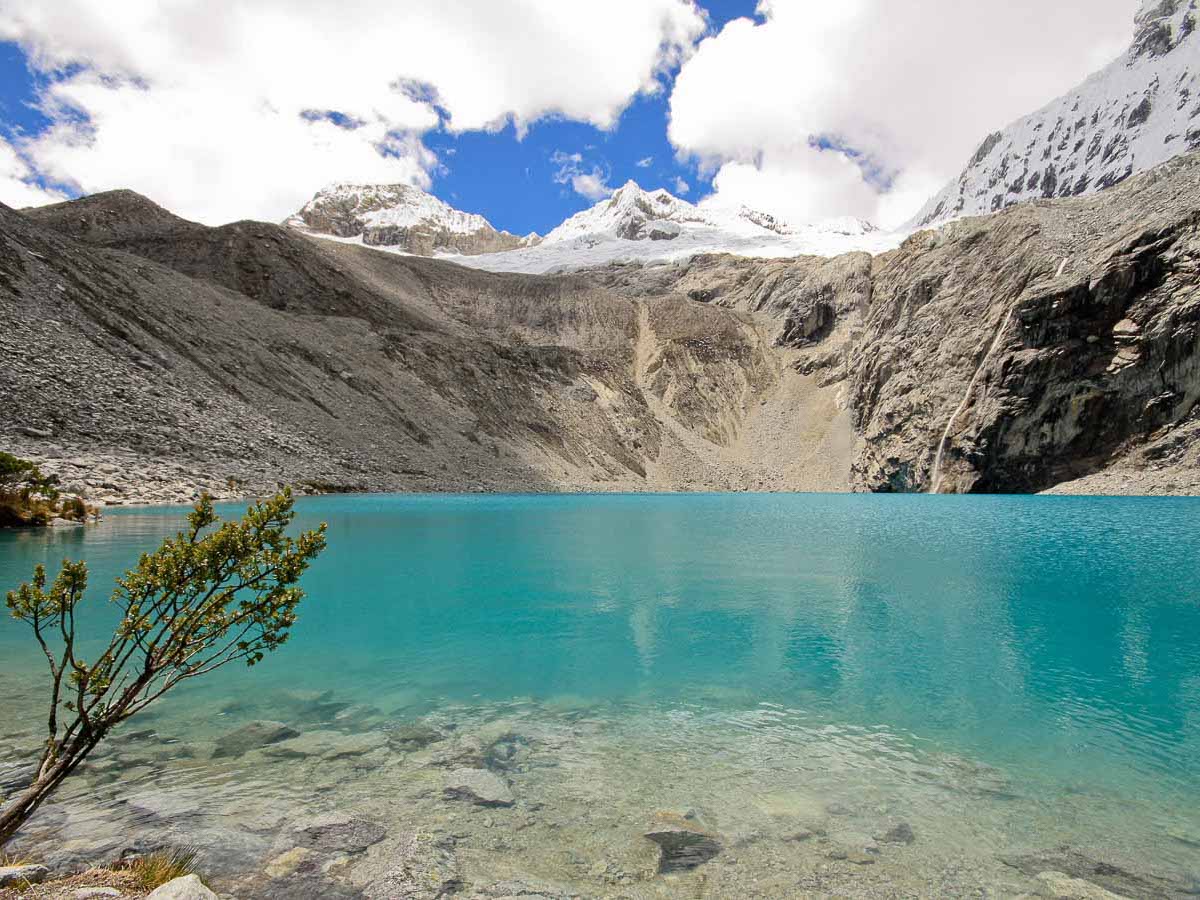
The Santa Cruz trek begins at Cashapampa and treks in a clockwise direction crossing the Punta Union Pass (4750m) on day 2 and the equally high and impressive Portachuelo Pass a few days later. Few people trek here. Overshadowed by the more famous Inca Trail, this is undoubtedly the better trekking region with lush valleys, tiny rural villages, clear flowing rivers, numerous lakes, and vast open mountain scenery. The jewel in the crown is the remote and pristine turquoise blue Lake 69 tucked away in amongst the towering peaks that surround it. This is for mountain and nature lovers.
The average altitude of the campsites on this Santa Cruz trek is about 3900m so it deserves a little respect! Looking after you throughout your trek is the attentive and cheerful staff as well as your knowledgeable guide.
There is a final night in Huaraz before the drive back to Lima (overnight hotel) and your return flight to the UK. You are free to extend your stay in Peru.
Go to the General and Trekking Notes for this Santa Cruz trek.
Santa Cruz Trek – Brief Itinerary
Day 1. Arrive Lima, overnight hotel
Day 2. Transfer to Huaraz
Day 3. Huaraz (3010m), Acclimatisation day
Day 4. Huaraz (3010m), Acclimatisation day
Day 5. Drive Huaraz – Cashapampa, Trek to Llamacorral (3700m)
Day 6. Llamacorral – Alpamayo Base Camp (4250m) – Taullipampa (4200m)
Day 7. Taullipampa – Punta Union Pass (4750m) – Paria (3700m)
Day 8. Paria – Vaqueria – Paccha (4100m)
Day 9. Paccha – Portachuelo Pass (4750m) – Cebollapampa (3900m)
Day 10. Visit Lake 69 and Pisco Base Camp (4600m)
Day 11. Cebollapampa – Llanganuco Lakes – Huaraz
Day 12. Drive to Lima, overnight hotel
Day 13. Depart
What the Price Includes
- A professional experienced and qualified English-speaking mountain tour guide
- Return airport transfers in Lima
- Transfers from Lima hotel to the bus station, and by public bus to Huaraz (return)
- Hotel accommodation in Lima, 2 nights, twin share, B&B
- Hotel accommodation in Huaraz, 4 nights, twin share, B&B
- Full camping services; sleeping tents, kitchen, dining tent, toilet tent, porters (own sleeping bag required)
- All meals and drinking water (boiled) on the trek
- All camping, park and trekking fees
- Full support pre-trek
What the Price Does Not Include
- Travel Insurance
- Tourist Visa
- Tips for trek staff
- Personal spending
| Group Dates | Land Only  | Book |
|---|---|---|
| 30 May - 11 Jun 2026 | £1595 | |
| 27 Jun - 9 Jul 2026 | £1595 | |
| 1 - 13 Aug 2026 | £1595 |
DEPOSIT – £250
In general terms, the outbound flight is overnight (departing the day before the date quote) and the inbound flight departs and arrives in the UK the same day.
The dates above can be altered to suit cheaper flight dates/days.
Single Room Option
– £260. This fee is for 2 nights in Lima, 4 nights in Huaraz and a tent on trek.
LAND ONLY
We do not offer or sell international flights. We can assist you with advice on the best, most reliable flights for this destination based on our extensive experience of such matters. Our services will commence when we collect you at the destination airport and finish when we drop you back there, unless otherwise agreed.
✓ Choose your preferred airline, flight route, seat class, and departure timings/airport to suit you.
✓ Low airfares and deal – you choose when you book your flights.
✓ This trip is a ‘package’, and therefore the Package Travel Regulations 2018 apply.
✓ Financial protection (International Passenger Protection (IPP)) against our insolvency.
Our tailor made prices start from the same as the group price

Three simple words that offer you total holiday flexibility – without any catch!
Start from scratch or combine:
You can build your trip, your way and choose where you want to go when you want to go, and what you want to do. And we love creating these unique adventures for you, at a price which will easily compete with group-based adventures – but you get exactly what you want!
Choose your own dates or alter one of our itineraries:
As most of our trips are guaranteed with just 2 people, absolutely fine. And you can choose whether to open this up as a group or keep it to yourselves.
Extend one of our group adventures:
No problem and no fees for doing so, as long as you let us know you are considering this when you book, even if you’re not definite or sure how long.
We will happily provide options and guaranteed costings to any tailor-made adventure before you make any commitment.



Santa Cruz Trek
Superb 7-day Trek
World-class Trekking Region
This Santa Cruz Trek is a superb 7-day trek in the Cordillera Blanca, crossing 2 high Passes, each of 4750m. The whole journey fits neatly into 2 weeks.
- Cordillera Blanca – is reputed to be the best mountain trekking region in the world outside of the Himalayas
- Cross the 4750m Punta Union Pass – stunning
- Experience the Peruvian countryside on the drive to Huaraz
- Time to explore Lima
Having arrived in Lima and stayed overnight, you will board the bus to Huaraz. Enjoy the long drive along the coastal highway before it turns right and up into the mountains, and finally to the delightful adventure town of Huaraz (3050m). Your guide will meet you here. You will acclimatise here for 3 nights.
The Santa Cruz trek begins at Cashapampa and treks in a clockwise direction crossing the Punta Union Pass (4750m) on day 2 and the equally high and impressive Portachuelo Pass a few days later. Few people trek here. Overshadowed by the more famous Inca Trail, this is undoubtedly the better trekking region with lush valleys, tiny rural villages, clear flowing rivers, numerous lakes, and vast open mountain scenery. The jewel in the crown is the remote and pristine turquoise blue Lake 69 tucked away in amongst the towering peaks that surround it. This is for mountain and nature lovers.
The average altitude of the campsites on this Santa Cruz trek is about 3900m so it deserves a little respect! Looking after you throughout your trek is the attentive and cheerful staff as well as your knowledgeable guide.
There is a final night in Huaraz before the drive back to Lima (overnight hotel) and your return flight to the UK. You are free to extend your stay in Peru.
Go to the General and Trekking Notes for this Santa Cruz trek.
Itinerary
Santa Cruz Trek – Brief Itinerary
Day 1. Arrive Lima, overnight hotel
Day 2. Transfer to Huaraz
Day 3. Huaraz (3010m), Acclimatisation day
Day 4. Huaraz (3010m), Acclimatisation day
Day 5. Drive Huaraz – Cashapampa, Trek to Llamacorral (3700m)
Day 6. Llamacorral – Alpamayo Base Camp (4250m) – Taullipampa (4200m)
Day 7. Taullipampa – Punta Union Pass (4750m) – Paria (3700m)
Day 8. Paria – Vaqueria – Paccha (4100m)
Day 9. Paccha – Portachuelo Pass (4750m) – Cebollapampa (3900m)
Day 10. Visit Lake 69 and Pisco Base Camp (4600m)
Day 11. Cebollapampa – Llanganuco Lakes – Huaraz
Day 12. Drive to Lima, overnight hotel
Day 13. Depart
What the Price Includes
- A professional experienced and qualified English-speaking mountain tour guide
- Return airport transfers in Lima
- Transfers from Lima hotel to the bus station, and by public bus to Huaraz (return)
- Hotel accommodation in Lima, 2 nights, twin share, B&B
- Hotel accommodation in Huaraz, 4 nights, twin share, B&B
- Full camping services; sleeping tents, kitchen, dining tent, toilet tent, porters (own sleeping bag required)
- All meals and drinking water (boiled) on the trek
- All camping, park and trekking fees
- Full support pre-trek
What the Price Does Not Include
- Travel Insurance
- Tourist Visa
- Tips for trek staff
- Personal spending
Dates & Prices
| Group Dates | Land Only | Book |
|---|---|---|
| 30 May - 11 Jun 2026 | £1595 | |
| 27 Jun - 9 Jul 2026 | £1595 | |
| 1 - 13 Aug 2026 | £1595 |
DEPOSIT – £250
In general terms, the outbound flight is overnight (departing the day before the date quote) and the inbound flight departs and arrives in the UK the same day.
The dates above can be altered to suit cheaper flight dates/days.
Single Room Option
– £260. This fee is for 2 nights in Lima, 4 nights in Huaraz and a tent on trek.
LAND ONLY
We do not offer or sell international flights. We can assist you with advice on the best, most reliable flights for this destination based on our extensive experience of such matters. Our services will commence when we collect you at the destination airport and finish when we drop you back there, unless otherwise agreed.
✓ Choose your preferred airline, flight route, seat class, and departure timings/airport to suit you.
✓ Low airfares and deal – you choose when you book your flights.
✓ A full refund of all monies paid if you wish to withdraw for any reason up to a specific date (we will inform you of that date before you book).
✓ This trip is a ‘package’, and therefore the Package Travel Regulations 2018 apply.
✓ Financial protection (International Passenger Protection (IPP)) against our insolvency.
Tailor-Made
Our tailor-made prices start from the same as the group price
Three simple words that offer you total holiday flexibility – without any catch!
Start from scratch or combine:
You can build your trip, your way and choose where you want to go when you want to go, and what you want to do. And we love creating these unique adventures for you, at a price which will easily compete with group-based adventures – but you get exactly what you want!
Choose your own dates or alter one of our itineraries:
As most of our trips are guaranteed with just 2 people, absolutely fine. And you can choose whether to open this up as a group or keep it to yourselves.
Extend one of our group adventures:
No problem and no fees for doing so, as long as you let us know you are considering this when you book, even if you’re not definite or sure how long.
We will happily provide options and guaranteed costings to any tailor-made adventure before you make any commitment.

Relevant Information About This Trip
ACCLIMATISATION
Vital on this trek.
There are 7 high passes on this trek
all over 4600m. Sleeping altitudes are lower.
Can I train for high altitude?
INTERNATIONAL FLIGHTS
Expect long flights to Peru.
Avoid transiting the USA if you can.
MIN GROUP SIZE 2
Min 2 people and you can go!
That’s overall group size, not per booking
Relevant Information About This Trip
ACCLIMATISATION
Vital on this trek.
There are 7 high passes on this trek
all over 4600m. Sleeping altitudes are lower.
Can I train for high altitude?
INTERNATIONAL FLIGHTS
Expect long flights to Peru.
Avoid transiting the USA if you can.
MIN GROUP SIZE 2
Min 2 people and you can go!
That’s overall group size, not per booking
General Notes
Budget for Clothing and Equipment – The following items may be at the top end of your budget considerations if you are venturing into the wilds. These notes should help you on the way to doing some homework and get what’s right for YOU. Remember, sometimes it’s better to hire than buy and not use again. Read our useful Layer Clothing System article.
Having good waterproof clothing with you if you are heading into exposed terrain for any length of time, I would simply class as essential. Without them, you could be in for a very uncomfortable ride and the word hypothermia immediately comes to mind. Don’t underestimate how quickly that can happen.
They can be expensive and it therefore poses the question of what should you buy – the array of options can be daunting.
Key point – never buy waterproofs without trying them on. The fit, style, feel and design all have a huge impact on whether they feel right for you.
Put simply, you want a jacket that will keep you dry in a sustained downpour. A ‘pacamac’ isn’t going to do this! It needs to be relatively lightweight, compact and (in my view) of ‘shell’ construction. In other words, one without a fixed inner layer such as a fleece. You can always add an inner layer (make sure the shell is big enough to accommodate an inner layer) but make sure it’s not fixed in to start with or it’ll be too warm to trek in. Give yourself the flexibility to change up or down as the weather dictates. Remember, it’s not always cold when it rains.
Until you start trying them on, you won’t get the feel of what you want. The hood, zips, cuffs, pockets, will all be factors as to whether it’s right. So go to the big stores such as Cotswold Outdoors, Go Outdoors, Mountain Warehouse, etc.. where they have plenty of choice and see what’s what.
For a decent quality jacket, you won’t get much change out of £150 but think of it as an investment if the intention is to use it time and time again. Do your homework, keep your eye out for sales or closing down shops or end of the line garments, etc.. and strike. Know your prices for the right jacket.
Good comfortable boots are worth their weight in gold. And they don’t have to be expensive.
Boots tend to be classified in ‘seasons’, which indicates their use suitability. 1 season boots are pure summer use going up to 4 season, which are for winter. Some 3 season and most 4 season boots (if not all) will be of such a construction that they will be suitable also for crampon use. As the rating increases, so too the overall strength and robustness of the boot and this includes both uppers and the sole.
As a ‘one off’, a 2 season, soft skinned, waterproof boot will be adequate for the likes of Everest Base Camp, the Sahara (see below), China and Kilimanjaro and similar treks that remain on well worn tracks. They will probably last a couple of treks as they will take a bit of a battering and after a while you may begin to feel the pebbles underfoot. Over time this can cause sore feet and/or blisters.
A 3 season boot on the other hand is likely to be far sturdier (including the sole) and therefore last a lot longer. If you’re looking for a boot that will last you years, you should seriously look at this level. With some boots like this, you won’t feel a thing underfoot.
If you’re heading for the Sahara, there is a separate information sheet on footwear (see Morocco’s Kit List section).
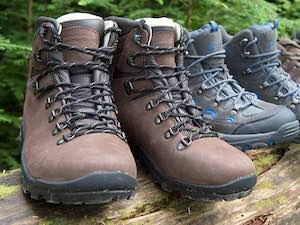
This is the typical type of boot you’re looking at, with an over the ankle protection. This is another classic case of trying some boots on to get the feel of what they are like and cost etc.. against the usage (a one-off or multiple use).



Like boots and sleeping bags, if you are going to use them time and time again, treat them as investments (in you!) and get the best you can. Daypacks need to be comfortable and ‘fit for purpose’.
Read our comprehensive article on how to choose a daypack, what ‘fit for purpose’ means, what to consider (including capacity), and links to the main manufacturers, as well as whether it may be better to hire.
Which one? What temperature rating? Synthetic or down? Buy or hire?
Whatever it is, it’s got to do its job and that is to keep you warm at night. Let’s be clear, sleeping bags do not produce heat, you do. A sleeping bag’s job is to retain your body heat so it’s all about what that bag is made of and its design.
Sleeping bags are measured in temperature ratings these days so look for the ‘comfort rating’ (see below for what this means). Some examples of what you might need:
0°C – Sahara
-5°C – Morocco mountains
-10°C – Kilimanjaro, Nepal, Peru, Bhutan (trekking)
-20°C – Norway arctic challenges
These figures are subjective and you can always wear wooly hats (huge effect) and fleeces inside your bag to help the process.
Pay attention to the ‘fit’. As bizarre as that may sound, bags do come in various lengths and also to fit females (shaped differently). You don’t want a bag to be too snug (claustrophobic) as that warm air you are producing needs to circulate. We all like a bit of wiggle room and it’s useful to be able to store some stuff!
Tip … experienced trekkers will routinely store all sorts of stuff in their sleeping bags overnight (some bags have pockets). Examples are head torches (keep it handy), camera batteries in a bag (prevents deterioration) and socks (warm for the morning)!
Synthetic bags are cheaper, easier to maintain (wash) and more robust when it comes to different conditions. But they are bulkier and heavier.
Down bags are more expensive and need more care (don’t get them wet). But they are lighter, more compact.
Buy or hire? This very much depends on whether your trek is a ‘one off’ or you intend to use it again. You can hire really good, professionally laundered sleeping bags from trek hire companies if you don’t wish to buy something you may not use again. You can buy sleeping bags in Nepal too, good enough for most treks and cheaper than hiring in UK. You can also hire the bags in Nepal, they will be new, not used and washed.
Head for the big stores like Cotswold Outdoors, Go Outdoors, etc… to see for yourself the array of bags and how they feel. Armed with the information you need, start to narrow down your search. Do some homework….
Go Outdoors – sleeping bag guide.
Cotswold Outdoors – sleeping bag guide.
Temperature Ratings – There is a European Standard to be able to compare sleeping bag performances and sleeping bags will have a label inside them:
- Comfort — the temperature at which a standard female can expect to sleep comfortably in a relaxed position.
- Lower Limit — the temperature at which a standard male can sleep for eight hours in a curled position without waking.
- Extreme — the minimum temperature at which a standard female can remain for six hours without risk of death from hypothermia (though frostbite is still possible).
Head torches are extremely useful, almost essential in any environment where no electricity is available such as camping. Essentially, it gives you hands-free lighting to where your eyes go; exactly what you want. Night time reading, sorting stuff out, toilets, you name it, you’ll need a head torch. You can get really good, powerful head torches these days quite cheaply. They often use LED’s so no chance of breaking bulbs.
Make sure it’s comfortable on your head, you know what batteries are used (take spares) and how long they last. Head torches come in a vast array of designs, colours and have varying levels of facilities.
You Cannot Afford To Travel Without Travel Insurance – Simple
Travel insurance should be considered an integral part of your trip costs. Accidents can happen to anyone at any time.
Take a look at some of our personal experience case studies.
TIP! As soon as you book any trip, investigate, decide and buy your travel insurance.
Why? Because even half decent policies will cover you for cancellation of your trip from the date of purchase, not just the period of your cover.
To be adequate, your policy MUST cover you for:
- Medical emergencies including rescue and repatriation to the UK.
- All activities you will be undertaking.
Some advice…
- Missed departure – make sure this section covers the cost of a one-way flight home. If it doesn’t, consider increasing it, using a policy that does or be prepared to pay the extra!
- Most travel insurance companies use a ‘pay and claim’ system. Carry a credit card with adequate funding capacity for emergencies.
- If you need to claim – call your insurance company immediately (or as soon as possible; don’t delay). They will give you advice. Check phone calls are a claimable cost. Keep all paperwork and receipts related to the claim, and take photos if appropriate, videos/images of delayed flight information, etc…you are highly likely to need them to support any claim.
- Purchase your insurance policy as soon as you can after booking a trip. Policies should cover you for cancellation of your trip prior to departure due to injury or illness.
- Travelling more than once a year? Consider an annual policy; usually cheaper.
- Check policies you may have with banks or building societies; some are not geared for adventure travel.
Here are some companies that some of our previous clients have used before and found their cover to be adequate for their needs. Make sure that you check the policies yourself for what YOU want it for:
True Traveller
Easy site to use, set up by travellers and a good place to start.
Add sections onto the policy, step by step, and see the premium change as you do.
Adventure Pack and Extreme Adventure Pack cover just about anything you need for our trips.
The annual multi-trip policy is excellent value; worth a look if you’re likely to travel twice in a 12-month period.
Insure and Go
Another easy site to use. Different levels of cover with add on’s if you want/need them.
Removing the excess payments looks good value as does the Annual policy versus a single trip if relevant.
We would suggest the Silver cover as a minimum depending on where you’re going.
You don’t have to be a Doctor or medical professional to be well prepared medically for an adventure.
Nothing will spoil your trip more than having health problems. With just a little thought about what might happen and together with knowledge of your own body, it should be sufficient for you to prepare a decent personal First Aid kit.
Quick checklist:
- Adequate travel insurance
- A personal First Aid kit (see below)
- Up-to-date and appropriate vaccinations for your trip (see below).
- A dental check-up prior to travel.
Food hygiene standards in third-world countries are less than what you are used to; a change of bowel movement is likely! The question is, to what degree? Travellers’ diarrhoea is very common so be ready for it! Read more about traveller’s diarrhoea.
Vaccinations
Make sure you’re up to date with both the UK citizen childhood NHS vaccination schedule and what you are recommended to have for your destination. Some travel vaccinations can be obtained on the NHS FREE of charge, while others will be chargeable.
There are no vaccines for Malaria; just tablets. Seek advice as what is prescribed very much depends on where you are going (and in some cases the region of that country). Preventative medicine for Malaria is constantly changing.
The following websites are excellent references to ascertain or confirm, what is recommended for each country.
Travel Health Pro – All things travel health
Travel Doctor Vaccines (UK)
Personal First Aid Kit
This is a suggested list of what you might consider carrying. It is not exhaustive. Build your own by adapting it to your own wishes/needs.
- Zovirax, cold sores
- Lip balm, preferably sun protective
- Steristrips
- Crepe bandage
- Vaseline
- Safety pins
- Cold/Flu capsules
- Imodium, diarrhoea
- Strepsils or similar, throats
- Ibuprofen, pain inflammation
- Paracetamol, pain killer/headache
- Asprin, sore throat/various
- Dioralyte, dehydration
- Gaviscon, indigestion
- Insect repellent
- Zinc oxide tape, for blisters
- Compede, for blisters
- Melonin Pads for injuries
- Diamox, related to high altitude (see High Altitude tab)
Trekking to high altitudes is hugely rewarding.
But do it responsibly – know the risks, signs and symptoms of AMS
If conducted responsibly, there is absolutely no reason why anyone should not trek safely to destinations such as Everest Base Camp, Kilimanjaro and numerous trekking peaks over 6000m. By responsibly, we mean knowing what to expect, how it will/can affect you and what to do if it does. By doing so, you could also save someone else’s life. Make sure your travel insurance covers you for the max altitude you will trek to.
Rest assure that our high altitude treks are tried and tested and you may already be asking yourself the question about whether you can pre-acclimatise or train for it?
What are the effects of altitude?
When you ascend to altitude for a sustained period of time, your body undergoes some physiological changes. Feeling fatigued, headaches, breathlessness, vivid dreams, sleeping badly, a loss of appetite (and possible nausea) and a change of bowel movement are all common experiences. These are the common symptoms of Acute Mountain Sickness (AMS). Whilst these symptoms are not life threatening, they should be treated as early warning signs.
If you continue to ascend with the symptoms, there is a real risk that it will progress to either High Altitude Cerebral Oedema (HACE) or High Altitude Pulmonary Oedema (HAPE). Both are considered emergencies and any further delay in treatment could be fatal.
The most effective treatment (and probably quickest) is to descend. Rapid recovery is often experienced by descending just a few hundred metres in altitude.
Stay hydrated, drink lots.
What is AMS?
Acute Mountain Sickness (AMS) is the term given to the early warning signs (symptoms) that are likely to occur to someone who is ascending without having fully acclimatised: in short, ascending too fast. AMS can strike anyone regardless of age, gender, fitness or experience. No-one is immune, not even those that were born and live/work at higher elevations such as the porters who work in the Everest region.
If ignored, it can lead to more serious, often fatal, issues.
Can I pre-acclimatise, or train for altitude?
It is possible (in a fashion) but given that a decent acclimatisation programme should suffice, it is questionable whether the time and money spent is worth it.
You can use a mask or chamber to experience a reduced oxygen level but all it proves is that it is more difficult to breath with less oxygen! What it can’t do (in a single day at least) is to replicate the effects of being at altitude for a number of consecutive days and that is far more important and significant. See more detail about why.
What’s acclimatisation?
Acclimatisation is the process of allowing the body to get accustomed to the thinner air. Everyone can acclimatise although some people take longer than others. The vast majority of people acclimatise well on tried and tested acclimatisation programmes. You won’t know until you do it.
In general, once you get over 3000m, you should adhere to general mountaineering guidelines for safe ascent. Ascend no more than 300m higher than the previous night’s sleeping altitude. You can ascend higher during the day (ie going over a high pass) as long as the net gain is no more than 300m. Every 3rd day, rest (go no higher). The shape of mountain terrain will not allow these guidelines to be met exactly (or sometimes even close), so manage it as best you can.
All of our itineraries that involve high altitude have acclimatisation programmes built into them, often more or ‘spare’ days.
Diamox (Acetazolamide)
Diamox is a well-known drug within the mountaineering/trekking fraternity to aid acclimatisation. It can be prescribed by your GP (be aware some GP’s won’t do this) or Travel Clinic. It can be used to aid prevention or as a cure (but it’s not guaranteed to do so). It does have side effects (intense temporary pins and needles is the prime one) but affects different people in different ways. The Travel Doctor’s webpage is a good source of information to decide if it is for you.
HACE and HAPE
HACE and HAPE are the next stages beyond AMS (if left untreated and you continue to ascend) and both can kill.
HACE (High Altitude Cerebral Oedema). The brain needs a good supply of oxygen and high altitude reduces that supply. If the symptoms of AMS are ignored and you continue to ascend, additional symptoms may appear:
Symptoms – Severe headache, clumsiness, confusion, vomiting and a change of behaviour (mood swings) are classic examples.
If these symptoms are ignored, it could rapidly lead to a loss of consciousness, reduced breathing and death.
HAPE (High Altitude Pulmonary Oedema). As the body adapts to a quicker and deeper style of breathing, changes occur in the blood. Fluid may collect in the lungs as a result, causing HAPE. Symptoms include:
Symptoms – Shortness of breath, fatigued, coughing (with blood in the spit).
If these symptoms are ignored, it could rapidly lead to breathing stopping and death.
In serious cases, death can follow within a matter of hours. Do not delay … descend, descend, descend.
Essential reading: Travel and High Altitude and Medex – travelling at high altitudes.
Trek Itineraries
Our itineraries all have built-in tried and tested acclimatisation programmes that will not be broken (shortened). They conform to the internationally recognised guidelines for a safe ascent. Some trekking days may appear short when ascending. This is purely to stay within safe ascent guidelines.
Common Sense
Experiences at high altitudes vary enormously. It is not an exact science and everyone is different. Guidelines are there to help you avoid putting yourself (and others) in danger. Summit Fever is a strong emotion but remember, the mountain will always be there. You may not if you continue to ascend when your body tells you not to. Common sense should always prevail.
Peru Notes
For the best trekking experience in Peru, go north of Lima to the stunning Cordillera Blanca range of mountains, not to the Inca Trail!
Cited as the Himalaya of the Americas, this compact range of mountains offers some stunning scenery, not trekked by many. The Huayhuash Circuit and Santa Cruz treks are both world-class. Huaraz is the base for our adventures, and a beautiful town it is too. We access Peru through Lima, where you can choose to extend your trip to other parts of the country if you wish.

Download the appropriate kit list:
Passport – Passports must be valid for 6 months from the date of entry into Peru.
Visa – No visa is required for Peru. You may have to fill in an immigration form on arrival.
Please check the up-to-date Entry Requirements for Peru, as these can change at no notice.
International Flights – We do not include, or sell international flights. We can assist you with advice on the best flights based on our extensive experience of such matters in order to get you to, and from your destination based on your own travel plans.
Flights via the USA. Even in transit, you will require an ESTA* as the US authorities deem that you are entering the country. You will go through normal immigration, which can take lots of time. They do not give priority to passengers who have connecting flights so if you do decide to go this route, allow plenty of time for the connection (4 – 6 hrs I would suggest). That may appear long but it’s better than missing a connection.
* An ESTA is effectively a visa and must be obtained prior to travel. It can be applied online, and the response is almost instant (or a few hours). Your details are held online by the US Authorities, with no paperwork involved. As of Jun 2022 the cost was US$21.
Internal Flights are a good way to get around Peru given the size of the country. You can fly from Lima to Huaraz for example, and also to Cusco if you head for the Inca trail or other interests that way.
Should you wish to make use of internal flights, you would be required to make the arrangements and pay for the flights yourselves.
When trekking in Peru, you will need a daysack and a trek holdall. See our article on holdalls and luggage.
Daysack – Recommended capacity is 35 litres. The daysack stays with you all of the time and will probably contain:
- waterproofs, fleece, duvet jacket, hat/gloves
- water, snacks
- sunhat, sunscreen, sunglasses
- personal hygiene (toilet tissue, hand sanitiser)
- camera
- personal first aid kit
Trek Holdall – A holdall is a soft-skinned bag that will carry the remainder of your clothing/equipment, wash kit and sleeping bag. The Porters/pack animals may not walk alongside you during the day, therefore when planning your packing, bear in mind that once your bag leaves you in the morning, you may not see it again until you reach camp at the end of the day.
Travelling there – Depending on where you are travelling to (and therefore what’s going with you), and how you’re getting there (direct flight or transiting another airport), consider what luggage you use to get your belongings there. The airport baggage handling systems can be rough at times.
Storing Luggage – free and safe storage facilities are available in hotels so you can leave clothing behind whilst you trek.
Our Peruvian base is in Huaraz, not Lima.
Airport transfers are included on arrival to the hotel in Lima (and reverse on departure). We will provide the hotel address details in the Final Details.
Transfers from the hotel in Lima to Huaraz (and return) – In all cases, private transfers from the hotel to the bus station will be arranged and are included in the cost. You then board the bus to Huaraz (journey times vary between 7.30 – 8.45 hrs). You will be met off the bus, OR given further instructions.
You will require bus tickets. They will either be collected at the bus station before departure, or sent to you via WhatsApp. You must be at the bus station 60 minutes before departure.
The buses are air-conditioned, with toilets and snacks available. Departure times from Lima vary. You will be informed of the time.
On the return journey, it happens in reverse.
On arrival in Lima, and prior to departure for the UK, we provide a good quality 3/4* hotel in the popular Miraflores area. This affluent area is close to the beaches and parks with plenty of restaurants, bars, nightclubs, shops, and a whole lot more. Occupation is on a twin share, same-sex basis.
In Huaraz (the base for the trekking), we provide a good quality 3* hotel, on a twin share, same-sex basis. Huaraz sits at an altitude of 3000m and is the epicenter for all outdoor activities in this area, including trekking. With the snow-capped peaks as a backdrop, this is a great place to acclimatise.
On trek – tents, twin share.
Single room option costs are stated under the Dates & Prices tab above.
Food
In hotels, breakfasts are included.
On trek, all meals are included:
- Breakfasts – a choice of cereals, porridge, toast, eggs, spreads, etc.. plus hot drinks.
- Lunches are packed meals, made up at b’fast.
- Tea/coffee/biscuits are served on arrival into camp.
- The evening meal is at least two courses; rice, pasta, lentils, vegetables, etc.. + dessert (usually tinned fruit). Hot drink.
Please inform us if you are vegetarian.
Water
Drinking water will be supplied on the trek, obtained from local sources (ie boiled).
Please only drink mineral water or water that has been treated. Do not drink tap water.
The Peruvian Sole (PEN) is the currency of Peru and you cannot obtain the currency outside of Peru.
Money changing is a big business in Peru so please be generally aware. The US$ is its second currency. When changing, keep denominations low and don’t accept anything larger than a 50 PEN note.
Take US$ to exchange (take new notes and nothing above a US$50 note), the GBP (£) can be difficult to exchange.
There are ATMs available in Lima, Huaraz, and the airport.
We recommend either carrying additional spare cash OR a debit/credit card as a backup. The latter (credit card) should always be carried for emergencies. Travel credit cards.
Fitness is very subjective and in simple terms, train for what you are going to do.
Santa Cruz trek – we would class this trek as ‘challenging’ primarily because it includes two high altitude passes each of 4750m. In amongst that, most of the campsites are up at around the 4000m mark. A good level of fitness is required.
Huayhuash Circuit trek – we would also class as ‘challenging’, and for good reason. This trek involves trekking at high altitudes with 9 nights sleeping above 4000m. It also crosses 7 x passes, all above 4600m. A good level of fitness is required. A ‘rescue horse’ usually forms part of the support team on this trek to assist anyone struggling physically.
In the UK, if you can walk for 5 – 6 hrs per day, on consecutive days, over undulating terrain (with normal rest stops), carrying a daysack weighing approx 6kg, and finish in good order then you should be perfectly capable of completing this trek.
For any advice – call 01529 488159 or 07725 943108.
All of our treks in Peru ascend to and sustain, a significantly high altitude.
Santa Cruz trek – this includes two high altitude passes each of 4750m. In amongst that, most of the campsites are up at around the 4000m mark.
Huayhuash Circuit trek – this includes sleeping above 4000m for 9 nights. It also crosses 7 x passes, all above 4600m.
You are strongly advised to read about what Acute Mountain Sickness (AMS, aka altitude sickness) is, be aware of the effects, the symptoms, and what to do if you succumb. Please read our High Altitude section in the General Notes above.
If you would rather speak to us for advice, call us on 01529 488159.
In general terms, during the main trekking season (May – mid-Sep), you will be trekking in a moderately warm environment whilst the sun is up (approx 20 deg C). As soon as it goes down, the temperature will drop quickly (down to single figures overnight and potentially below freezing at the higher altitudes).
Shorts/trousers and a t-shirt will be the standard style of dress on a daily basis. You should carry warmer clothing for use at the higher altitudes (when crossing passes for example).
In the evenings you will require several layers of clothing.
Carry your waterproof clothing with you all of the time. If it rains, it could be heavy and drying clothing at altitude is virtually impossible. The simple rule of thumb is to be well prepared for all weather.
Advice for vaccines is constantly developing. Visit your GP and the following UK travel advice website for the most up-to-date advice and information on where you will be travelling to. Don’t forget to include ALL travel if it includes a wider itinerary.
This Travel Health Pro website is good for checking vaccines.
Our Guides in Peru are English speaking, qualified, personable, and have a wealth of experience. He will meet you in Huaraz (not Lima). He will be First Aid trained and know the area extremely well as will any staff supporting you. Whilst the Guide is your main point of contact, the Camp Chef and other support will also be with you throughout your time on the trek. The group will be supported by horses to carry supplies.
They will have all of the necessary equipment and knowledge to get you to professional medical assistance should it be necessary.
Communications are generally good in Peru. Most hotels have free wifi.
Mobile coverage in the mountains is sporadic and dependent on your location.
Peru has a 220v, 60Hz supply. Both the European continental round 2-pin plug, as well as the 2-pin flat prong type used in the USA, are used.
There are no charging facilities on the trek (no electricity at all). World power and plugs – see what works
All of our holidays can be tailor-made for YOU and we make it simple. It’s so easy to do.
Popular Treks and Cycles

Kilimanjaro, Lemosho

Annapurna Circuit

Ngorongoro Bike Ride, Tanzania

Sahara
Our Reviews
Pokhara – What To Do & See

Everest Base Camp Review

Kilimanjaro vs EBC | Treks Compared | Which is Harder

Is The Maldives Worth It?


