
Why Adventure Travel Is the Best Form of Education
Adventure travel is the best form of education, elevating education into a classroom free, hands-on masterclass. As part of life’s education, you can’t beat it.
Whether you’re on a bicycle saddle in Tanzania, wearing a pair of walking boots in the Himalaya, riding a motorbike in India or hanging out of a Sri Lankan train, the adventures experienced forces individuals to engage directly with some serious challenging cultures and terrains.
Adventure travel education start at home
While any adventure starts at home, it begins long before you leave the house. Adventures require planning. Serious thought into how you will pack, what goes where, and why. What will I need, and when. And do I have it all? The pre-journey preparation and excitement lasts a lot longer than the adventure itself!
But the serious education evolves on the adventure itself.
Travellers learn fast
Travellers learn fast. In some cases, they have to. It is part of why this is such a good form of education. In some cases, it becomes a form of survival.
That form of leaning maybe:
- How to fix a bicycle puncture by watching the mechanic fix yours in the middle of nowhere.
- How to use skis as a way of keeping a tent upright, because pegs are of no use in deep snow.
- How to go to the toilet in the wilderness, where there is no toilet.
- To pack more snacks, because you ran out with no resupply in sight.
- The strength of the sun, because there’s very little shade in the Sahara.
- How to dress/undress within the confines of a sleeping bag, because it’s too cold outside of it!
Start your kids early
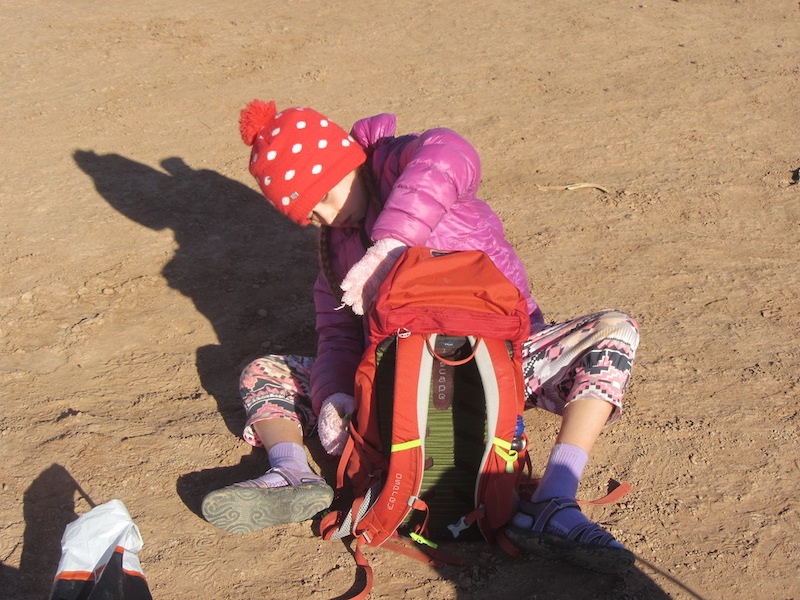
Adventure travel has a lasting effect on children and young adults. They learn fast. See our family adventure options.
Ask a question, or call Terry: 07725 943108
Life’s lessons – live without
On adventures, you learn to live without. To become minimalistic, where necessary. Learning what you need, as opposed to what you want, is an important life lesson in its own right. Porters (Himalaya) or camelteers (Sahara desert) supporting trekkers carry very little of their own stuff. They have learnt over many years that they don’t need much.
Trying new things
You learn that other cuisines may not look familiar but they may be delicious. And then you want to know how to cook it but don’t speak their language. Sign language and a simple friendly smile is a wonderful thing.
You learn to be self reliant. Most of the time, no-one else is going to do it for you.
Geography & Environmental Science
One week immersed in a country on an adventure is worth more than a year in any classroom. Think about it. A single classroom lesson is around 45 mins. You’re there 24 hrs a day, learning every single minute.
You will remember geographical names like you have never done before. It takes just one memorable, relatable incident for that town, or village, or specific place to be etched in your mind, forever. No textbook, no classroom will do that; adventure travel does.
And it doesn’t stop with names. Witnessing glacial rivers swell during the day as the ice upstream melts, and where does all that water go? Perhaps after walking through the terrain you understand why villages are built close to rivers, using hosepipes to bring in water using gravity. There is no formal plumbing here!
Watch and learn how remote communities use the natural free resources; the sun (solar) and wind for the generation of electricity (power and hot water) and the rivers (check out those long gravity fed hosepipes). It’s simple and effective, and they work at it.

A lesson on how to heat water using the sun.
Adventure travel works as the best form of education
Ultimately, stepping outside one’s comfort zone on any form of adventure proves that the most enduring education is found not in the pages of a textbook (although they do help of course), but out there, integrated into the world’s communities, where every obstacle overcome transforms into a lifelong lesson.
Our Reviews
Pokhara – What To Do & See

Everest Base Camp Review

Kilimanjaro vs EBC | Treks Compared | Which is Harder

Is The Maldives Worth It?


