
What To Do In Marrakech
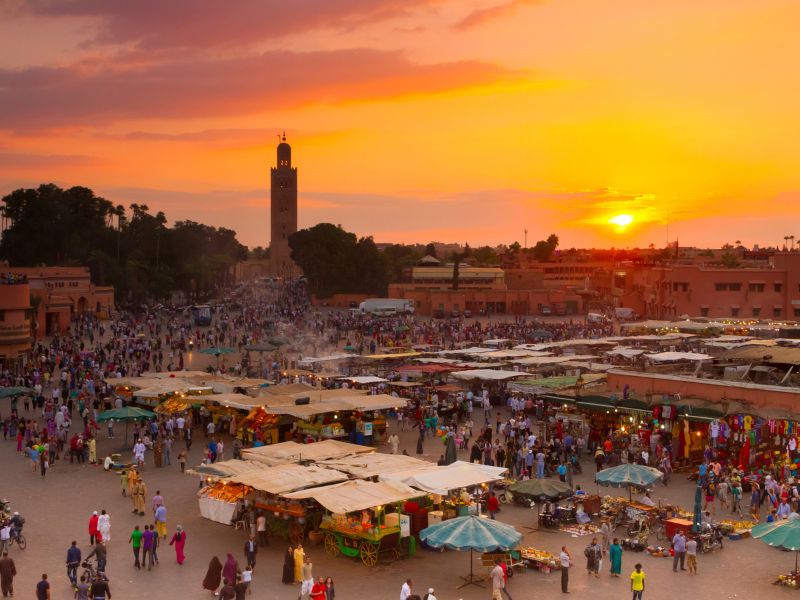
Marrakech is an excellent base from which to explore.
The famous Jemma el-Fna square
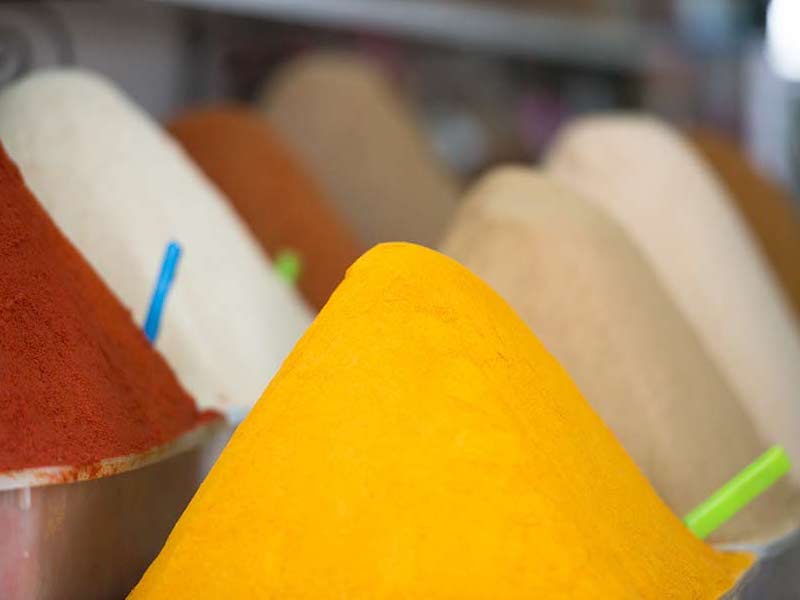
Beautiful Moroccan spices
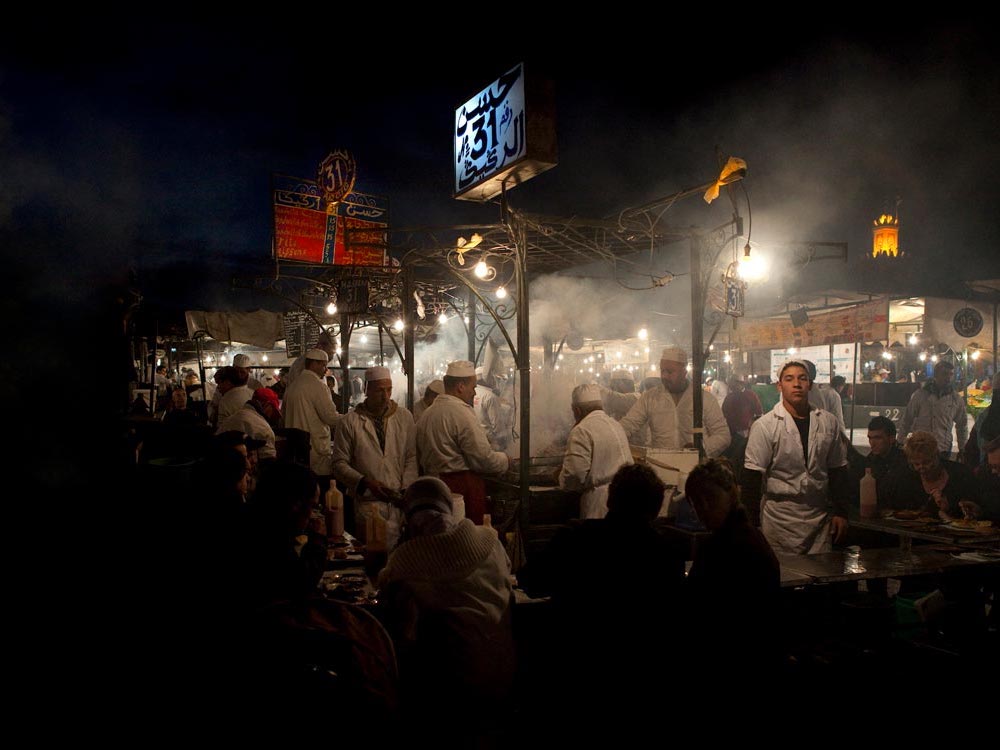
Marrakech comes alive after sunset
What To Do In A Short Space Of Time?
Marrakech’s Old City is bounded by the 6m high walled ramparts and inside those walls is where all of the action is (generally). You will pass through the wall entrance on your way to the hotel. The wall measures just 19 miles long so if you spend longer here, you could cycle it quite easily (bikes are available for hire). The city is now expanding way beyond the wall.
Marrakech is famous for its main square – the Jemaa el-Fnaa. While there is lots of activity during the day, it bursts into life at night in a sea of colour, smells, sights, and sounds. There are rows of brightly lit food stalls vying for your business and an equal number of other stalls selling fruit juices, nuts, and all sorts of other market traders. Local entertainers are there in abundance. A trip to Marrakech is never complete without visiting the Jemaa el-Fnaa under darkness.
Other sites that you may consider depending on your preferences are the Majorelle Garden, the Ben Youssef Madrasa and the Bahia Palace.
Heading to Nepal sometime, see what to do in Kathmandu.
*** Tip … please be very aware of pickpockets, especially for mobile phones. Tuck them well away, and when they’re in use, use a security lanyard. ***
The Medina
Adjoining the square is the Medina. This densely packed maze of alleyways is home to the plethora of thriving souks (markets) all interwoven. Stalls that specialise in particular and traditional textiles (such as clothing or leather bags) tend to be found in the same area once you get further in. It can be great fun getting lost, you can spend some serious hours in here, but thankfully, the locals are used to pointing tourists in the right direction. The stallholders are expert bargainers so if you are tempted to buy, know your prices and bargain hard, but politely.
Tip … keep an eye on the time and make sure you have the address of your hotel with you.
Restaurants
Most restaurants that surround the main square use fixed menus and are alcohol-free. If you fancy a beer or a glass of wine and prefer a more choice and a cosmopolitan menu, then you need to head a little further out. Head out to the main Avenue Mohammed VI. You’ll find a few along there, notably the Portofino restaurant. It’s close, contemporary, good menu that sells alcohol and it’s air-conditioned.
Bars and Night Clubs
Your hotel is likely to have a bar but if you want something livelier, there is plenty of information available to find what may suit you best. If you fancy something really special, try the Le Bar Churchill in the La Mamounia Hotel. This is a top-end hotel frequented by Sir Winston Churchill and there is a dress code with prices to match. The Hivernage District hosts several 4/5* hotels and they all have decent bars, music playing, etc..
Hotel or Riad?
Our default is a 4* hotel, or equivalent Riad in Marrakech. Which type will often depend on the group size. Most Riads won’t cope with large groups in terms of room numbers in addition to potential requirements.
- Hotel advantages – larger establishments, usually with pools, a bar, air conditioning, etc.
- Hotel disadvantages – tend to be out of the centre of town although walkable, and petite taxis are not expensive.
- Riad advantages – beautiful and traditional establishments, usually tucked away in the Medina. Creates a wonderful feeling of being in Morocco. Very walkable to the centre of town.
- Riad disadvantages – transport can’t get to their front doors, so an element of walking from where the transport drops you off (with luggage). They will not sell alcohol.
Flexibility – We can arrange to stay in a Riad on arrival in Morocco, and at a hotel after your trek (or visa versa).
Hammams
Traditional (and local) hammams are public bathhouses. Not all dwellings in the old city had hot running water so Hammams were installed in every community. The more traditional ones are where you are likely to be scrubbed to within an inch of your life. If you escape with your dignity in tact, you’re lucky! But it’s a great experience. Hammams have, however, become big business in Marrakech and you’re likely to find a mid-range or luxury spa in your hotel or not too far away. If you fancy one on your return from trekking, it’s best to try and book in advance (get the telephone number prior to departing on the trek and get the guide to call on your way back to coordinate timings).
Enjoy Cooking?
If you enjoy cooking, consider seeking out and taking home some of your more popular spices, such as ground ginger. They are a fraction of the price but don’t buy in the Medina. Find a local side shop and make sure you know your prices. If you have time, you can also do some cooking courses.
More Time In Marrakech?
An extra day or two added to the end of your trip is probably enough to quell the appetite of most travellers’ here. Planned from the outset, a different return date (flight) may even be cheaper than the scheduled itinerary dates. A 1 or 2 night extension + return airport transfers is not expensive if there are 2 of you.
Getting Around Marrakech
Marrakech is a very walkable place so wear sensible footwear! The Jemaa el Fanaa, the Medina and local restaurants are all very close. If you spent no additional time here, then what is mentioned above will fill your time with ease.
There are an abundance of ‘petite taxis’ that will get you around the city quickly. Be prepared to bargain and a few words of french up your sleeve won’t do you any harm. If your language skills are rubbish, look up a free language translator on your mobile phone.
The horse-drawn carriages are in the centre of the city and whilst a little pricey are very pleasant on a nice day.
Trekking
Anyone visiting Marrakech will not escape the numerous adverts for trekking in the High Atlas mountains or even the Sahara Desert. The High Atlas mountains is a 90 min drive and there are plenty of treks to be had including Mt Toubkal, Mt Mgoun, the Twin Peaks (Toubkal and Ouanoukrim) or the more challenging Morocco 3 Peaks.
The Sahara however, is a good 9 hrs driving, if not more (500km). Given the twisty roads in places (motion sickness), a straight drive in a single day is not recommended. It is better to break the journey and stay in Ouarzazate overnight. Our Sahara treks are superb, 5 days of trekking in a remote and beautiful environment. Ignore any adverts or claims to take you to the Sahara for a short jaunt in a day – they’re lying! Any sand in between is merely a patch of sand, not the Sahara!
An alternative is our Atlantic Coast trek, ending in Essaouria.


