
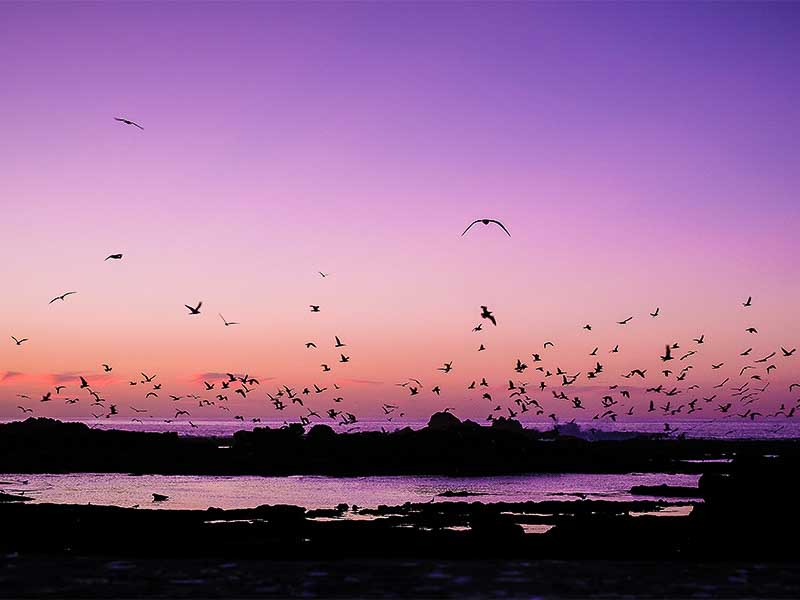
Atlantic Coast Trek, Morocco
Trek for 5 days along the beautiful Atlantic coast
| Group Dates | Land Only |
|---|---|
| 16 - 21 Jun 2026 | £680 |
| 30 Jun - 5 Jul 2026 | £680 |
| 4 - 9 Aug 2026 | £680 |
| 1 - 6 Sep 2026 | £680 |
Prices are based on a min of 2 pax.
Flexible departure dates – depart on any dates you wish. You may find international flights are cheaper on different days.
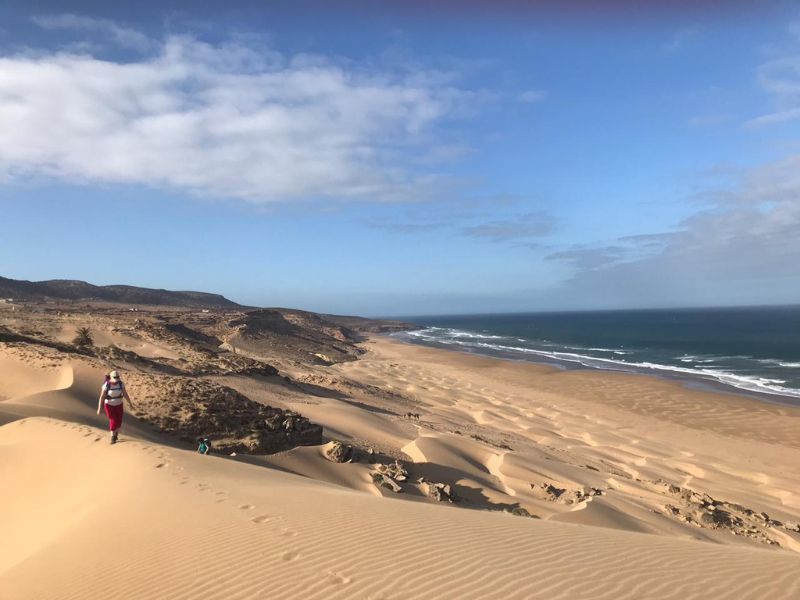
Trekking along the Atlantic coast beaches.

Essaouira, a beautiful relaxing end to the trek.
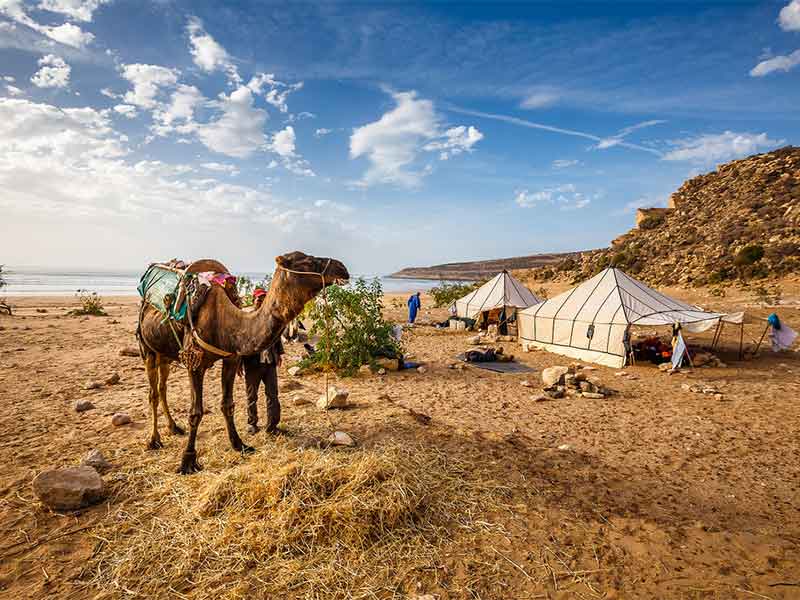
Camping on the beaches, Camels for company!
Morocco Notes
Essential Notes – essential reading on clothing and equipment such as waterproofs, boots, daysack, sleeping bags, travel insurance, travel health and trekking high altitude (opens new tab).
General Notes – covers generic information on our adventures (opens new tab).
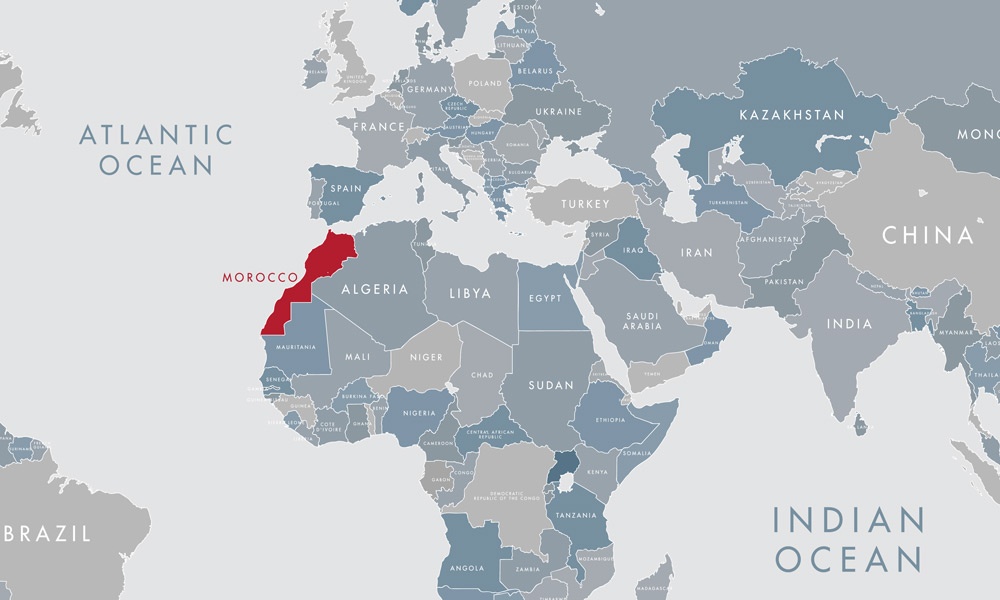
Hosting a rugged mountainous interior, a Mediterranean and Atlantic coastline and the vast Sahara Desert, the Kingdom of Morocco is a beautifully diverse country less than 4 hrs by air from the UK. It is rich in culture too, with a blend of Arab, Berber, North African and European influence.
Whether you are trekking in the Sahara, the mountains, or touring around this country, you can be sure of a very warm welcome from our Berber hosts.
Download the appropriate kit list:
Sahara, Atlantic Coast, Snow and Sand treks
Morocco mountain treks (Toubkal, Mgoun, Twin Peaks, 3 Peaks, Rif Mountains)
Sahara – Footwear
Passports & Visas – For up-to-date information on entry requirements into Morocco, please visit the FCDO Travel Advice webpage for Morocco.
IMPORTANT – you are strongly advised to carry your passport with you whilst in the mountains. Checks by the authorities are being carried out and failure to produce identity documents may lead to issues.
We do not include or sell international flights. We can assist you with advice on the best flights based on our extensive experience of such matters in order to get you to, and from your destination based on your own travel plans. Read our article on how best to fly to Morocco from the UK.
London not convenient? – Other regional airport options are possible. We appreciate the potential inconvenience of London if you live some distance away. Whilst using regional airports may cost more, that cost may be offset by the cost and time of travelling to London. Please ask for advice.
Daysack – The recommended capacity is 35 litres. The following are likely to be in it (weight fully loaded 6 – 7 kg):
- waterproofs, fleece, duvet jacket, hat/gloves
- water, snacks
- sunhat, sunscreen, sunglasses
- personal hygiene (toilet tissue, hand sanitiser)
- camera
- personal first aid kit
Trek Holdall – A holdall is a soft-skinned bag that will carry the remainder of your clothing/equipment, wash kit and sleeping bag. The camel/mule train will not walk alongside you during the day therefore when planning your packing, bear in mind that once your bag leaves you in the morning, you may not see it again until you reach camp at the end of the day.
Storing Luggage in Morocco – free and safe storage facilities are available in hotels so you can leave clothing behind whilst you trek.
Travelling there – Depending on where you are travelling to (and therefore what’s going with you), and how you’re getting there (direct flight or transiting another airport), consider what luggage you use to get your belongings there. The airport baggage handling systems can be rough at times.
If touring and your luggage is being transported daily by vehicle, it doesn’t matter what luggage you take.
In cities and towns we use a variety of hotels and local Riads depending on the size of the group. This will apply to arrivals and departures (in Marrakech) and to touring groups generally throughout the tour.
Riads are beautiful, traditional Moroccan establishments. The term comes from the Arab word ‘ryad’ (meaning ‘garden’) but is applied to townhouses built around an inner courtyard or garden. They are likely to have lush plants and a central fountain. The more upmarket ones will also have a Spa or Hammam. They are more suited to small groups. Most will not sell/serve alcohol.
Hotels are usually bigger, 4* establishments, typically with swimming pools, air-conditioned rooms, a bar, and other facilities.
You will be informed of the Riad/Hotel in the Final Details document sent to you prior to departure.
Accommodation On Trek – All of our treks are based on camping (tents). We will only use the shelter offered by the Neltner Refuge where the weather dictates. See the notes below for more information on the Refuge.
- Sahara – 2 person tents
- Toubkal – 2 person tents or possibly the Neltner Refuge (see note below) depending on the weather
- Twin Peaks – as for Toubkal above
- 3 Peaks – 2 person tents and potentially a Gite and the Neltner Refuge (see note below)
- Snow and Sand – 2 person tents and possibly the Neltner Refuge (see note below) depending on the weather
- Mgoun – 2 person tents and potentially a Gite
- Atlantic Coast – 2 person tents
Neltner Refuge. The Refuge is a huge set of stone buildings owned by mountaineering authorities. It sits at an altitude of 3200m. Its location affords a safe base for climbers and trekkers in all weathers. There are camping places next to the building, which is our prime accommodation (tents). Use of the Refuge facilities (primarily showers) is not free and therefore if you wish to use them, small fees may apply (payable locally).
Single room option costs and details will be shown on the trip webpage.
Unless stated otherwise, it will include the occupation of a single room in hotels/Riads and a tent on the trek. If the itinerary on a trek includes a Gite or Refuge (such as the Neltner Refuge (Toubkal), single rooms may not be available there due to the nature of the accommodation.
Food
Hotels/Riads – Unless otherwise stated in your itinerary, all hotel/Riad accommodation is based on a B&B basis allowing you to roam and discover the vast array of amazing restaurants from traditional Moroccan cuisine to pizza houses, from late-night bars to quiet coffee shops.
Breakfasts usually are buffet style consisting of fruit, cereals, hot food, pastries, fruit juices, and hot drinks.
Where other meals are provided on tours, there is usually a menu option or buffet-style meal.
On trek, all meals are supplied when trekking. In all cases, there are no (or few) resupply facilities on the trek; no shops. Any preferred snacks such as energy bars must be purchased and taken with you. Please do bear in mind the potential heat when choosing your snacks (eg chocolate melts!). The food is purchased locally and carried on the camels/mules from the outset. It is of a high quality.
To give you an idea of the food choices on the treks:
Breakfasts are continental style consisting of cereals (including porridge), bread with various spreads (jam, honey, nutella), cream cheeses, omelettes, hot drinks. The content will vary daily.
Mid-morning Snacks in the form of a big bag of mixed nuts and fruit are also often provided, magically appearing from the Guide! This mix consists of dried figs and dates, sugar coasted nuts, and more nuts of all sorts.
Lunches are freshly prepared and can range from salad with tinned fish, bread, olives, cheeses, and some fresh fruit. Hot meals can also be served, often lentils or similar.
Evening meals consist of 3 courses: soup, main course, and dessert.
Starter – various soups with bread.
Main course – traditional tagines of chicken, lots of vegetables, rice, lentils, pasta, and similar hearty dishes.
Desserts – normally tinned fruit.
Hot drinks.
Most dietary requirements can be catered for. We will take the requirement from your booking form.
Water
During your time in cities, in transit, or on tour where water can be purchased, it is your responsibility to do so. It is inexpensive. If required, your guide will show you where to buy it but in general terms, plan ahead to ensure that you have enough.
Only on the Sahara trek will water be supplied by us throughout the trek itself as there is nowhere to buy it.
For all other treks, the guide will show you where to buy it.
The local currency is the Moroccan Dirham (MAD). You may find it difficult to obtain local currency before you arrive in the country.
We suggest that you take the majority of your money in the form of cash as you will exchange the majority of this soon after you arrive in Marrakesh, if not at the airport. After you leave Marrakesh, your opportunities to change cash will be limited. If you prefer not to carry all your money in cash, it is possible to withdraw money from ATM’s in Marrakesh and Ouarzazate using your debit or credit card.
There are money exchanges at the airport (after immigration) and also on the streets of Marrakesh (official ones) but we stress, be aware of the time of your arrival, the time you depart on the trek, and the likely opening hours of money exchangers. If in doubt, exchange your cash before departing the airport.
Money – Spending
Approximately £200 – £300 should be allowed for miscellaneous expenses including meals in Marrakesh and Ouarzazate, drinks, supplementary snacks, tips, etc. but this amount does depend on your personal spending habits and your wish to buy souvenirs.
During the trek, there are few, if any, places to buy snacks of any nature.
The Medina is a great place to shop. The traders in there are excellent bargainers. Know your prices and bargain hard!
We recommend that you carry a credit card with you at all times for emergency purposes. Travel credit cards.
Money – Guidance on Tipping
Tipping is the accepted way of saying ‘thank you’ for good service. Tips do not form part of the wages of your guides and trek crew but they are very much appreciated. It is important to remember that tipping is voluntary and should be dependent on good service. Normally the tips are given at the end of the trek and this is best done as a group.
Our advice is to budget between £30 – £40 per trekker (in local currency). Nominate a group representative to collect the tips and present them to each individual rather than giving to the Guide to distribute as this is far more personal. This is normally done as you reach the transport at the end of the trek with a short ceremony to say goodbye to the trek crew.
Further advice is given in the Final Details document provided 2 weeks prior to departure.
Fitness is very subjective and in simple terms, train for what you are going to do.
Treks in Morocco are moderately challenging (see below) and we would recommend you adopt a regular training regime on the lead up to your trip as the fitter you are, the more you will enjoy it. It is not practical to provide training schedules covering fitness levels from basic to the very fit but the following should help.
Train your body to walk with what you will be using on trek; clothing, footwear and the daysack. The daysack is of paramount importance. 6-7 kg will weigh heavily on your shoulders if you have an ill-fitting daysack or one that has no waist belt to speak of.
If you are able to trek for 5-6 hrs per day, on consecutive days, carrying your daysack weighing 6-7kg, then you should be perfectly capable of completing these treks in good order.
- Sahara – this is a slow-burn endurance trek; nothing speedy! The potential high heat, basic living conditions, and underfoot terrain will provide a combined challenge to your body. Pay attention to footwear.
- 3 Peaks – the most physical of our treks in Morocco, it has a significant accumulative ascent over the 8 days and reaches 3 x 4000m peaks. Only the first peak (Mgoun) is ‘a must’ as the route goes over and goes down the other side. The other two peaks are up and down (same way) and you can therefore easily stop, turn around and descend back to the Refuge. You need good endurance for this trek.
- Toubkal (summer) – a good steady ascent to 4000m over 2 days. An excellent first-time short mountain trek that will provide a good test. Any discomfort felt that is related to altitude is easily remedied by descending.
- Toubkal (winter) – as per the summer version only the weather conditions will be very different.
- Twin Peaks – a double dose of 4000m peaks on successive days. If summiting Toubkal is not quite enough, then a single-day extension will get you up Ouanoukrim too. Two 1000m ascents in 2 days can prove challenging.
- Snow and Sand – combine the rigours of a Toubkal summer climb and the Sahara. As this is done in mid Sep, expect the temperatures in the Sahara to be hot.
- Atlantic Coast – a good mix of casual strolling with the undulations of walking by the coast. You will know you’ve had a good walk each day but it’s not the same physicality as Toubkal for example.
For any advice – call 01529 488159 or 07725 943108.
Treks to Mt Toubkal, the Twin Peaks, Mgoun, and the 3 Peaks all involve trekking to altitudes above 4000m, albeit briefly to summit.
Some may experience the effects of the altitude on the ascent, which will quickly disappear on the descent. You are strongly advised to read about what Acute Mountain Sickness (AMS, aka altitude sickness) is, be aware of the effects, the symptoms, and what to do if you succumb. See our Trekking to High Altitudes section above.
If you would rather speak to us for advice, call us on 01529 488159.
You can travel in Morocco year round, such is the diverse terrain, although the roads over the high passes of the mountains maybe be closed due to snow.
General weather patterns are the activities are given below but please do bear in mind, the weather now is very changeable (climate change) so nothing is guaranteed! Whilst Morocco is renowned for being hot, the weather can change quickly. Take note of the Kit List and go prepared. Don’t be drawn into the ‘it will always be hot’ scenario!
Touring – year round, avoiding the high passes over mountain ranges.
Trekking – Sahara – Mar/Apr and late Sep/Oct/early Nov.
Expect 30°C during the day, much lower at night. Despite the fact that this region boasts 320 cloudless sky days per year, colder weather, rain and sand storms are always possible and the kit list is a reflection of that. Please ensure that you are prepared for the worst.
Trekking – Toubkal/Mgoun/3 Peaks – Jun/Jul/Aug/Sep.
Expect 25°C during the day, down to single figures overnight, especially at altitude.
Trekking – Winter Toubkal – Jan/Feb.
Expect single figures throughout, sub zero overnight.
Trekking – Snow and Sand – mid Sep. Small window due to the prevailing weather conditions of the two opposite types of terrain.
As for Toubkal and the Sahara but being mid Sep, the Sahara is likely to be very hot.
Trekking – Atlantic Coast – year round but May/Jun best.
Expect 25°C during the day, but the wind will make it feel cooler.
Night temperatures can drop to single figures so don’t be drawn into the ‘it will always be hot’ scenario!
Medical – Vaccinations
Advice for vaccines is constantly developing. Visit your GP and the following UK travel advice website for the most up to date advice and information on where you will be travelling to. Don’t forget to include ALL travel if it includes a wider itinerary.
Touring
Your Guide will generally be with you throughout the journey as will a driver. It will depend on the trip.
Trekking
Your Guide will generally be with you throughout the journey. Depending on the size of the group, you may have an Assistant Guide, there to support the main Guide. In addition, you will have a Camp Chef, potential assistant chef and Camelteers/Muleteers, there to handle their animals.
The Camelteers/Muleteers will also act as the ‘helpers’ around camp.
Your Crew is there to take care of you during your journey and their working day will be long; they eat before you rise and after you have retired. You are however part of a team and as such, everyone should aim to help generally wherever possible.
You are expected to erect and dismantle your own tent but the crew will help you if needed.
Morocco has generally good mobile coverage. On the trek, coverage is there but not all of the time. It will very much depend on exactly where you are and your network.
Morocco has a standard European 220v, 50Hz supply.
The round European 2 pin plugs are used. World power and plugs – see what works
Ideas To Enjoy Marrakech
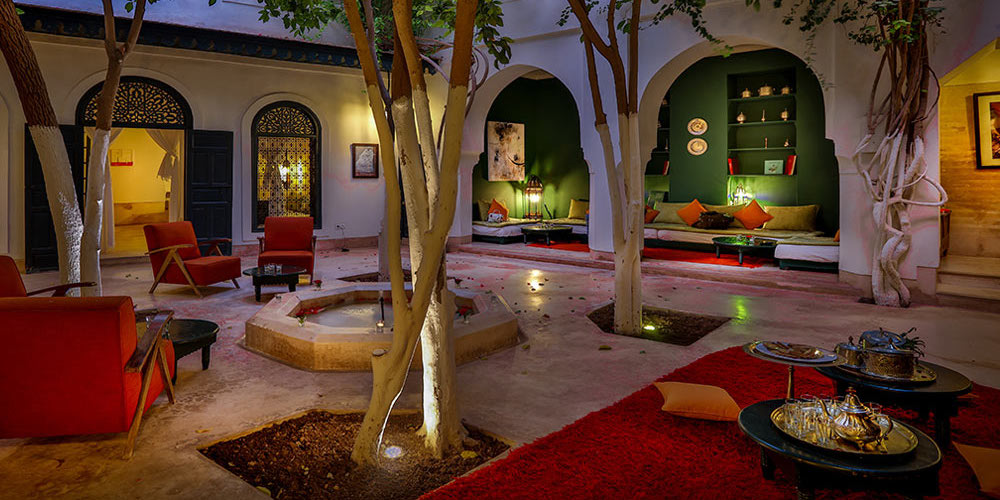
LUXURY RIAD
Treat yourself to a night or two in one of Marrakech’s hidden luxury traditional Riads. They are beautiful establishments, peaceful, and often locked deep away inside the Medina. A good base from which to explore.
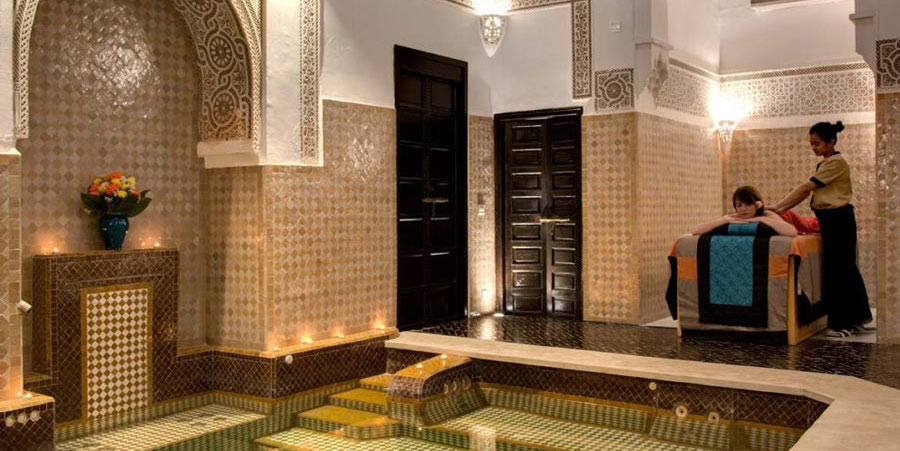
ENJOY A SPA OR HAMMAM
Relax in a quiet Spa or traditional Hammam. These can be associated with the hotel or Riad that you are staying in, or you can book another outside. Either way, booking in advance is recommended to ensure your day is planned as you like it.
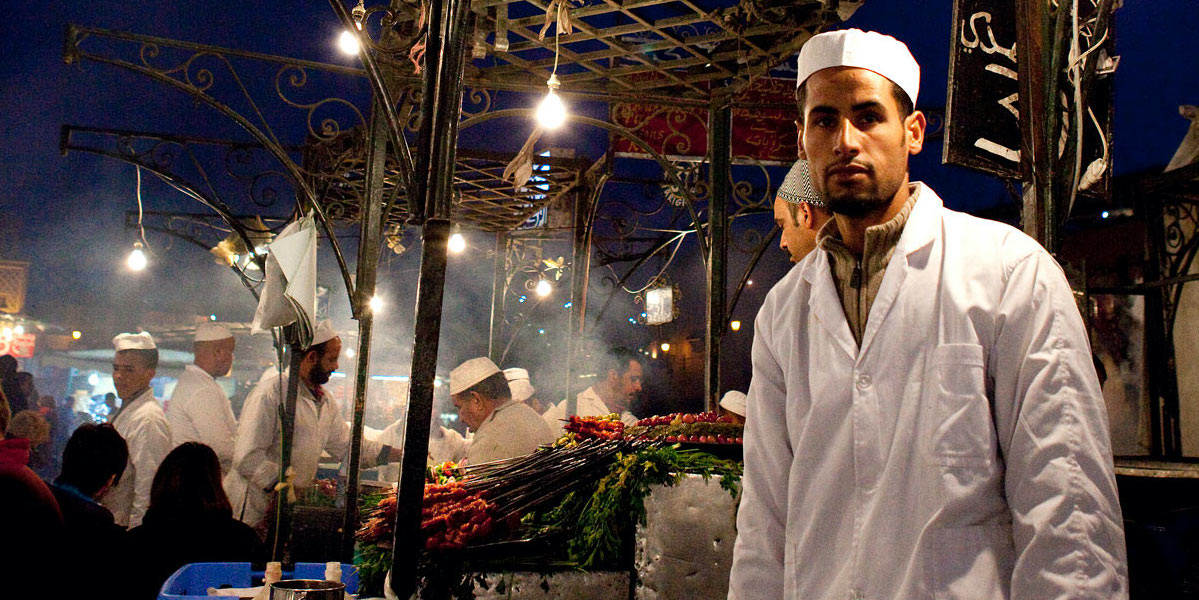
MARRAKECH’S DJEMAA EL FNA SQUARE
Experience this famous square, it comes alive at night with a sensory explosion of sights, smells, and sounds. Food stalls of all sorts and entertainers litter the whole area, certainly a sight to behold and enjoy.
See what to do in Marrakech.
All of our holidays can be tailor-made for YOU and we make it simple. It’s so easy to do.
Popular Treks and Cycles

Kilimanjaro, Lemosho

Annapurna Circuit

Ngorongoro Bike Ride, Tanzania

Sahara
Our Reviews
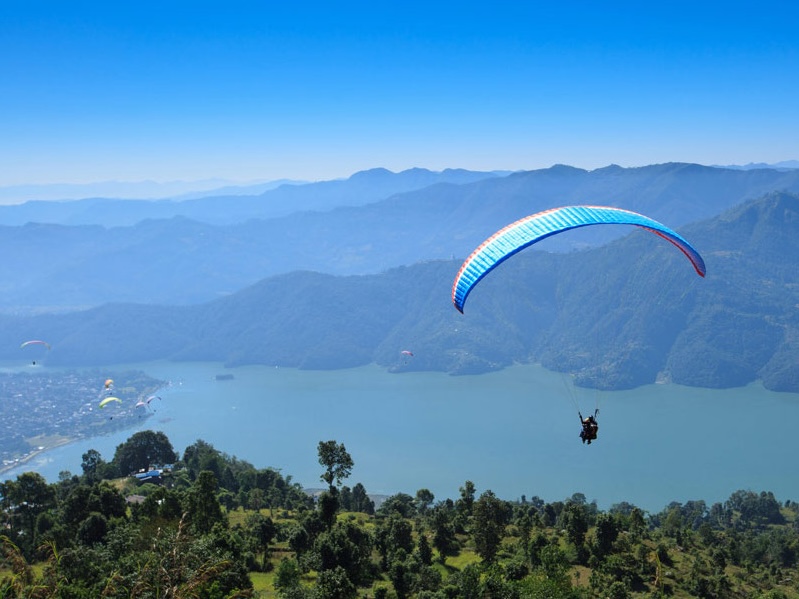
Pokhara – What To Do & See

Everest Base Camp Review

Kilimanjaro vs EBC | Treks Compared | Which is Harder

Is The Maldives Worth It?


